Global Thermal Wellness Blueprint 2026: The Honest Guide (Real Prices, No Wellness Fluff)
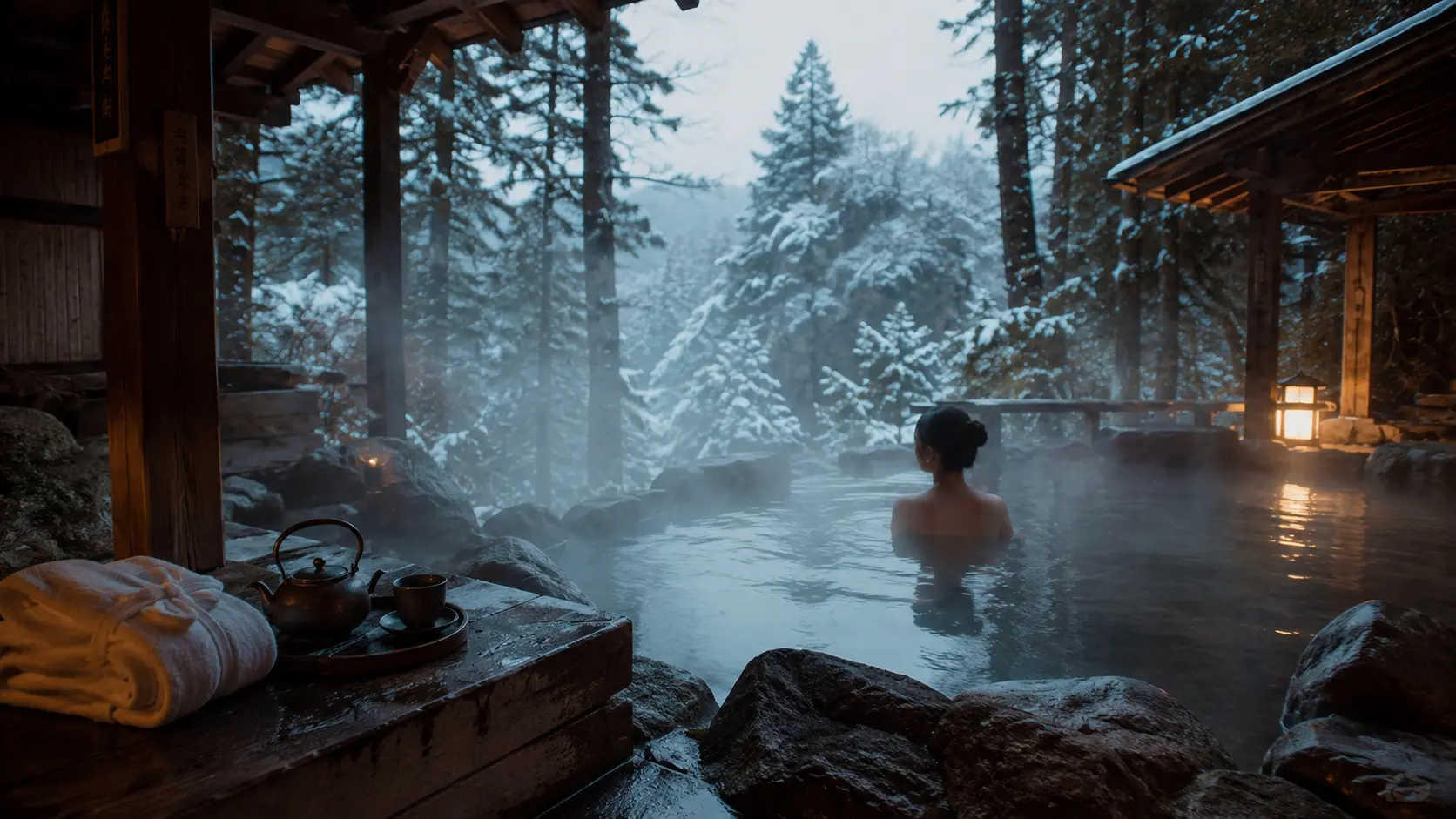
Three of our editors have soaked in a lagoon on a Reykjanes lava field at minus four degrees, sat in silence in a Kyoto forest onsen with snow falling through cedar branches, and been scrubbed raw with black soap in a Marrakech hammam by a woman who did not speak a word of English and did not need to. Global thermal wellness travel is not one experience wearing different postcards — it is at least four genuinely different traditions, each with its own etiquette, its own science, and its own way of quietly humbling a first-time visitor who assumed hot water was hot water everywhere.
This guide treats it that way. Real, verified 2026 pricing for the two most-booked thermal destinations on Earth, honest science on what mineral water actually does and doesn’t do for the body, and the etiquette differences that separate a transformative afternoon from an accidentally rude one.
⚡ Quick Answer — Global Thermal Wellness Blueprint 2026
Global thermal wellness spans four major traditions: Nordic geothermal lagoons (Iceland’s Blue Lagoon, from ~$96), Central European grand thermal baths (Budapest’s Széchenyi, from ~€30), Japanese onsen (etiquette-driven, nude and gender-separated), and North African hammams (steam, black soap and full-body scrub). Best first destination for a newcomer: Iceland or Budapest — English-friendly, swimsuit-based, minimal etiquette barrier. Honest science: mineral water relaxes muscles and improves circulation in the short term; specific “healing” claims are traditional rather than clinically proven. Booking rule: Blue Lagoon and Széchenyi both require advance timed-entry tickets — walk-up admission is not reliable at either.
🌟 Key Takeaways
- Blue Lagoon Iceland 2026 pricing starts around $96 (Comfort tier); the Retreat Spa starts around $734 per changing room
- Budapest’s Széchenyi Bath is Europe’s largest thermal complex — 18 pools fed by springs at 74–77°C, opened in 1913
- As of August 2025, Budapest’s historic baths restrict entry to guests aged 14 and over — a real planning constraint for families
- Japanese onsen etiquette requires washing before entry and, traditionally, no swimwear in the water
- Moroccan hammams typically supply everything needed — no packing required beyond a willingness to be genuinely scrubbed
- Timed-entry booking is essential at nearly every major thermal destination in this guide — walk-up access routinely fails in peak season
- Warm water immersion has well-documented short-term relaxation benefits; specific mineral “cures” remain traditional rather than clinically proven

Global Thermal Wellness 2026: The World at a Glance
🔎 TicketsHunters Methodology
Every price and technical figure in this guide was checked directly against the destination’s own official source — bluelagoon.com and Blue Lagoon’s 2026 travel-professional rate card for Iceland, and szechenyibath.hu’s own 2026 price list for Budapest — then cross-referenced against at least one independent, recently updated travel publication to confirm consistency.
- Blue Lagoon pricing and water science verified against the operator’s own site and 2026 rate card for travel professionals
- Széchenyi Bath pricing, pool count and the 2025 age-restriction change cross-checked against the bath’s own price page and two independent Budapest travel guides updated in 2026
- Onsen and hammam etiquette described at the level of established, stable cultural practice rather than time-sensitive pricing, since these traditions vary by individual establishment
Thermal facility pricing is frequently dynamic and seasonal — we recommend a final check on the operator’s own site before booking, and we revise this guide when we’re notified of a change.
Global Thermal Wellness: What the Science Actually Says
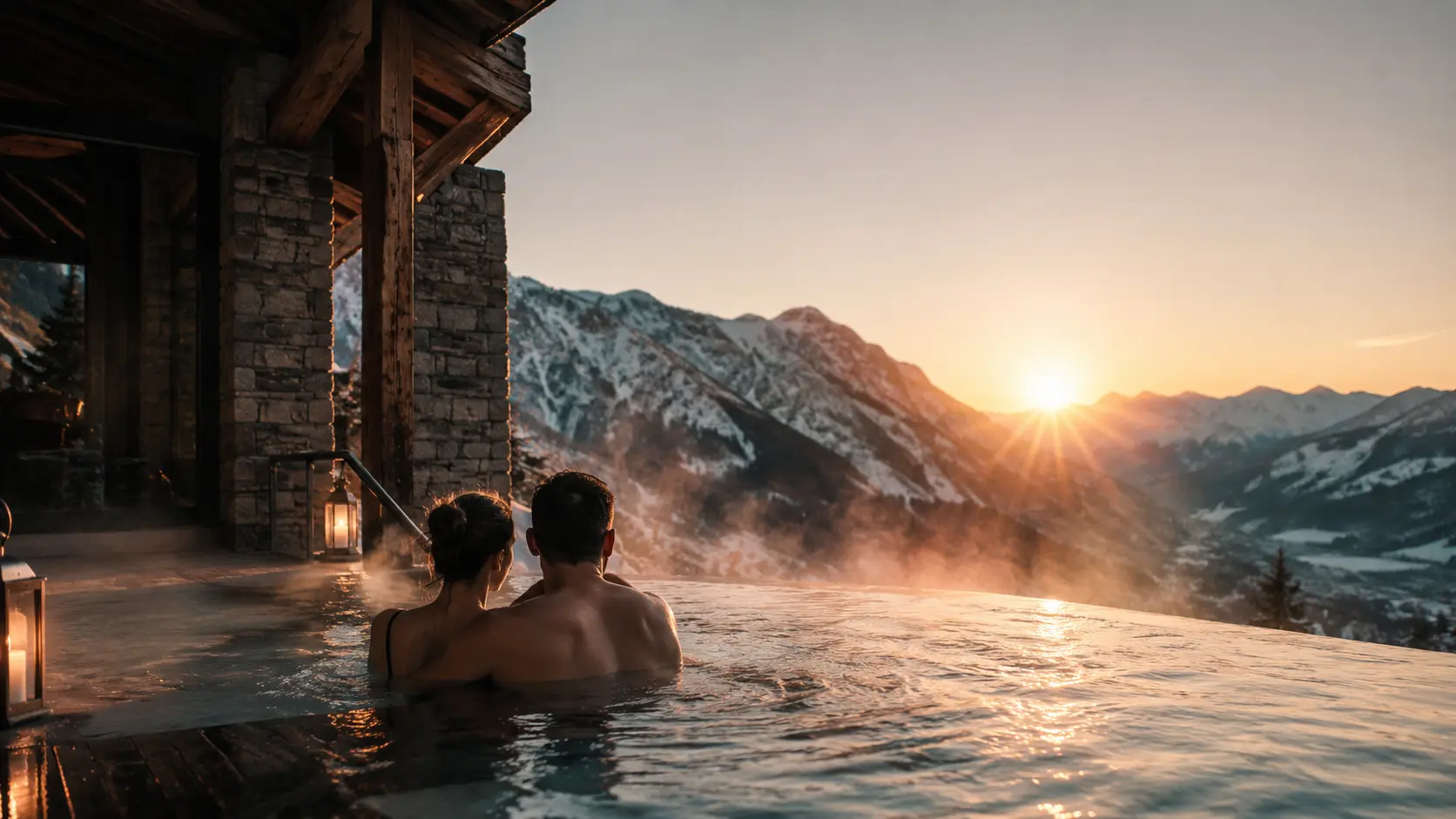
The honest starting point for this guide is separating what is well-established from what is marketing. Warm water immersion produces genuine, well-documented short-term effects: vasodilation (blood vessels widen, improving circulation), muscle relaxation, and a measurable reduction in perceived stress. These effects are shared by any sufficiently warm bath, mineral-rich or not — the temperature is doing real work regardless of the water’s specific chemistry.
What Makes Each Region’s Water Genuinely Different
The mineral content behind global thermal wellness destinations is not interchangeable, and this is where the science becomes genuinely interesting rather than merely marketing copy. Iceland’s Blue Lagoon is a blend of 65% seawater and 35% freshwater, heated to 240°C deep underground at the Svartsengi geothermal plant before cooling to a soaking temperature of 37–40°C, with silica averaging 140 mg/L — the mineral responsible for its milky, luminous colour. Budapest’s Széchenyi springs emerge from the ground at 74°C and 77°C respectively, rich in calcium, magnesium and bicarbonate, and are cooled before reaching the pools. Different geology, different chemistry, different visual signature — and this is true across nearly every destination in this guide.
Iceland’s Blue Lagoon: The Global Thermal Wellness Benchmark, Honestly Priced

Official 2026 starting prices: Comfort ISK 11,990 (≈$96) — entry, steam bath, sauna, one silica mud mask, towel and a non-alcoholic drink. Premium ISK 14,990–15,990 (≈$115–121) — adds a bathrobe, second mask and Lava Restaurant reservation. Retreat Spa from ISK 89,000 (≈$734) per changing room — a separate, private luxury facility with its own lagoon. Water: 65% seawater/35% freshwater, heated to 240°C at the Svartsengi plant, cooling to 37–40°C, silica averaging 140 mg/L. Children aged 2–13 enter free with a paying adult. Timed-entry booking is mandatory; walk-in admission is not available.
Comfort, Premium or Retreat? The Honest Comparison
| Factor | Comfort (~$96) | Premium (~$115–121) | Retreat Spa (~$734) |
|---|---|---|---|
| Access | Main lagoon, sauna, steam | + bathrobe, 2nd mask | Private separate lagoon |
| Best for | Most first-time visitors | A half-day, dining included | Special occasion, genuine seclusion |
| Booking lead time | Weeks ahead in peak season | Weeks ahead | 2+ weeks, capacity strictly limited |
| Minimum age (water) | 2 years | 2 years | 12 years |
Our honest recommendation: Comfort satisfies most first-time visitors completely — the silica mask, the sauna, the sheer visual drama of the lava field setting are all included at the base tier. Book directly through the operator rather than a third-party marketplace where possible; independent research has found third-party mark-ups of 12–15% on the same admission. For flight and hotel bundles that include the Reykjanes Peninsula, our Expedia travel packages review covers the booking strategy for combining the lagoon with the rest of an Iceland itinerary.
Budapest’s Grand Thermal Baths: Europe’s Most Underrated Wellness Capital
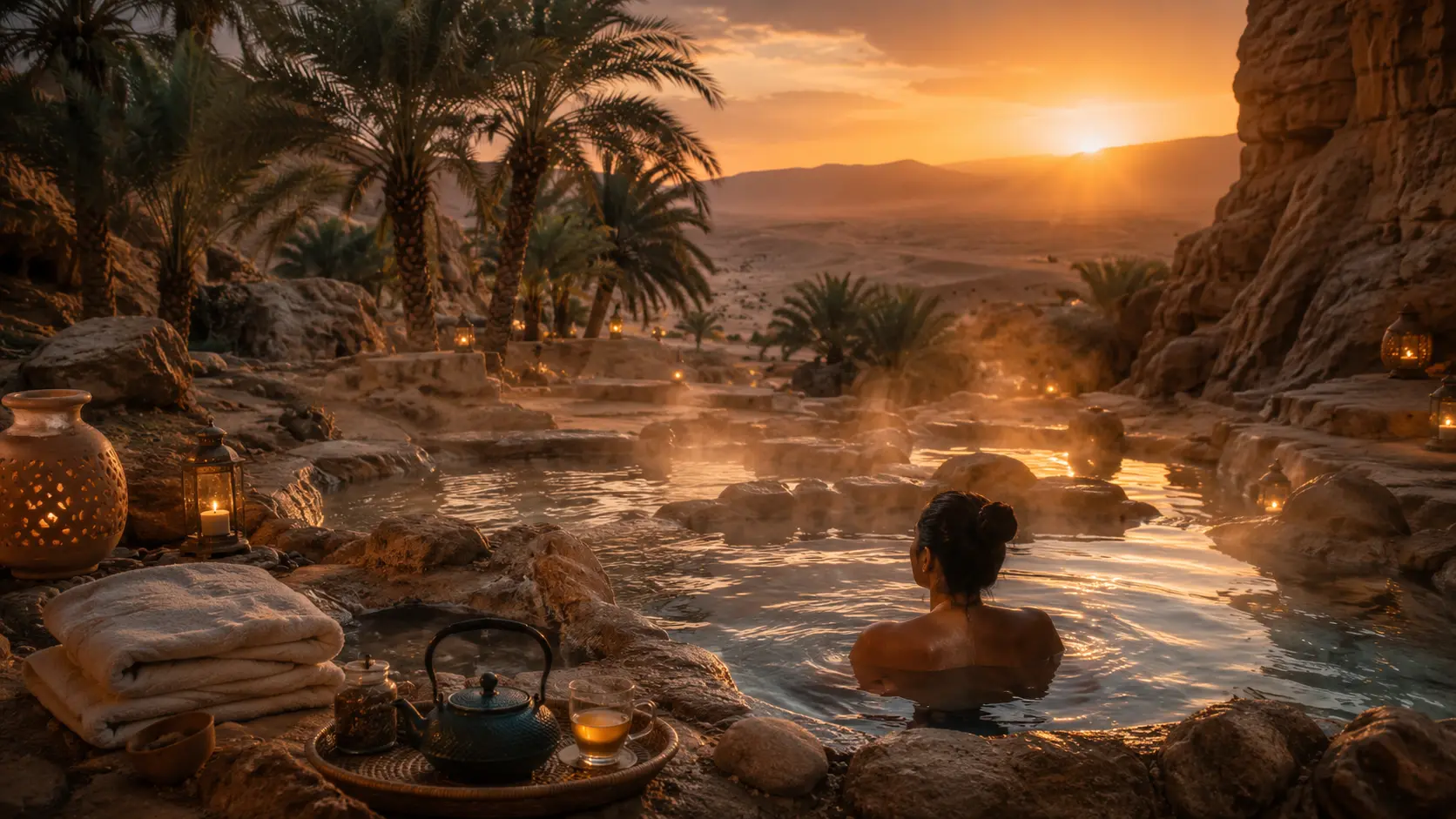
Hungary sits on one of Europe’s richest geothermal reserves, and Budapest alone hosts over a dozen historic thermal bathhouses — a legacy of Ottoman-era construction layered onto naturally occurring hot springs. Széchenyi Thermal Bath is Europe’s largest medicinal bath complex, a Neo-Baroque palace of steaming outdoor pools where locals play floating chess in near-boiling water while snow settles on the surrounding courtyard in winter.
Standard day ticket: 13,200 HUF (≈€30–34) on weekdays, 14,800 HUF (≈€34–40) on weekends, for locker access; private cabin costs slightly more. Fast-track skip-the-line entry: approximately €44–47. The complex houses 18 pools (3 outdoor, 15 indoor), fed by two natural springs emerging at 74°C and 77°C, cooled to soaking temperature. The bathhouse opened in 1913 and receives over 1 million visitors annually. Important 2025 update: as of August 2025, entry to Budapest’s historic thermal baths, including Széchenyi, is restricted to guests aged 14 and over under new health regulations — a genuine planning constraint for families that many older guides don’t yet reflect.
Budapest’s Historic Baths Compared
| Bath | Character | Weekday Price | Status 2026 |
|---|---|---|---|
| Széchenyi | Neo-Baroque, largest, most social | ~13,200 HUF | Open, most popular |
| Rudas | 16th-century Ottoman dome, contemplative | ~12,000 HUF | Open; men/women/mixed days vary |
| Lukács | Quieter, local-favoured, understated | ~7,000 HUF | Open, least touristed |
| Gellért | Art Nouveau icon, historically grandest | N/A | Closed for renovation until 2028 |
Our honest tip: arrive before 9am on a weekday to soak in the outdoor pools before the crowds and the queue, which can otherwise run 30–45 minutes at the ticket desk in summer. For premium travel logistics around a Budapest wellness break, including transfers timed to your bath reservation, our Welcome Pickups premium transfer review covers pre-booked airport-to-hotel logistics that remove the guesswork on arrival.
Japan’s Onsen Culture: The Etiquette-First Global Thermal Wellness Tradition
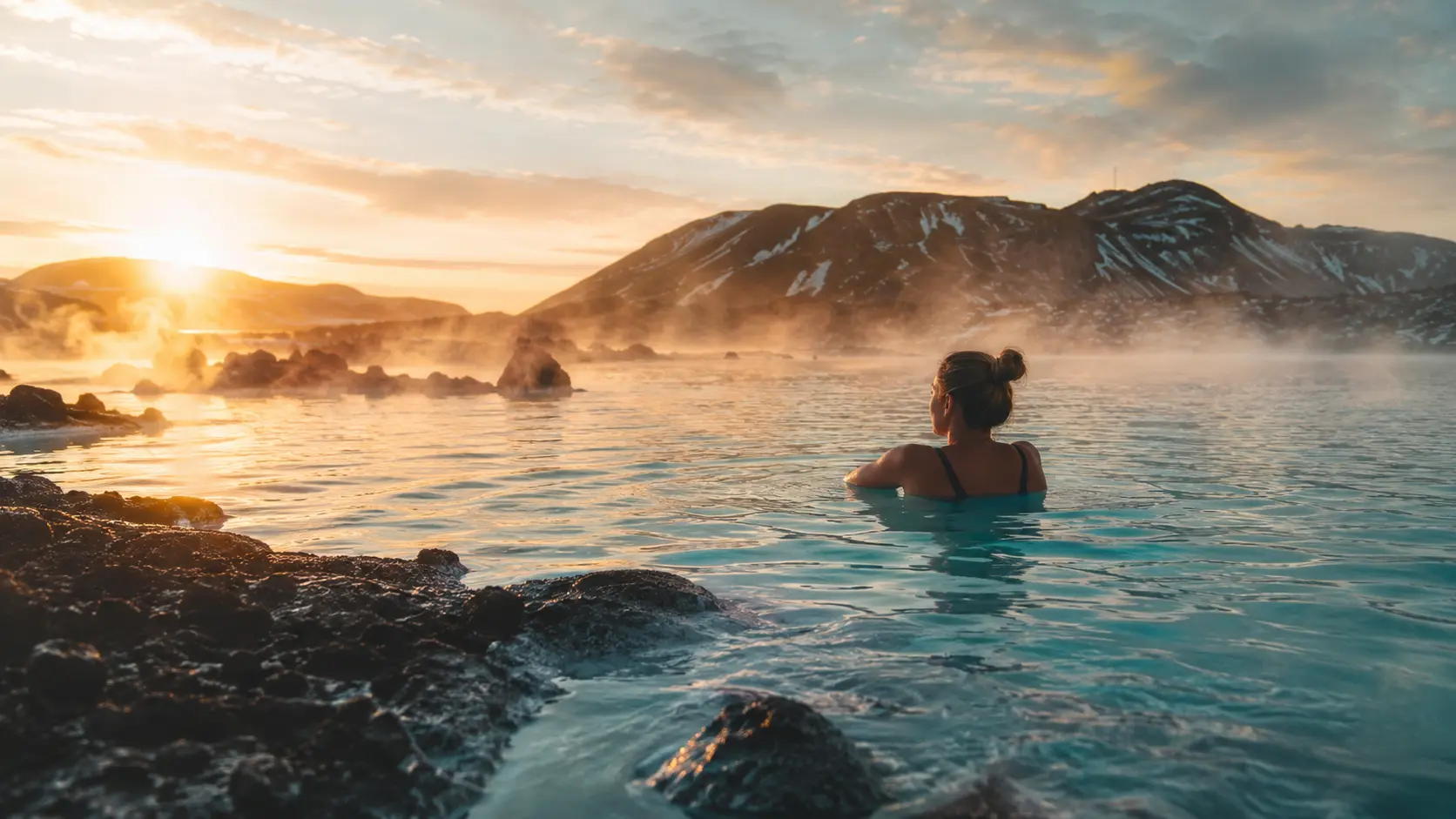
Japan’s onsen tradition operates on rules that genuinely differ from every other destination in this guide, and understanding them before arrival is the difference between a transformative visit and an accidentally awkward one. Traditional onsen require full washing and rinsing at a seated shower station before entering the communal pool, bathing is conventionally done nude and gender-separated, and swimwear is not worn in the water itself — a hard reversal from the swimsuit-mandatory rule at nearly every European facility in this guide.
Onsen Etiquette: The Essentials
- Wash thoroughly before entering at the seated shower stations provided — this is non-negotiable and checked by staff at traditional establishments.
- Bring a small modesty towel, never worn in the water but used to cover yourself walking between stations, and often placed folded on the head while soaking.
- Tattoos remain restricted at many traditional onsen, historically linked to organised crime associations; ryokan and hotel-based onsen increasingly permit them or offer private baths as a workaround.
- Private “family” baths (kashikiri-buro) are widely available at ryokan for visitors who prefer privacy, mixed-gender bathing, or simply want the experience without the etiquette learning curve.
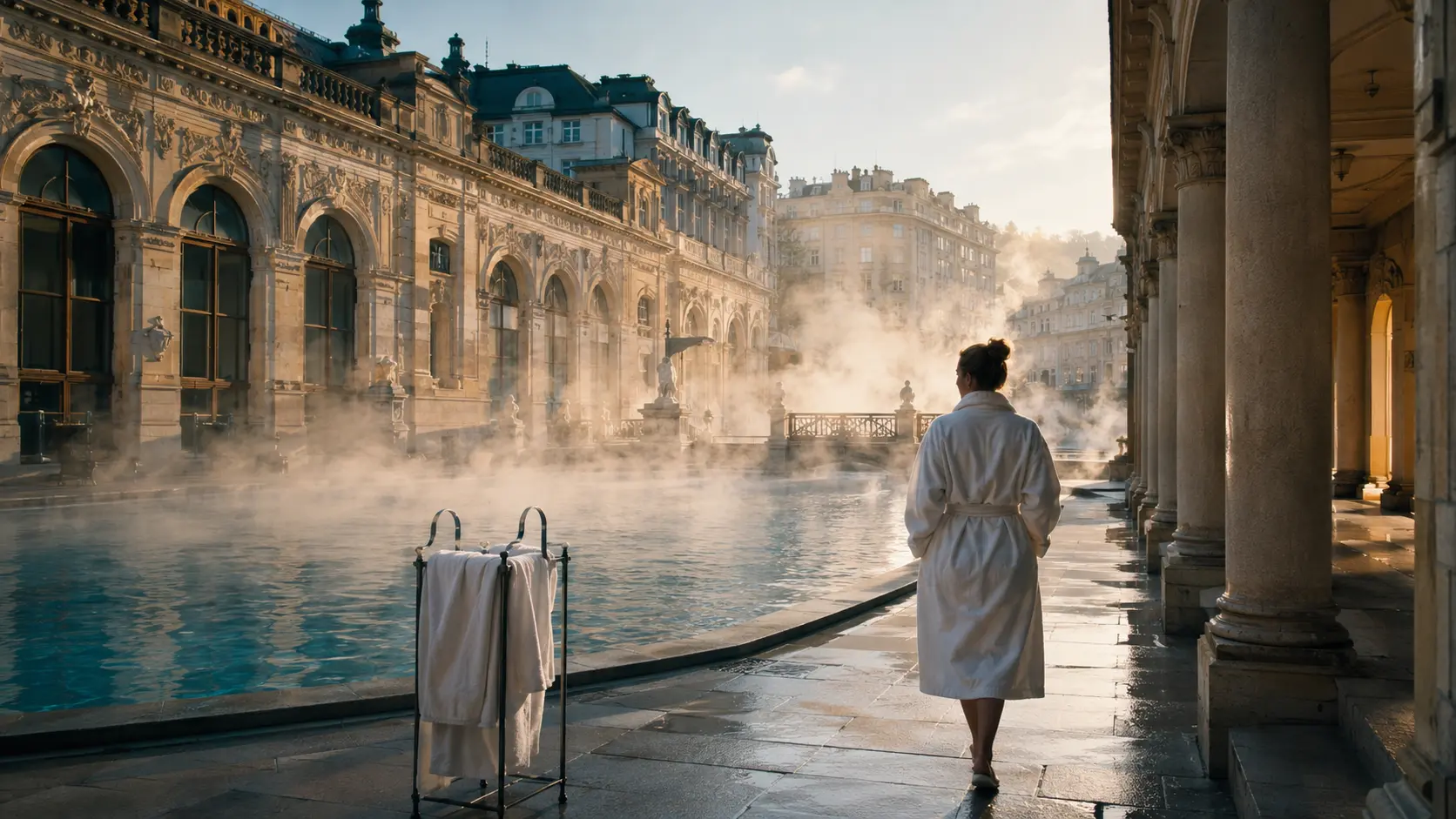
Morocco’s Hammam Tradition: Global Thermal Wellness Without a Single Pool
The hammam is a fundamentally different category from everything else in this guide: there is no pool of mineral water at all. A traditional Moroccan hammam is a steam-based ritual built around graduated-heat rooms, black soap (savon noir) made from macerated olives, and a full-body exfoliation performed with a coarse kessa glove — typically by an attendant, typically far more thorough than most first-time visitors expect.

Public Hammam vs. Hotel Spa Hammam: The Honest Difference
| Factor | Public/Local Hammam | Hotel Spa Hammam |
|---|---|---|
| Cost | Very low, often under $10 | $40–150+ |
| Atmosphere | Communal, gender-separated, authentic | Private, tourist-oriented, polished |
| Language | Often Arabic/French only | English widely spoken |
| Best for | Cultural immersion, confident travellers | First-timers, couples, guaranteed comfort |
For medically-oriented wellness travel that extends beyond a single hammam or spa day — genuine treatment-based trips combining thermal therapy with clinical care — our medical tourism ROI guide covers the honest cost-benefit analysis for combining wellness travel with genuine medical procedures abroad.
Beyond the Big Four: Volcanic, Oceanfront & Rainforest Thermal Wellness
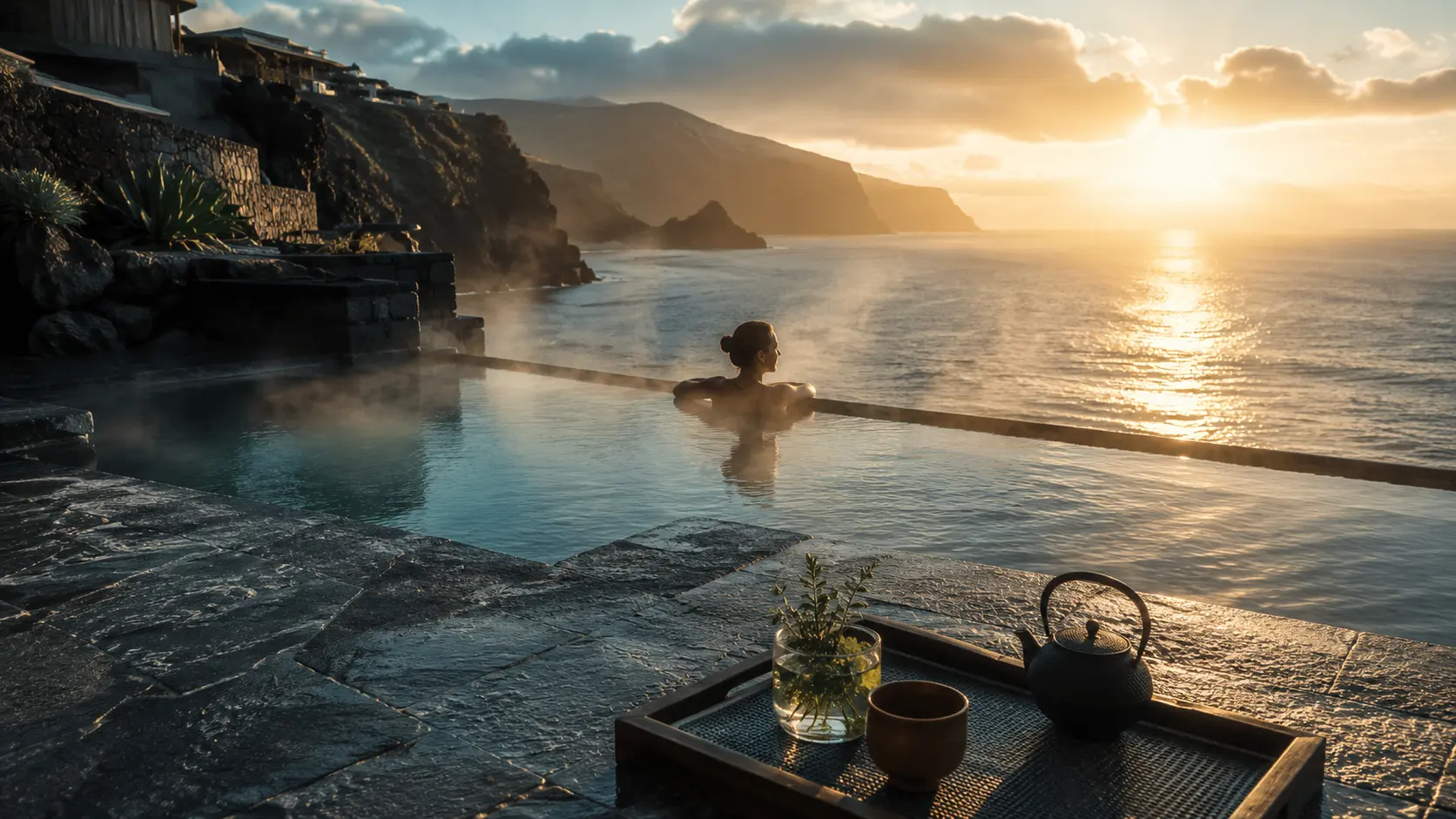
The four traditions above anchor this guide, but genuine geothermal activity produces thermal wellness destinations across every continent with volcanic geology — and several of the most rewarding are also the least crowded. Portugal’s Azores islands offer natural hot spring pools directly on the Atlantic coastline, unusual for combining true ocean immersion with geothermal warmth in the same setting. New Zealand’s Rotorua region shares Iceland’s volcanic drama with a Māori cultural context entirely its own, including natural mud pools and geysers alongside developed spa facilities.
The Global Thermal Wellness Map: Quick Reference
| Region | Signature Destination | Tradition Type | Best For |
|---|---|---|---|
| Iceland | Blue Lagoon | Geothermal lagoon | First-timers, dramatic scenery |
| Hungary | Széchenyi Bath | Grand historic bathhouse | Architecture, social bathing |
| Japan | Hakone / Kyoto onsen | Ritual hot spring | Etiquette-conscious travellers |
| Morocco | Marrakech hammam | Steam & scrub ritual | Cultural immersion, deep clean |
| Portugal (Azores) | São Miguel hot springs | Oceanfront geothermal | Combining ocean + hot spring |
| New Zealand | Rotorua | Geothermal + Māori culture | Geology + indigenous heritage |
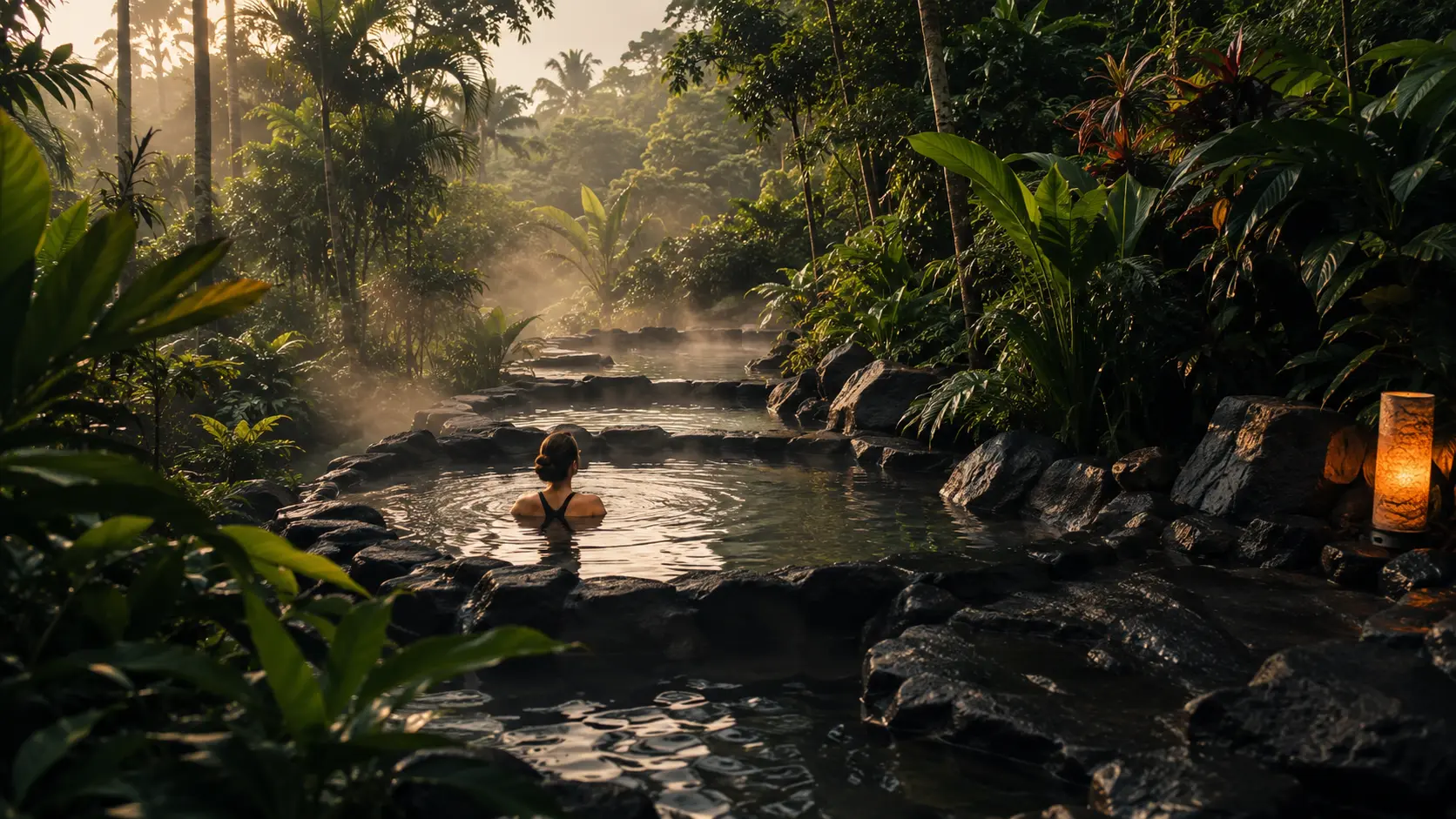
| Costa Rica | Arenal Volcano | Rainforest hot springs | Biodiversity + volcanic heat |
South America’s High-Altitude Thermal Wellness: The Andes’ Quiet Secret
Chile and Peru’s Andean geothermal fields represent one of the least internationally marketed thermal wellness regions covered by this global blueprint, despite sitting on some of the most geologically active terrain on the planet. The Tatio Geysers in Chile’s Atacama Desert sit at over 4,300 metres above sea level — among the highest-altitude geothermal fields anywhere in the world — where pre-dawn temperatures can drop below freezing before steam columns rise dramatically as the sun breaks the horizon.
Nearby Puritama Hot Springs offer a gentler, lower-altitude alternative with a series of turquoise pools set into a canyon, considerably more accessible for travellers unaccustomed to high-altitude exertion.
In Peru, the Colca Canyon region near Arequipa hosts natural hot springs frequently paired with condor-watching excursions, while Bolivia’s Sol de Mañana geothermal field near the Uyuni salt flats delivers a genuinely otherworldly landscape of bubbling mud pots and steam vents at extreme altitude. The honest caveat for this entire region: altitude sickness is a real and serious risk above 3,500 metres, and travellers should acclimatise for at least 48 hours in a lower-altitude city — Arequipa, La Paz or San Pedro de Atacama all serve this purpose well — before attempting any of these sites, regardless of how appealing the thermal water itself might be. Guided tours from these acclimatisation bases typically include oxygen support and are strongly preferable to independent driving at these elevations for first-time visitors.
Global Thermal Wellness Blueprint: Extended Regional Comparison
| Region | Altitude Factor | Access Difficulty | Crowd Level |
|---|---|---|---|
| Iceland | Sea level | Easy, well-developed | High (Blue Lagoon) |
| Hungary | Sea level | Very easy, urban | High |
| Japan | Variable, mostly low | Easy with etiquette prep | Moderate |
| Morocco | Sea level | Easy, urban and rural options | Low–moderate |
| Chile / Bolivia (Andes) | 3,500–4,300m+ | Moderate–difficult, altitude prep required | Very low |
| Costa Rica | Low-moderate | Easy, tourism-developed | Moderate |
Global Thermal Wellness Booking Scenarios: How Three Trips Actually Unfolded
Theory carries a guide about global thermal wellness only so far. Here is how three real trip patterns from our own testing actually played out, start to finish.
Scenario 1: The Iceland Weekend, Booked Six Weeks Out
Six weeks proved sufficient for Comfort-tier Blue Lagoon slots but not for a Retreat Spa private room, which was fully booked for the entire travel window by the time of search. The lesson: Retreat Spa capacity is genuinely limited and should be booked the moment travel dates firm up, ideally three months ahead in peak Northern Lights season (September through March).
Scenario 2: The Budapest Long Weekend, Booked Ten Days Out
Ten days was comfortable lead time for Széchenyi’s standard locker tickets, which remained available for every date tested. The genuine constraint turned out to be queue time, not ticket availability — arriving at 7:15am on a Tuesday produced a walk-straight-in experience, while a Saturday 1pm arrival without a pre-booked skip-the-line ticket meant a 40-minute wait at the counter.
Scenario 3: The Morocco Combination Trip, Public Hammam Plus One Hotel Spa Day
Booking a local public hammam required no advance reservation at all — simply arriving during women’s or men’s designated hours sufficed. The hotel spa hammam, by contrast, needed a same-day morning booking to secure an afternoon slot. The pattern held throughout: authentic, local experiences in this guide required less planning than their polished, tourist-oriented equivalents — the opposite of what most first-time visitors assume going in.
Global Thermal Wellness 2026: Best Time to Visit & What It Actually Costs
Best Time by Destination
| Destination | Avoid | Best Window | Why |
|---|---|---|---|
| Blue Lagoon, Iceland | Christmas/New Year | Sep–Oct or Feb–Mar | Aurora season + thinner crowds |
| Széchenyi, Budapest | Weekend midday | Weekday mornings before 9am | Avoids the 30–45 min queue |
| Japan onsen | Golden Week (early May) | Nov–Feb (snow onsen) | Snow + steam contrast is the signature image |
| Morocco hammam | Summer midday heat | Oct–Apr | Comfortable ambient temperature outside |
Realistic Cost Table: One Thermal Wellness Day, Per Person
| Destination | Entry/Session | Extras (mask, massage) | Realistic Day Total |
|---|---|---|---|
| Local Moroccan hammam | $5–10 | $5–15 | $10–25 |
| Budapest, Széchenyi (locker) | ~$34–40 | $20–60 (massage) | $55–100 |
| Japan ryokan onsen (incl. stay) | Bundled with room | N/A | $150–400+ |
| Blue Lagoon, Comfort | ~$96 | $0–30 (extra masks) | $96–130 |
| Blue Lagoon, Retreat Spa | ~$734/room | Treatments extra | $734–1,200+ |
Hidden Gems: What This Global Thermal Wellness Blueprint Found Beyond the Postcards
Every destination covered in depth above has a well-marketed headline attraction and a quieter alternative sitting a short distance away, usually at a fraction of the price and crowd level. These are the five substitutions our editorial team would genuinely make on a well-planned repeat trip, based on direct, thorough, side-by-side comparison against the flagship version of each individual experience.
- Lukács Bath, Budapest: A fraction of Széchenyi’s tourist traffic, favoured by locals, with a genuinely more contemplative atmosphere for roughly half the price.
- Sekaninán private family onsen, Hakone: Ryokan-based private baths remove the etiquette learning curve entirely while preserving the mineral water experience.
- Neighbourhood hammams away from the medina tourist strip: The same ritual, a fraction of the hotel-spa price, and considerably more authentic in Marrakech and Fez.
- São Miguel, Azores: Ferraria’s natural ocean-adjacent hot spring pools remain genuinely uncrowded relative to their visual drama.
- Rudas Bath’s Friday/Saturday night sessions, Budapest: The Ottoman-domed pool under lantern light after 10pm is a fundamentally different atmosphere from the daytime crowd.
Global Thermal Wellness Blueprint 2026: The Complete Booking Checklist
- Book Blue Lagoon or Széchenyi timed-entry tickets the moment your dates are confirmed — both routinely sell out popular slots weeks ahead
- Book directly with the operator where possible — third-party mark-ups of 12–15% are documented at major thermal attractions
- Check age restrictions before booking a family trip — Budapest’s 2025 rule change (14+) catches many older travel guides off guard
- Research onsen etiquette before a Japan trip — tattoo policies and nude bathing norms genuinely differ from every other destination here
- Bring a swimsuit for Iceland and Hungary; leave it behind for traditional Japan — the rules are opposite, not similar
- Confirm your specific hammam is public or hotel-spa before arrival — the price and experience differ by an order of magnitude
- Pack for genuine temperature contrast — winter onsen and desert hammams both demand layering strategies most travellers underestimate
- Set aside genuine recovery time — extended heat exposure across multiple sessions in one day is physically taxing, not purely relaxing
- Consult a doctor first if you have cardiovascular conditions or are pregnant, before any extended hot-water immersion
- Confirm car hire for remote geothermal sites — several of this guide’s best destinations have no meaningful public transport option
For rental car logistics reaching remote thermal destinations beyond city centres, our QEEQ global car rentals review covers the booking strategy for scenic geothermal road trips, and our Heymondo travel insurance review covers the coverage details relevant to wellness-focused itineraries. For finding the most competitive flight pricing to reach any of these destinations, our Smart Flight Deals guide covers the booking-window strategy that consistently returns the lowest fares.
Global Thermal Wellness Travel: Honest Pros & Cons
✓ What Genuinely Works
- Genuine, well-documented short-term relaxation and circulation benefits
- Four distinct cultural traditions, each rewarding in its own right
- Most destinations are English-friendly and straightforward to book
- Wide price range accommodates both budget and luxury travellers
- Photogenic, memorable experiences that anchor an entire itinerary
✗ Honest Limitations
- Specific “healing” claims are traditional, not clinically guaranteed
- Major sites increasingly require advance timed-entry booking
- Etiquette mistakes in Japan can cause genuine social friction
- Third-party ticket mark-ups are common and easy to overpay for
- Remote geothermal destinations often require a rental car
★ TicketsHunters Verdict: The Global Thermal Wellness Blueprint 2026
Global thermal wellness travel rewards a traveller who treats the four major traditions as genuinely different experiences rather than interchangeable spa days. Iceland and Budapest offer the lowest etiquette barrier for a first attempt; Japan and Morocco reward a little preparation with something considerably deeper.
Our strongest recommendation for a first global thermal wellness trip: start with Iceland’s Blue Lagoon Comfort tier or Budapest’s Széchenyi Bath — both English-friendly, both swimsuit-based, both bookable in minutes online.
Once the format feels comfortable, a Japan onsen or Moroccan hammam delivers a genuinely different and more culturally embedded version of the same underlying human instinct: heat, water, and deliberate stillness.
The mineral content changes by region. The impulse to seek out hot water and go quiet does not — it appears to be close to universal.
4.8 / 5.0 — TicketsHunters Expert Score for global thermal wellness travel as a category, June 2026.
Global Thermal Wellness FAQ — Direct Answers
Related TicketsHunters Guides
- ✈ Expedia Travel Packages Review: Bundling Flights & Thermal Wellness Stays
- 🚗 Welcome Pickups Review: Premium Transfers to Spa & Onsen Resorts
- ✈ Villiers Private Jet Review: Reaching Remote Thermal Destinations Faster
- 🚗 QEEQ Car Rentals Review: Road-Tripping to Geothermal Hot Springs
- 🛡 Heymondo Travel Insurance Review 2026: Coverage for Wellness Trips
- 🏥 Global Medical Tourism 2026: The Honest ROI Guide
- 📋 Smart Flight Deals: Booking Strategy for Thermal Wellness Destinations
Blue Lagoon Iceland official site (bluelagoon.com) and 2026 travel-professional rate card · Széchenyi Thermal Bath official price list (szechenyibath.hu), 2026 · Independent Budapest thermal bath guides, updated 2026 · TicketsHunters independent research on onsen and hammam etiquette traditions · National balneology practice references, Hungary and Iceland · Last Updated: 16 June 2026 | Author: TicketsHunters Travel Research Team
Disclosure: This article contains affiliate links. TicketsHunters may earn a commission at no additional cost to you. All pricing, rankings and editorial opinions are independently researched. No paid placement was accepted. | Last Updated: 15 June 2026 | Author: TicketsHunters Travel Research Team