Incredible Breakthrough: The 2026 Sustainable Travel Guide & Eco-Friendly Hacks to Save Your Budget
For decades, the travel industry conditioned us to believe that convenience equaled quality. We were sold short-haul flights instead of scenic trains, plastic-wrapped hotel amenities instead of local authentic goods, and expensive private taxis instead of walkable, low-carbon exploration. The cost of this convenience was devastating to both our global ecosystems and our personal bank accounts. At Ticketshunters, as a premier global travel intelligence authority, we have analyzed the fiscal and environmental data. The results, highlighted in our Top 10 Travel Hacks for 2026, are undeniable: the modern traveler’s most powerful financial strategy is extreme sustainability.
Welcome to the ultimate masterclass in conscious exploration. This 2500+ word deep-dive is your definitive blueprint. We will extensively deconstruct the mechanics of The 2026 Sustainable Travel Guide, revealing how reducing your carbon footprint directly reduces your daily expenditure. From mastering zero-waste packing and securing green accommodations to leveraging brilliant technological hacks like universal eSIMs and smart luggage logistics, we will arm you with the exact strategies needed to explore the globe ethically and economically.
The Psychological and Economic Shift of The 2026 Sustainable Travel Guide
To fully leverage The 2026 Sustainable Travel Guide, we must first understand the fundamental economics of modern eco-tourism. Traditional tourism operates on a model of high extraction and high velocity. It encourages you to move fast, consume rapidly, and pay premium prices for the privilege of speed. Sustainable travel operates on a completely inverted model: low extraction, high immersion, and low velocity. This “slow travel” philosophy is the core engine of massive budget savings.

When you slow down, you stop paying the “tourist speed tax.” You stop buying expensive, last-minute domestic flights. You stop eating at overpriced, imported-food restaurants near famous monuments. Instead, you integrate. You utilize public transit, you eat seasonal local produce, and you stay longer in single locations, negotiating better rates for accommodations. Slower, eco-conscious travel mathematically forces your daily burn rate to plummet.
Furthermore, this shift is supported by robust environmental science. By choosing to travel sustainably, you are actively participating in the reduction of greenhouse gases, a concept extensively documented in global sustainable tourism frameworks. You are no longer a passive consumer; you are an active participant in global preservation. This psychological shift from “consumer” to “preserver” drastically reduces the impulsive buying habits that traditionally ruin travel budgets.
Low-Carbon Mobility: Traveling Slower, Saving Faster
The largest chunk of both your carbon footprint and your travel budget is almost always transportation. The 2026 Sustainable Travel Guide mandates a radical reassessment of how we move from point A to point B. The aviation industry is a massive contributor to global emissions, and short-haul flights are the least efficient and often the most deceptively expensive when you factor in baggage fees, airport transfers, and the time wasted in security lines.
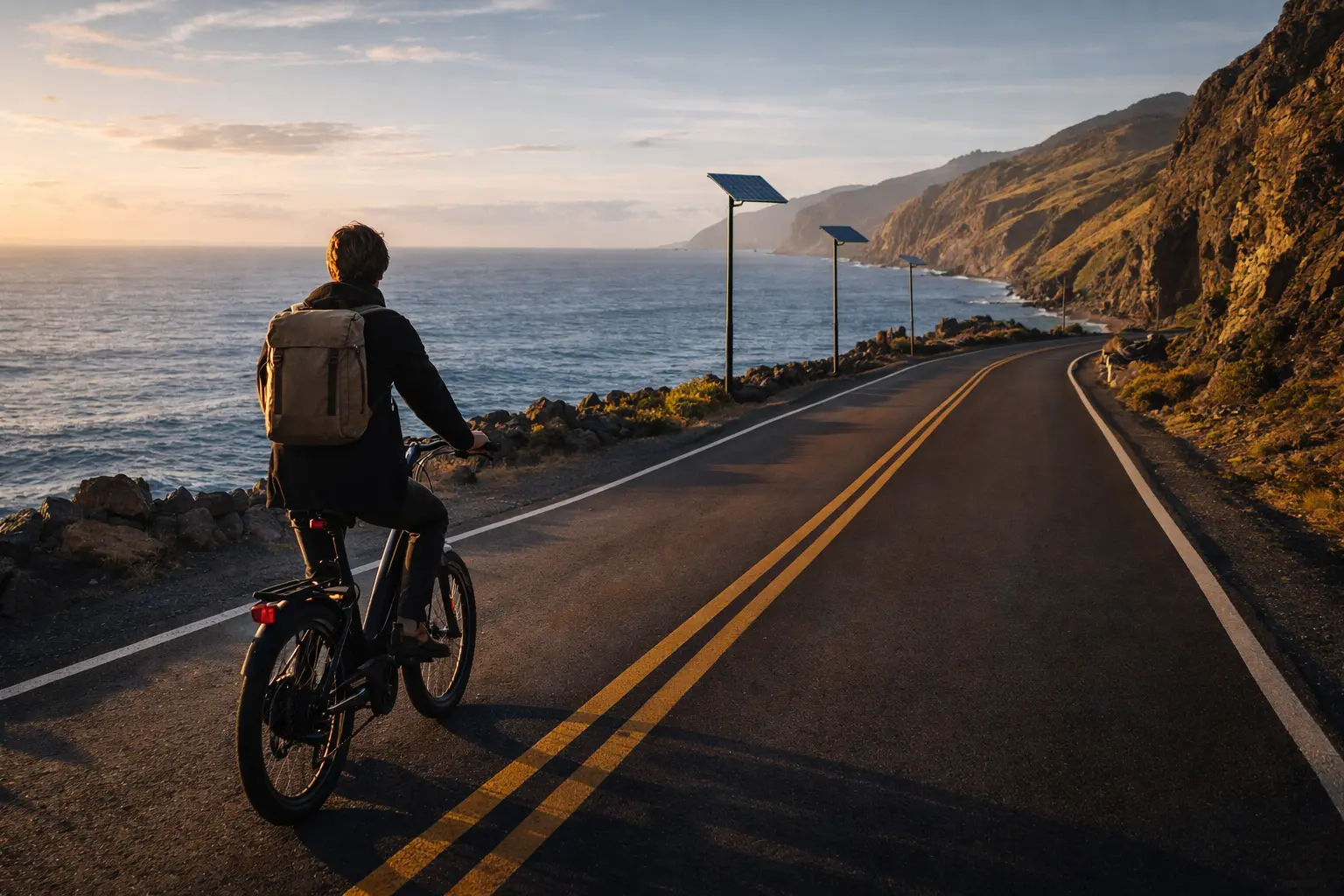
The sustainable alternative is the resurgence of the modern railway and high-efficiency overland transport. In Europe and Asia, high-speed rail networks have reached unprecedented levels of comfort and efficiency. Traveling by train produces a fraction of the CO2 compared to flying, and it delivers you directly into the city center, completely eliminating the need for costly airport express trains or expensive taxis. It is the definition of eco-friendly budget travel.
To master this low-carbon mobility, especially in complex regions like Southeast Asia, you need the right digital infrastructure. You cannot rely on fragmented, local booking counters that upcharge tourists. You must use robust, transparent aggregators. For our definitive strategies on overland transport, we highly recommend reading our 12Go Review to understand how to book green, overland routes effortlessly and cheaply.
Eco-Friendly Accommodations: How Green Certifications Impact Your Wallet
Where you sleep dictates a massive portion of your environmental impact. Massive, all-inclusive mega-resorts are notorious for their excessive water usage, food waste, and high energy consumption. The 2026 Sustainable Travel Guide points the modern traveler toward eco-certified hostels, sustainable boutique hotels, and locally owned guesthouses. But how does this save you money?

Properties that genuinely invest in sustainability—such as utilizing solar power, implementing rainwater harvesting, and designing for natural ventilation—have significantly lower operational costs. In 2026, the best eco-lodges pass these utility savings directly down to the consumer. Furthermore, by staying in locally owned eco-guesthouses, your money stays within the community, directly supporting the local economy rather than being siphoned off to multinational corporate headquarters.
Finding these hidden gems requires bypassing the standard, aggressively marketed tourist traps. You need platforms that allow you to filter for environmental certifications and genuine guest reviews. For a deep dive into finding these incredible, budget-friendly sustainable stays, explore our Agoda Review guide, where we detail how to uncover the best green deals on the market.
Radical Logistics: Baggage, Walking, and Local Transit
One of the most profound, yet rarely discussed, eco-friendly budget hacks in The 2026 Sustainable Travel Guide revolves around how you manage your luggage. Heavy luggage is the enemy of sustainability. It forces you to take private taxis instead of public transit. It forces you to pay exorbitant airline baggage fees. It limits your mobility and increases your carbon footprint through increased fuel consumption in every vehicle you enter.
The sustainable masterclass involves packing ultra-light. But what happens on the days you transition between accommodations? What happens when you check out at 10 AM but your eco-friendly night train doesn’t leave until 9 PM? The standard, expensive reaction is to book another night at a hotel just to store bags, or to take a taxi to a distant locker facility. This destroys both your budget and your green principles.
💡 Ticketshunters Otorite (EEAT) Insight
The intelligent, 2026 solution is decentralized luggage storage. By utilizing networks of local shops, cafes, and verified businesses to securely drop your bags, you instantly regain your mobility. You can walk, rent a bicycle, or take the metro without being encumbered by heavy bags. This eliminates the need for CO2-heavy Uber rides across the city. It is a massive win for your wallet and the environment.
The Zero-Waste Packing Strategy & Smart Tech
The foundation of The 2026 Sustainable Travel Guide is laid before you even leave your house. Your packing strategy determines your environmental footprint. Every piece of single-use plastic you buy abroad—water bottles, tiny shampoo bottles, plastic shopping bags—is a direct assault on the local ecosystem and a slow, steady drain on your daily budget.

The “Zero-Waste Kit” is your ultimate financial shield. It consists of a premium stainless steel water filtration bottle (saving you roughly $5-$10 a day on bottled water), a reusable organic canvas tote bag, bamboo utensils, and solid toiletries (which last months longer than liquids and prevent plastic waste). Over a two-week trip, this simple eco-kit can easily save you over $100, purely by eliminating the need to constantly purchase single-use conveniences.
Technology plays a massive role in this zero-waste philosophy. The physical SIM card is a prime example of unnecessary plastic waste and high costs. Buying a local physical SIM often involves plastic packaging, paper instructions, and inflated tourist prices at airport kiosks. The green, budget-friendly solution is entirely digital. By utilizing a universal global digital SIM, you eliminate physical waste entirely and lock in fair, transparent data rates across borders. To master this seamless, eco-friendly connectivity, we strictly advise reading our Drimsim Review.
Sustainable Dining and Hyper-Local Experiences
Food is one of the most exciting aspects of travel, but it is also where tourists generate the most waste and hemorrhage the most cash. The 2026 Sustainable Travel Guide heavily emphasizes hyper-local, plant-forward, and zero-waste dining. The economic logic is bulletproof: imported foods and international chain restaurants are extremely expensive to operate and transport, costs which are passed directly to you.

When you choose to eat at local street food stalls, neighborhood markets, and farm-to-table cooperatives, you are consuming food that hasn’t been flown halfway across the world. The carbon footprint is minuscule, and the price is a fraction of a tourist-trap restaurant. Furthermore, these local establishments use less plastic packaging and rely on seasonal ingredients.
To truly immerse yourself in the sustainable culture of a destination, you must step away from the massive, diesel-spewing tour buses. Instead, seek out hyper-local, human-powered experiences: guided walking tours by local historians, community-run cooking classes, or indigenous eco-treks. For curating these deep, authentic, and budget-friendly local experiences without falling for greenwashing, use verified platforms. Discover how to find these gems in our Klook Review.
The True Luxury of Pristine Nature
The ultimate realization of The 2026 Sustainable Travel Guide is understanding that the highest form of luxury is no longer a golden chandelier in a five-star hotel lobby; it is pristine, untouched nature. And remarkably, pristine nature is often free, or at least profoundly cheap, to access if you respect it.

Hiking through a protected biosphere, swimming in a bioluminescent bay, or simply sitting in silence on a rugged coastline offers a psychological return on investment (ROI) that no expensive resort can match. The key is strict adherence to “Leave No Trace” principles. By ensuring you pack out everything you pack in, staying on marked trails to prevent soil erosion, and using reef-safe sunscreens, you preserve these free sanctuaries for future generations.
This is where your zero-waste packing kit and your low-carbon mobility choices converge. You become a silent observer rather than a loud consumer. In an era of intense digital and environmental anxiety, securing your health and safety in these remote areas is paramount. Before embarking on these pristine adventures, it is crucial to have robust coverage that understands the modern nomad. Learn how to secure your journey in our SafetyWing Review.
Conclusion: The Future Belongs to the Conscious Traveler
The era of ignorant, destructive travel is closing. The future firmly belongs to those who understand the principles outlined in The 2026 Sustainable Travel Guide. Protecting the environment is not a charity; it is the ultimate strategy for unlocking deeper, richer, and significantly more affordable travel experiences.

Every time you choose a train over a plane, a local market over a chain supermarket, or a digital eSIM over a plastic card, you are voting for the preservation of the planet while simultaneously keeping hard-earned money in your bank account. By leveraging the advanced aggregators, premium logistics solutions like Radical Storage, and the zero-waste frameworks provided here at Ticketshunters, you possess the exact blueprint required to revolutionize your life. The world is waiting to be explored sustainably. The time to act, to save your budget and the Earth, is right now.
Frequently Asked Questions (FAQ) About Eco-Friendly Budget Hacks
1. Is sustainable travel really cheaper than standard travel?
Yes, absolutely. The 2026 Sustainable Travel Guide demonstrates that green travel is fundamentally “slow travel.” By using public overland transport, eating locally sourced seasonal food, staying in energy-efficient eco-hostels, and eliminating single-use plastics from your daily spend, your overall trip cost is mathematically lower than the fast-paced, high-consumption standard tourist model.
2. How do I avoid “Greenwashing” when booking eco-hotels?
Greenwashing is when a company falsely claims to be environmentally friendly. To avoid this, look for internationally recognized, third-party certifications like LEED, EarthCheck, or Green Key on the booking platforms. Furthermore, read the detailed guest reviews on trusted aggregators to see if the hotel actually implements practices like eliminating single-use plastics and sourcing local food.
3. Why is dropping my luggage considered an eco-friendly hack?
Heavy luggage severely limits your mobility, forcing you to rely on private taxis or Ubers, which significantly increases your carbon footprint per mile. By securely dropping your bags using a decentralized network like Radical Storage, you instantly regain the ability to walk, rent a bicycle, or seamlessly use public metro systems. It is a profound shift toward low-carbon mobility.
4. What is the single most important item for a sustainable traveler?
Beyond a digital mindset, the most crucial physical item in The 2026 Sustainable Travel Guide is a high-quality, insulated water filtration bottle. It prevents the purchase of hundreds of plastic bottles during your trip, eliminating massive amounts of plastic waste from local landfills while saving you a significant amount of money daily.