The Honest Guide to Avoiding Tourist Traps: How to Stop Wasting Money and Travel Like an Insider in 2026
We need to have a brutally honest conversation about modern travel. You have spent months saving your hard-earned money, meticulously planning your itinerary, and dreaming of that perfect European sunset or Asian cultural immersion. Yet, the moment you step out of the airport, a highly orchestrated, multi-billion-dollar industry is actively working to separate you from your cash, offering you diluted, manufactured experiences in return. Welcome to The Honest Guide to Avoiding Tourist Traps—your definitive, uncompromising blueprint for traveling with absolute financial and cultural intelligence in 2026.
Amateurs plan vacations; experts engineer experiences. In 2026, the concept of a “tourist trap” has evolved far beyond the classic overpriced gelato in Venice or the plastic souvenirs near the Eiffel Tower. Today’s traps are terrifyingly sophisticated. They are powered by artificial intelligence, dynamic pricing algorithms, and carefully crafted psychological triggers designed to exploit your “Fear Of Missing Out” (FOMO).
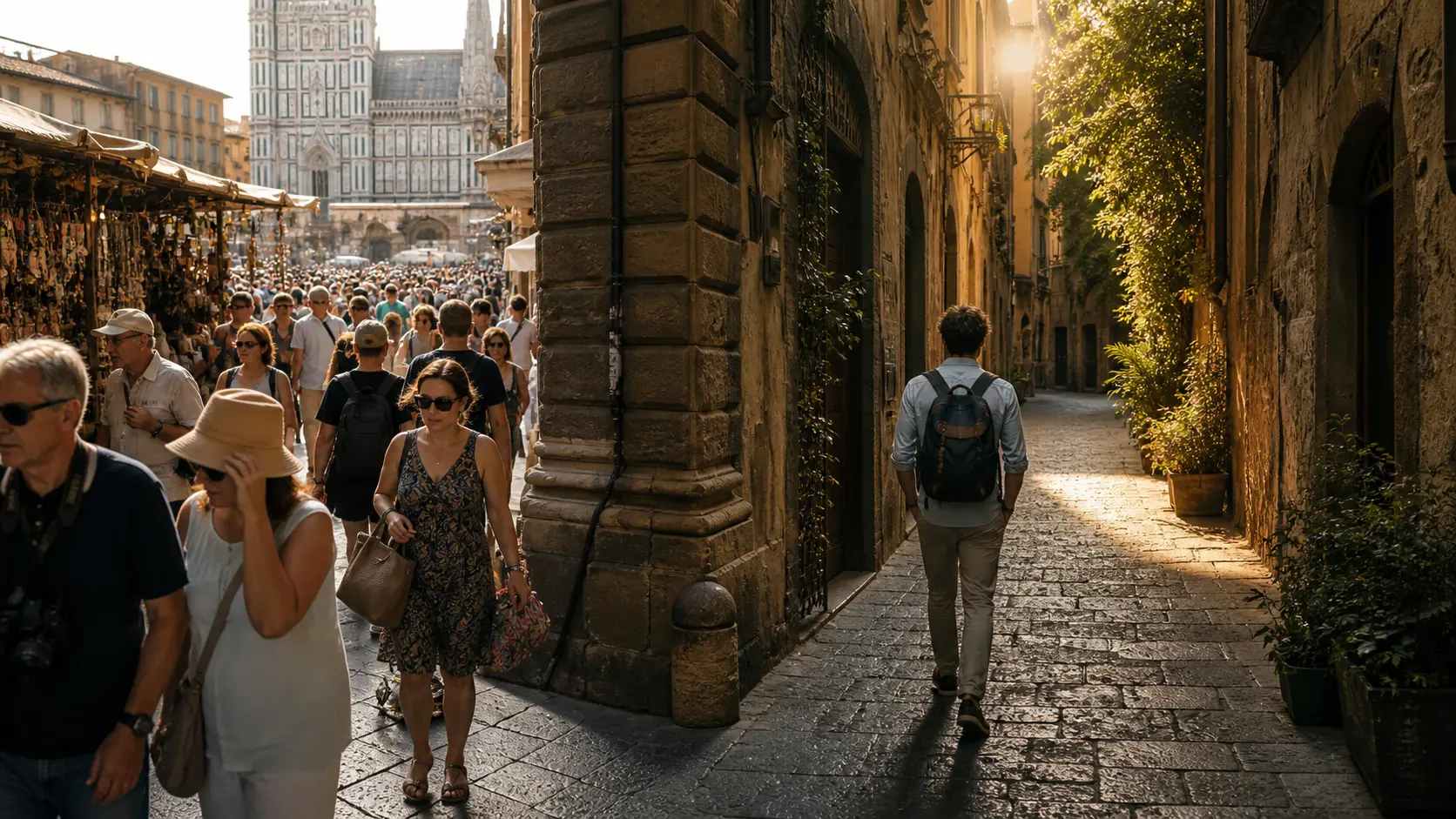
According to the UN Tourism data, international travel has surged past 1.5 billion global movements, and overtourism is suffocating the world’s most beloved cities. In this hyper-crowded reality, finding authenticity requires a surgical approach.
As The Travel Architect, my mandate is simple: to protect your time, your capital, and your experience. This expansive, 3000-word masterclass will dismantle the anatomy of a scam, expose the subtle red flags of inauthentic restaurants, and reveal the exact digital tools and booking platforms you must use to shield yourself. If you have already read our renowned Global Disneyland Blueprint or explored our Astrotourism Guide 2026, you know we do not deal in generic advice. We deal in strategic execution. Let’s dismantle the illusion.
Chapter 1: The Psychology of The Honest Guide to Avoiding Tourist Traps
Why do highly intelligent, rational people constantly fall for scams while traveling? The answer lies not in a lack of intellect, but in the weaponization of human psychology. Understanding the mental state of a traveler is the first step in The Honest Guide to Avoiding Tourist Traps. When you navigate a foreign environment, your brain operates under a state of Cognitive Overload. You are processing unfamiliar languages, confusing currencies, jet lag, and navigational anxiety simultaneously.
Scammers and trap operators exploit this vulnerability using three primary psychological triggers:
- Social Reciprocity: The “Free Bracelet” scam in Paris or Rome operates entirely on this. A stranger aggressively places a cheap string on your wrist or hands you a sprig of rosemary. Your brain is wired to respond to a “gift” with social politeness. Once you accept it, they demand a heavy tip, creating a public scene if you refuse. The defense? Absolute, unapologetic boundaries. Never accept unsolicited items.
- Fear of Social Friction: Many tourists realize they are in a trap (like an overpriced restaurant with a highly aggressive host outside) but sit down anyway because walking away feels “rude.” Smart travelers are fiercely protective of their boundaries. Walking away is your strongest currency.
- Manufactured FOMO (Fear Of Missing Out): The illusion of scarcity. “Only 2 VIP tickets left!” or “Special local festival today only!” Traps use urgency to bypass your critical thinking. Real authenticity does not require high-pressure sales tactics.
Chapter 2: The 2026 Digital Threat Landscape: AI Scams and Ghost Bookings
If you think a tourist trap is just a bad restaurant, you are vastly underestimating the 2026 travel landscape. We have entered the era of synthetic fraud. The Federal Trade Commission and major cybersecurity firms have reported a 400% surge in AI-fueled travel scams. The Honest Guide to Avoiding Tourist Traps mandates that you update your digital armor immediately.
One of the most insidious new threats is AI Voice Cloning and Phishing. Criminals scrape social media to clone the voice of your travel agent or a family member, calling you to demand immediate “bailout” funds or emergency transfer fees for a supposed travel disaster.
Furthermore, AI is now used to generate flawlessly written, hyper-personalized phishing emails that look exactly like your airline’s cancellation notices, directing you to fake portals to “re-book” your flight while stealing your credit card data.

The Rise of “Quishing” (QR Code Phishing)
Since the pandemic, QR codes have replaced physical menus, parking meters, and transit maps globally. Scammers now print high-quality, malicious QR code stickers and place them perfectly over legitimate codes at tourist attractions. When you scan the fake code, you are routed to an identical-looking payment portal that silently harvests your credit card information.
To combat this, never scan a randomly placed QR code on a street pole or parking meter. Always manually type the official web address or use the dedicated application for that city’s transit system.
Additionally, connecting to open, unsecured Wi-Fi networks in airports or cafes is a massive vulnerability. Hackers set up “Evil Twin” networks (e.g., naming their network “Starbucks_Free_WiFi”) to intercept your banking details. A core pillar of our digital defense strategy is absolute self-reliance. By securing an unbreakable global eSIM via Airalo, you completely eliminate the need to ever connect to a dangerous public network, keeping your data encrypted and your navigation seamless.
Chapter 3: The Overtourism Epidemic and the “Destination Dupe”
A vital aspect of The Honest Guide to Avoiding Tourist Traps is recognizing when an entire city has become a trap. In 2026, the concept of “overtourism” has reached a breaking point. Destinations that were once charming historical havens have morphed into congested theme parks, actively displacing local residents and diluting the very culture tourists travel to see.
Consider the realities of modern European travel. Venice has instituted an entry fee for day-trippers. Amsterdam has launched aggressive “Stay Away” ad campaigns targeting disruptive bachelor parties. Barcelona has placed strict caps on cruise ship arrivals, and locals have actively protested the housing crisis caused by short-term rentals.
If you are standing shoulder-to-shoulder with thousands of sweating tourists to catch a glimpse of the Mona Lisa, you are not experiencing France; you are experiencing a global queue.
The elite traveler’s countermeasure is the Destination Dupe. Instead of fighting the crowds in Venice, astute travelers are exploring the romantic, pristine waterways of Ljubljana, Slovenia. Instead of paying extortionate prices for VIP tables in Ibiza, they are discovering the spectacular, affordable sea caves and vibrant nightlife of Lagos, Portugal.
Instead of the overcrowded Machu Picchu trails, insiders are experiencing the living history of the Sacred Valley in Peru. By swapping the overhyped capitals for these equally stunning, secondary cities, you automatically cut your budget in half and multiply the authenticity of your interactions by ten.When you apply the core principles of The Honest Guide to Avoiding Tourist Traps, you quickly realize that swapping overcrowded capitals for secondary cities is the ultimate luxury.
Chapter 4: The Culinary Minefield: Identifying the Restaurant Tourist Trap
Nothing stings quite like paying €35 for a plate of microwaved pasta that tastes like cardboard, simply because your table has a faint view of the Colosseum. The culinary tourist trap is the most widespread scam globally, designed specifically for rapid turnover and profit maximization over flavor and authenticity. If you want to eat like a local, you must memorize the red flags of The Honest Guide to Avoiding Tourist Traps.

The 5 Iron-Clad Rules of Dining Abroad
- The Menu Photo Ratio: If a restaurant’s menu features laminated, heavily saturated photos of every single dish, walk away immediately. Authentic spots might have one or two photos of a daily special, but a photo-heavy menu signals a kitchen optimized for mass-produced, frozen food aimed at people who don’t know what they are ordering.
- The Multilingual Manifesto: If the menu outside is printed in English, German, French, Spanish, Russian, and Mandarin, it is a trap. Truly authentic, highly-rated local restaurants print their menus in their native language (perhaps with a small English translation below). They cater to their community, not international tour buses.
- The Aggressive “Barker”: If there is a well-dressed employee standing on the sidewalk aggressively trying to shepherd you inside with promises of “the best paella in town” or “free limoncello,” run. Extraordinary restaurants do not need to beg for customers; their reputation fills their tables.
- The “Traditional” Label: The more a restaurant advertises its food as “Authentic” or “Traditional” in giant neon letters, the less authentic it is. A real Parisian bistro doesn’t need to tell a Parisian that the food is traditional.
- The Parking Lot/Patron Test: Look at who is sitting at the tables. If you see locals chatting, or better yet, if you see the staff eating the food during their break, you have struck gold. If it is 100% tourists in cargo shorts looking exhausted, keep walking.Memorizing these dining red flags is a fundamental pillar of The Honest Guide to Avoiding Tourist Traps, ensuring your culinary budget goes toward local artisans rather than imported frozen meals.
Chapter 5: Transit & Logistics: Surviving the Airport Hustle
The highest vulnerability period for any traveler is the first 45 minutes after landing in a new country. You are exhausted, disoriented, and carrying all your most valuable possessions. The Honest Guide to Avoiding Tourist Traps categorizes the airport arrivals terminal as a maximum-security threat zone.This is precisely why The Honest Guide to Avoiding Tourist Traps emphasizes pre-booking your ground transportation before your plane even leaves the tarmac.
The “Broken Meter” and “Scenic Route” taxi scams are legendary. You enter an unvetted local taxi, and suddenly the driver claims the meter is broken, quoting you an astronomical flat rate. Or worse, they take the longest possible route to your hotel, exploiting your lack of geographical knowledge. In regions like Southeast Asia or Latin America, hailing a random street taxi at night can even result in “express kidnappings.”
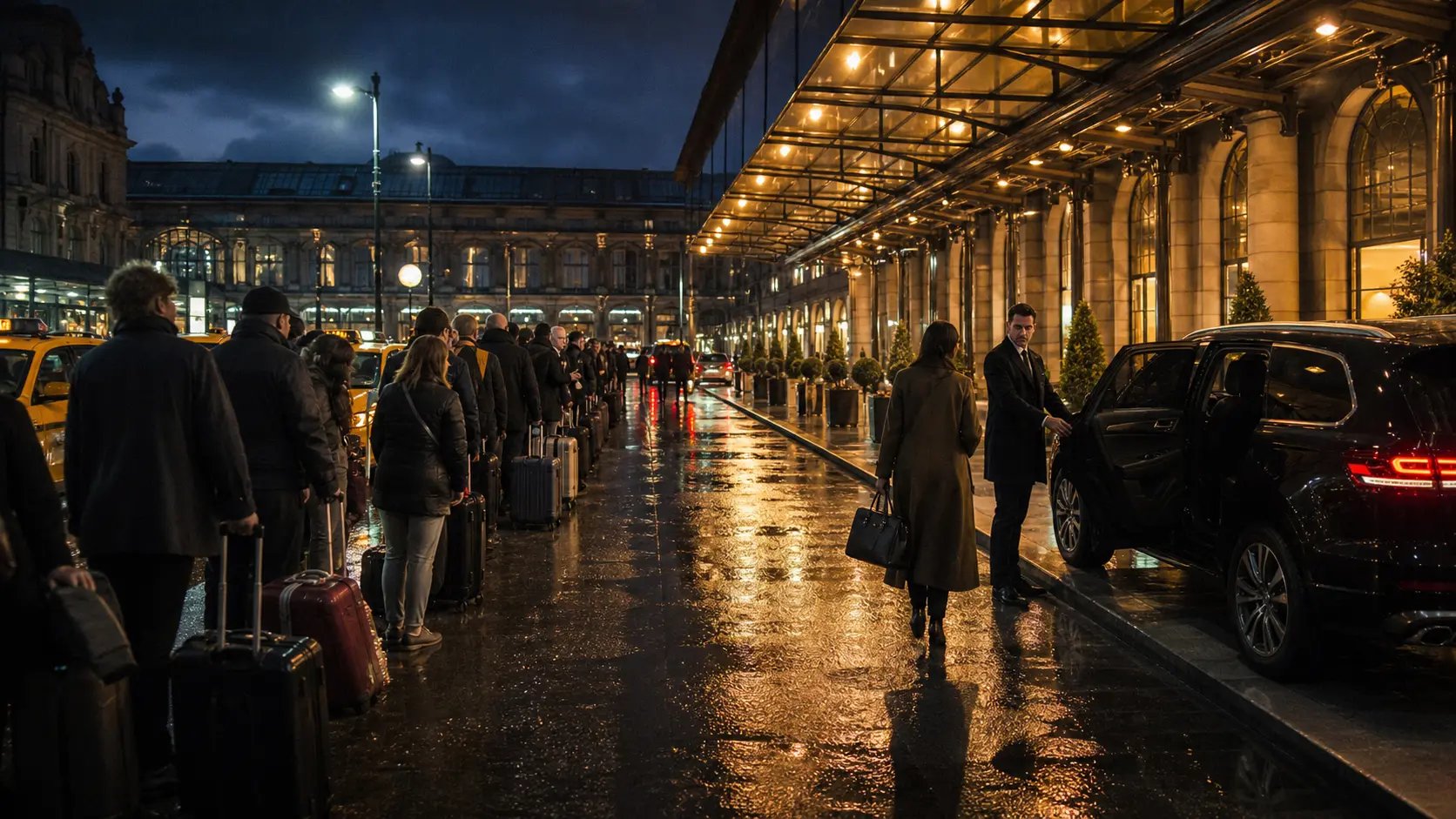
The solution is an absolute refusal to negotiate on the curb. Elite travelers eliminate transit anxiety entirely through digital pre-booking. For intercity travel or fair-price hailing, utilizing inDrive for transparent, negotiated rides puts the power back in your hands, ensuring the price is locked before you ever open the car door.
Furthermore, if you have a long layover or arrive hours before your Airbnb check-in, do not drag your heavy suitcases through cobblestone streets. Not only is it physically exhausting, but it marks you instantly as a prime target for pickpockets. Smart travelers utilize networks like Radical Storage to safely lock away their bags, allowing them to blend in seamlessly and explore unburdened.
Chapter 6: Attractions, Fake Tours, and the “Skip-The-Line” Illusion
Let’s examine the anatomy of the “Museum Trap.” You travel to Paris to see the Louvre, or to Rome for the Vatican. You arrive at 9:00 AM, only to find a line of exhausted tourists winding around the block, baking in the sun for three hours. Desperation sets in. Suddenly, a very official-looking individual with a badge approaches you offering an “exclusive, private VIP skip-the-line tour” for a highly inflated cash price.
This is a classic exploitation scenario. Often, these street vendors are selling fake tickets, or they group you with 40 other people for a mediocre, rushed tour that skips nothing. The Honest Guide to Avoiding Tourist Traps dictates that you must never, under any circumstances, buy tickets from street vendors near major monuments.By strictly following The Honest Guide to Avoiding Tourist Traps, you will bypass these street-level scammers and secure your digital entry without any friction.

To outsmart the masses, your access must be secured digitally, weeks in advance. True fast-track entry is linked directly to the venue’s internal API. By utilizing official partners like Tiqets to secure instant barcode entry, or leveraging our advanced Viator tour booking strategies, you generate a secure QR code on your phone. You simply walk past the miles of waiting tourists, scan your phone at the turnstile, and enter. This is not a luxury; it is basic time-management mathematics. In travel, your time is your most expensive asset.
Chapter 7: Specific Regional Threats (Americas, Asia, Middle East)
While the psychological principles of the tourist trap are universal, the execution is highly regional. A sophisticated travel architect must adapt their defensive posture based on geography. If you have studied our 2026 VIP Travel Blueprint, you understand that regional intelligence is paramount.Customizing your defensive strategy based on geography is a critical lesson deeply embedded inside The Honest Guide to Avoiding Tourist Traps.
The Americas: Cartel Proxies and Express Kidnappings
In Mexico and parts of Latin America, the traps can carry severe physical risks. The “Tepito” market in Mexico City or the chaotic borders of Tijuana are not places for casual strolling. Hailing street taxis at night in these areas exposes you to “Express Kidnappings,” where victims are forced to withdraw money from multiple ATMs. Stick fiercely to vetted ride-hailing apps or pre-arranged private drivers. In the Caribbean (like the Dominican Republic or Jamaica), the traps often revolve around predatory “timeshare” presentations disguised as free luxury excursions. If the offer requires a “90-minute presentation,” decline immediately.
Southeast Asia: The Money Changer Mirage
In hubs like Bali or Bangkok, the most pervasive trap is the rigged currency exchange booth. They advertise impossibly favorable exchange rates on a whiteboard down a dark alley. Once you hand over your cash, they use sleight of hand (literally dropping bills behind the counter) to shortchange you. The defense is absolute: only use official bank ATMs (preferably inside the bank lobby) or pay digitally using a zero-fee travel card.
The Middle East & North Africa: The “Helpful Local”
In the souks of Marrakech or the bazaars of Istanbul and Cairo, the trap begins with overwhelming hospitality. A “helpful local” offers to guide you out of the labyrinthine market or show you a “secret tannery.” Once you arrive, you are ushered into a high-pressure carpet or leather shop, and the “free guide” suddenly becomes aggressive, demanding an extortionate tip for his services. Remember Chapter 1: Do not accept unsolicited help. Use offline GPS maps and navigate confidently.

Chapter 8: The Art of the Souvenir – Escaping the Plastic Illusion
Let us end with the most physical manifestation of the tourist trap: the souvenir shop. Walk down the main artery of any major tourist city, and you will see identical shops selling identical, mass-produced plastic junk. These items are overwhelmingly imported from overseas factories, possessing absolutely zero cultural connection to the city you are visiting.
Purchasing these items does not support the local economy; it supports global manufacturing conglomerates. The Honest Guide to Avoiding Tourist Traps advocates for “Slow Shopping.” Seek out back-alley artisan workshops, local ceramists, indigenous textile weavers, and independent artists. Not only will your purchase hold genuine cultural weight and aesthetic value, but your money will directly support the generational craftsmanship of the local community.Embracing slow shopping and supporting real artisans perfectly encapsulates the ethos of The Honest Guide to Avoiding Tourist Traps.
The Final Verdict: Mastering the Art of Silent Luxury
To read The Honest Guide to Avoiding Tourist Traps is to accept a harsh reality: the modern travel industry is not designed to nurture your soul; it is designed to extract your wealth. But armed with strategic foresight, psychological awareness, and the right digital infrastructure, you become impervious to the noise.
Your ultimate takeaway from The Honest Guide to Avoiding Tourist Traps should be the realization that your travel time is your most precious asset.

You stop standing in three-hour ticket queues. You stop eating overpriced, generic food. You stop falling victim to the frantic anxiety of the airport taxi rank. Instead, you glide seamlessly through your journey, experiencing the profound beauty of Silent Luxury. The world is too vast, and your time is too valuable, to spend it caught in a trap. Step out of the queue, look beyond the neon signs, and reclaim the authentic art of exploration.
Executive Briefing: High-Level FAQ
What is the most dangerous new tourist trap in 2026?
The digital threat of “Quishing” (QR Code Phishing) and AI-generated “Ghost Bookings” (fake luxury villa listings on major platforms) represent the highest financial risks. Rely exclusively on secure, verified digital networks.To stay entirely protected against these digital threats, keep The Honest Guide to Avoiding Tourist Traps bookmarked for your next international deployment.
How do I spot a tourist trap restaurant immediately?
Apply the rules from The Honest Guide to Avoiding Tourist Traps: Beware of massive menus with heavily saturated photos, aggressive hosts outside begging you to come in, and a customer base entirely devoid of locals.
Are “skip-the-line” tickets a scam?
If bought from a street vendor in cash, yes. If secured digitally through an official API partner (like Tiqets or Klook) offering instant QR code delivery, they are an essential tool for bypassing hours of waiting and saving your sanity.
How can I avoid the overtourism crowds in Europe?
Embrace the “Destination Dupe.” Instead of suffocating in Venice or Barcelona, pivot to equally stunning but less commercialized regions like Ljubljana, Slovenia, or the rugged coastlines of Albania. It offers superior authenticity at a fraction of the cost.