The Honest Ultimate Carry-On Packing List 2026: Stop Overpacking & Master Your Flight Like a Pro
We are TICKETSHUNTERS, and we have a confession to make: checking a bag in 2026 is a rookie mistake. It costs you time, money, and your sanity. Welcome to the only Carry-On Packing List you will ever need—built on ruthless honesty, zero fluff, and decades of global travel experience.

Let’s address the elephant in the departure lounge. In 2026, airline baggage fees have skyrocketed to absurd levels, and lost luggage statistics are a nightmare. You don’t need “more stuff” to have a great trip; you need a smarter strategy. Whether you are flying long-haul from New York to Tokyo, or taking a quick puddle-jumper across Europe, mastering your carry-on packing list is the ultimate flex.
Our philosophy at Ticketshunters is built on Honesty and Authority (E-E-A-T). We don’t just aggregate tips; we test them. We’ve flown millions of miles, navigated the strictest low-cost carriers, and unlocked the secrets of minimalist luxury. In this comprehensive guide, we are tearing down the myths of overpacking. Prepare for an intensive deep-dive into smart tech, TSA regulations, capsule wardrobes, and the psychological hacks that will transform you from an anxious overpacker into a sleek, fast-moving travel architect. If you’re looking for the absolute best flight deals to test your new skills, check out our ruthless CheapTickets Flight Deals Review.
The Psychology of Overpacking: Why We Pack Our Fears
Before we list the physical items, we must address the mental baggage. Overpacking is rarely about logic; it’s a psychological response to the unknown. We pack four extra t-shirts “just in case.” We pack three pairs of shoes for scenarios that will statistically never happen.
Fear Of Missing Out (FOMO) on outfit choices leads to heavy bags, physical strain, and exorbitant baggage fees.
The 2026 Industry Reality: Airlines have weaponized space. With base fares dropping, carriers rely on ancillary revenue (bag fees, seat selection) to survive. A standard checked bag now averages $40-$70 each way. Over a year of travel, that is hundreds of dollars incinerated. The only winning move is not to play their game. Pack a perfectly optimized carry-on packing list and walk right past the baggage carousel. Need a car when you land? Skip the counter queues and compare global rates with our trusted Qeeq Direct Review.

1. The Foundation: Digital Wallet & Travel Documents
In 2026, the paper boarding pass is an artifact. Your smartphone is your command center. However, tech fails, batteries die, and international borders still require physical verification. The golden rule of a bulletproof carry-on packing list is redundancy.
-
✓
Biometric Passport & RFID-Blocking Wallet: Ensure your passport has at least 6 months of validity. Use an RFID-blocking wallet to prevent digital theft in crowded terminals. -
✓
Digital and Physical Backups: Store digital copies of your passport, visas, and insurance on a secure cloud drive. Carry one physical photocopy tucked into a hidden compartment of your bag. -
✓
Lounge Access Cards: Don’t sit at the crowded gate. Keep your Priority Pass or elite airline cards accessible. Discover how to live like a king at the airport in our Priority Pass Review 2026.

2. Smart Electronics & Travel Tech Organizers
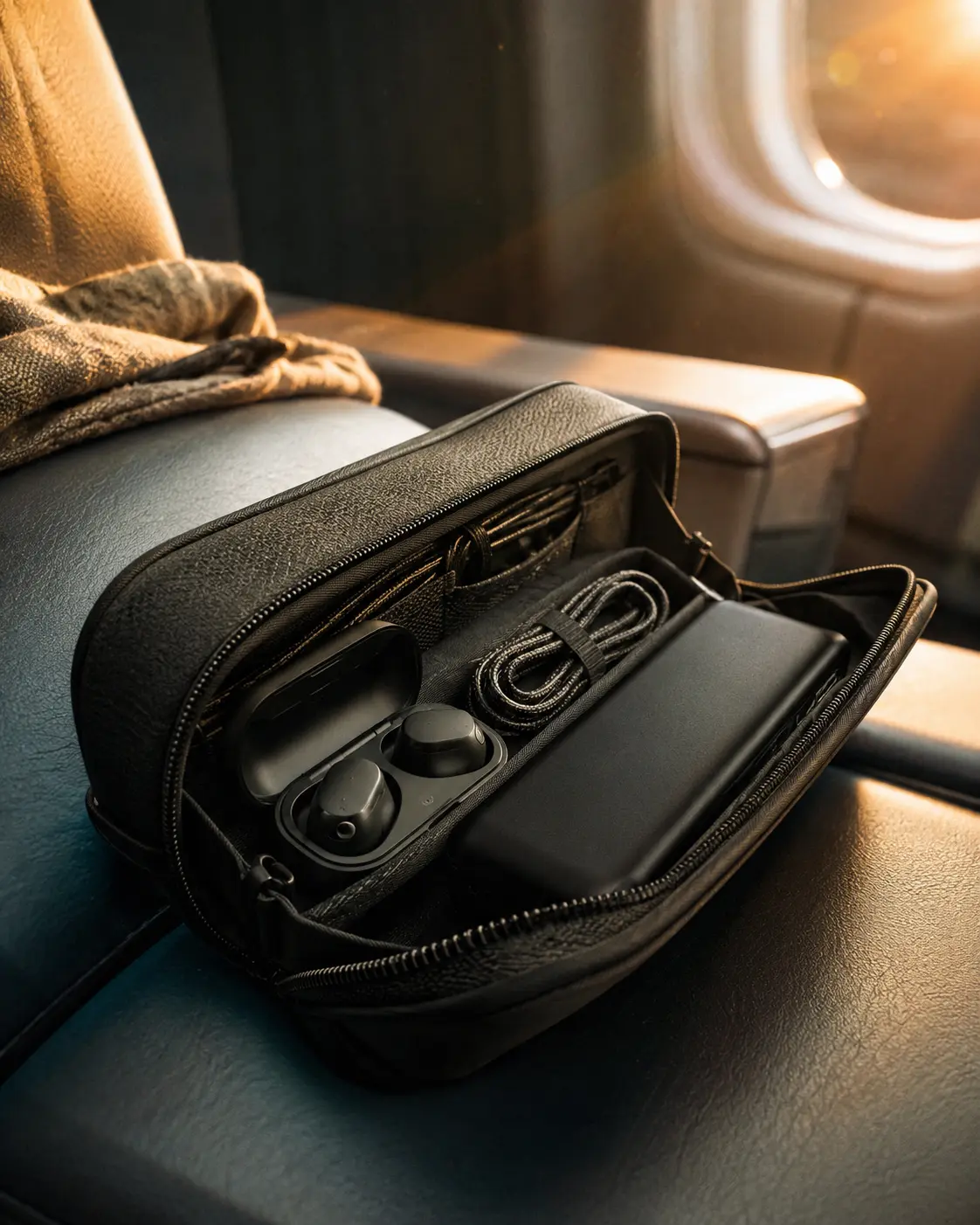
A chaotic jumble of cables at the bottom of a backpack is the hallmark of an amateur. The ultimate carry-on packing list demands a dedicated tech pouch. As modern travelers, we are entirely dependent on our devices for navigation, translation, and entertainment.
The Non-Negotiable Tech Essentials
Pro Tip: Never check lithium-ion power banks; international aviation laws require them to be in your carry-on luggage to prevent cargo fires. Read official TSA guidelines on battery capacities.
| Tech Item | Why You Need It in 2026 |
|---|---|
| Universal GaN Travel Adapter | Gallium Nitride (GaN) chargers are 50% smaller and charge devices 3x faster. Essential for layovers. |
| 20,000mAh Power Bank | Keeps your phone alive when digital boarding passes and mapping apps drain your battery. |
| Active Noise-Canceling Earbuds | Block out engine roar and crying babies. Over-ear headphones are great, but earbuds save precious bag space. |
| Bluetooth Audio Transmitter | Plug this into the airplane’s seatback screen to use your wireless AirPods or Sony buds. A total game-changer. |
3. Compression Packing Cubes & The Capsule Wardrobe
How do you fit 10 days of clothing into a standard 22 x 14 x 9 inch carry-on bag? The answer lies in two highly guarded travel secrets: Compression Packing Cubes and the Capsule Wardrobe Strategy.
A capsule wardrobe means packing items that all coordinate. Think neutral bases (black, navy, beige) with interchangeable accent pieces. If every top matches every bottom, a mere 8 items of clothing can create over 20 unique outfits. Are you flying out for the ultimate sports event? Read how we packed perfectly in our Honest 2026 World Cup Travel Guide.
The Rolling vs. Folding Debate
Let’s settle this once and for all: Roll your clothes. Rolling prevents hard creases and squeezes out excess air. Once rolled, place them inside a compression packing cube. Zip the first zipper to close it, then zip the secondary compression zipper to physically crush the air out, reducing the volume by up to 40%. This is the cornerstone of any effective carry-on packing list.

4. TSA-Approved Liquid Toiletries & Clear Bags
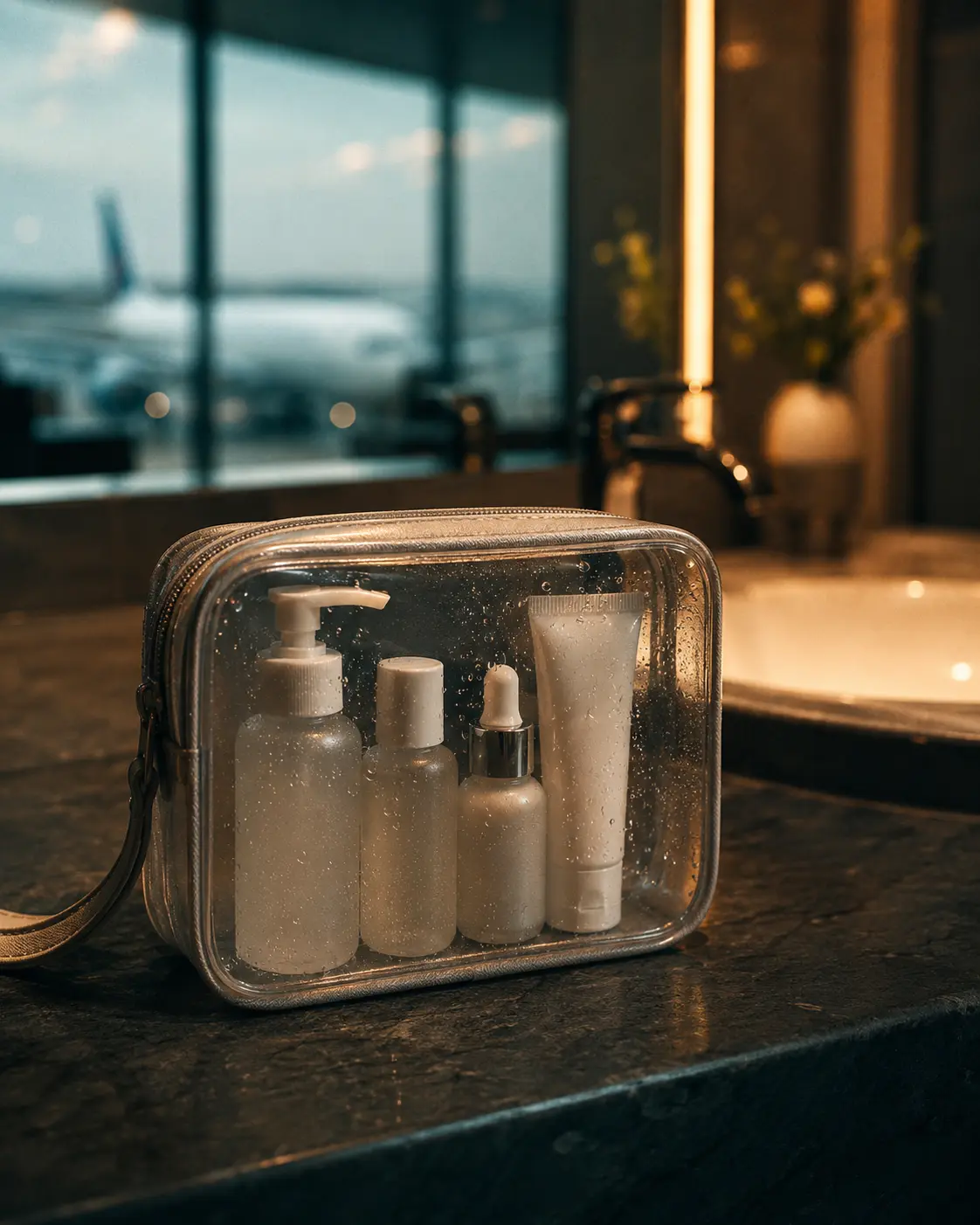
The 3-1-1 rule still haunts travelers in 2026. You are allowed containers of 3.4 ounces (100ml) or less, all fitting into one quart-sized, clear, resealable bag. Security agents are unforgiving; full-sized shampoo bottles will be unceremoniously thrown in the trash.
The TICKETSHUNTERS Hack: Transition to solid toiletries. Solid shampoo bars, solid perfume, and toothpaste tablets do not count towards your liquid limit. This frees up precious space in your clear bag for essential skincare and sunscreens. Invest in a premium, TSA-approved clear toiletry bag made of durable TPU rather than a flimsy disposable ziplock. It looks professional and speeds up your security scan.
5. Deep Dive: The Under-Seat Personal Item
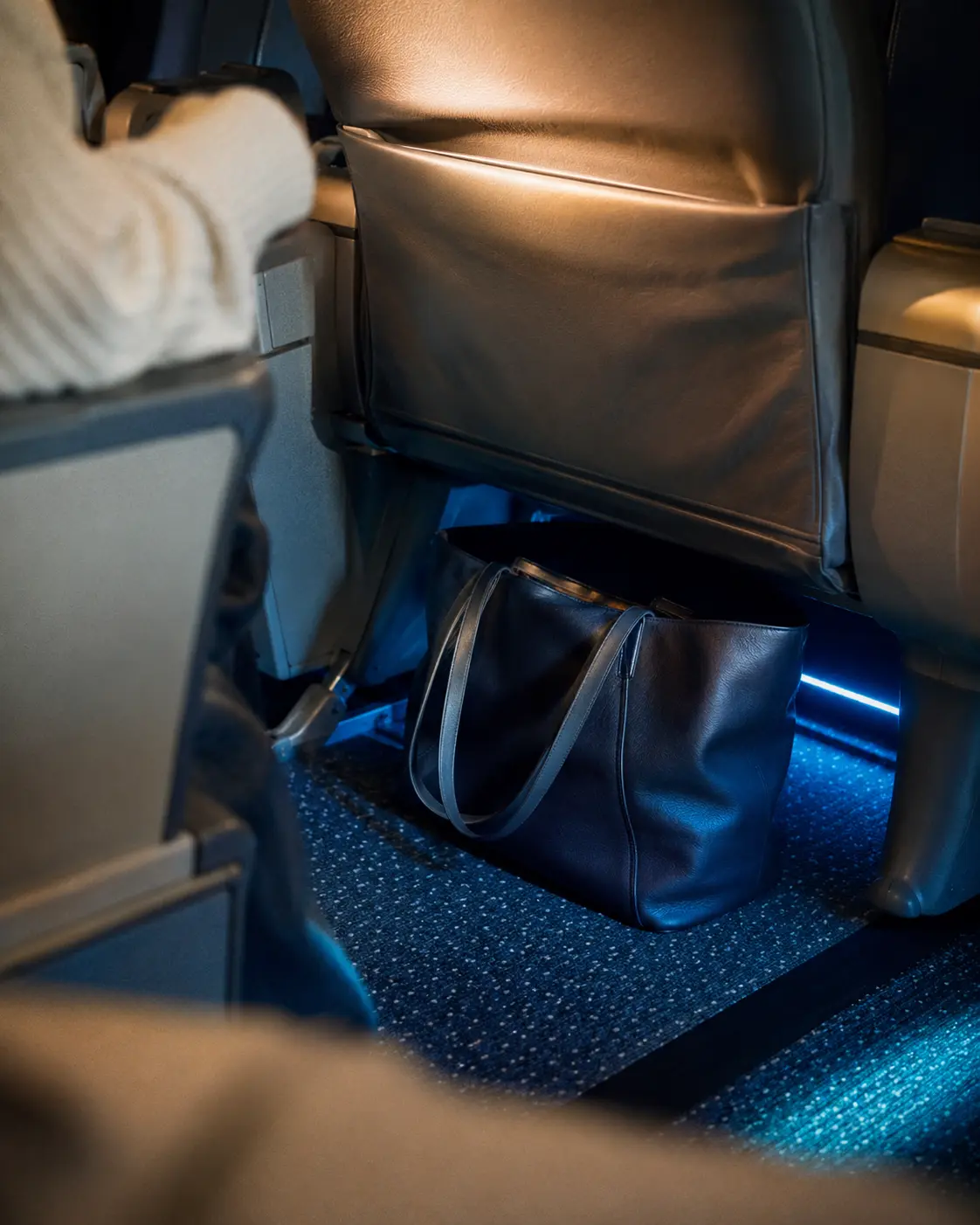
Most airlines allow one carry-on bag (the overhead bin) and one personal item (under the seat in front of you). Amateurs waste their personal item limit on a tiny purse or a duty-free bag. Pros use a specifically designed “weekender” backpack or a sleek tote that maximizes every cubic inch of the under-seat space.
Your personal item is your “In-Flight Command Module.” Once you board, you should never have to stand up to access the overhead bin. If you want to check out the world’s best museums without waiting in ticket lines, pre-book your digital tickets on your phone—check out our Tiqets Review Museum Skip The Line guide.
What Goes in the Personal Item?
- 📌 Tech Pouch: (Tablets, e-readers, headphones, cables)
- 📌 Liquids & Toiletries: (For easy removal at security)
- 📌 Travel Documents & Passport
- 📌 Medications: (Never put prescription meds in an overhead or checked bag)
- 📌 Valuables: (Jewelry, cash, keys)
6. Long-Haul Flight Comfort & Hydration
Flying 14 hours in economy class is a test of human endurance. Your carry-on packing list must include survival gear. The cabin air is incredibly dry (often less than 20% humidity), causing dehydration, fatigue, and jet lag.
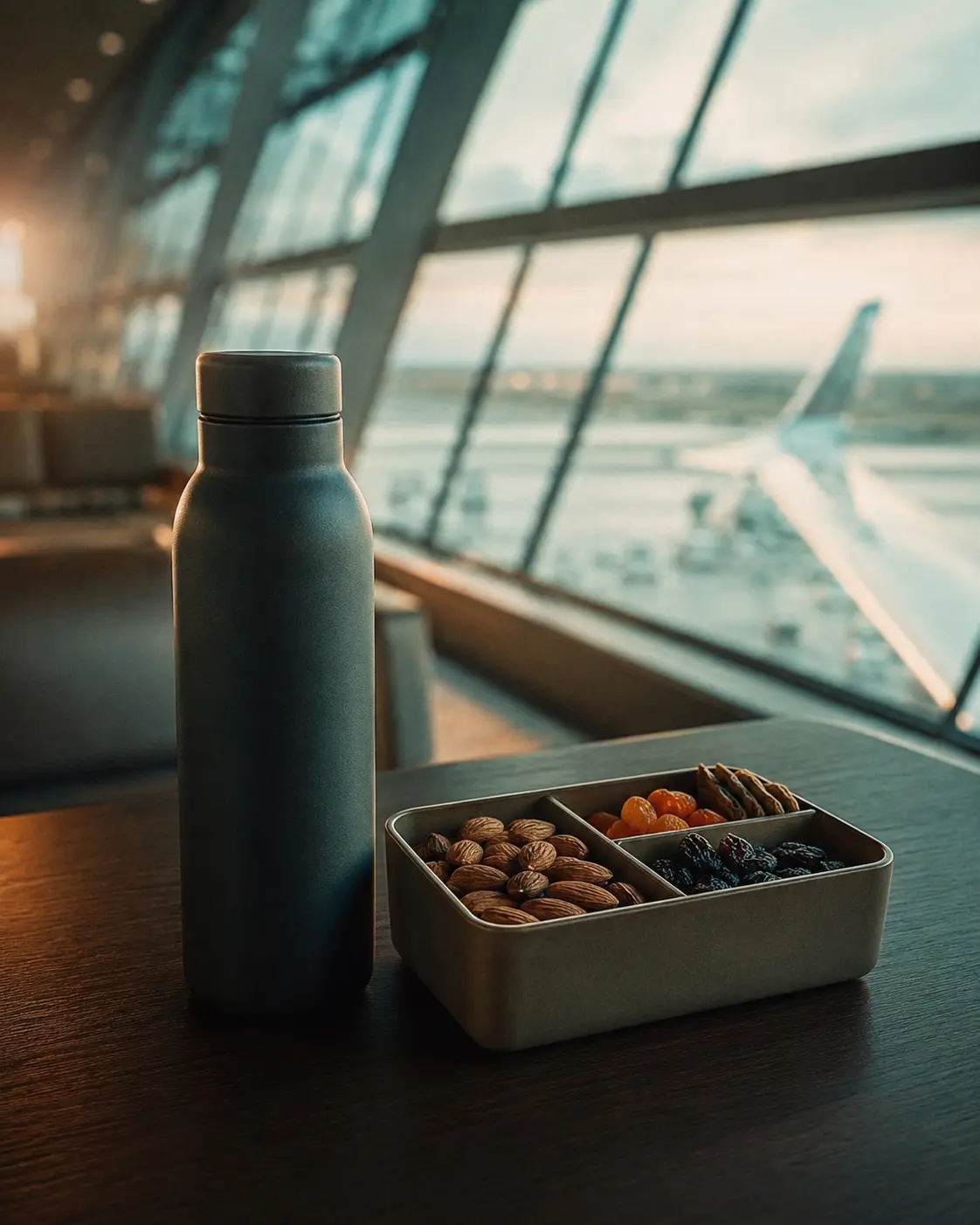
Pack a collapsible, reusable silicone water bottle. Take it empty through TSA security, and fill it up at a water fountain near your gate. Do not rely on the tiny plastic cups the flight attendants hand out every three hours. Staying hydrated is the number one defense against jet lag. Combine this with travel snacks (protein bars, almonds) to avoid expensive and highly processed airport food.
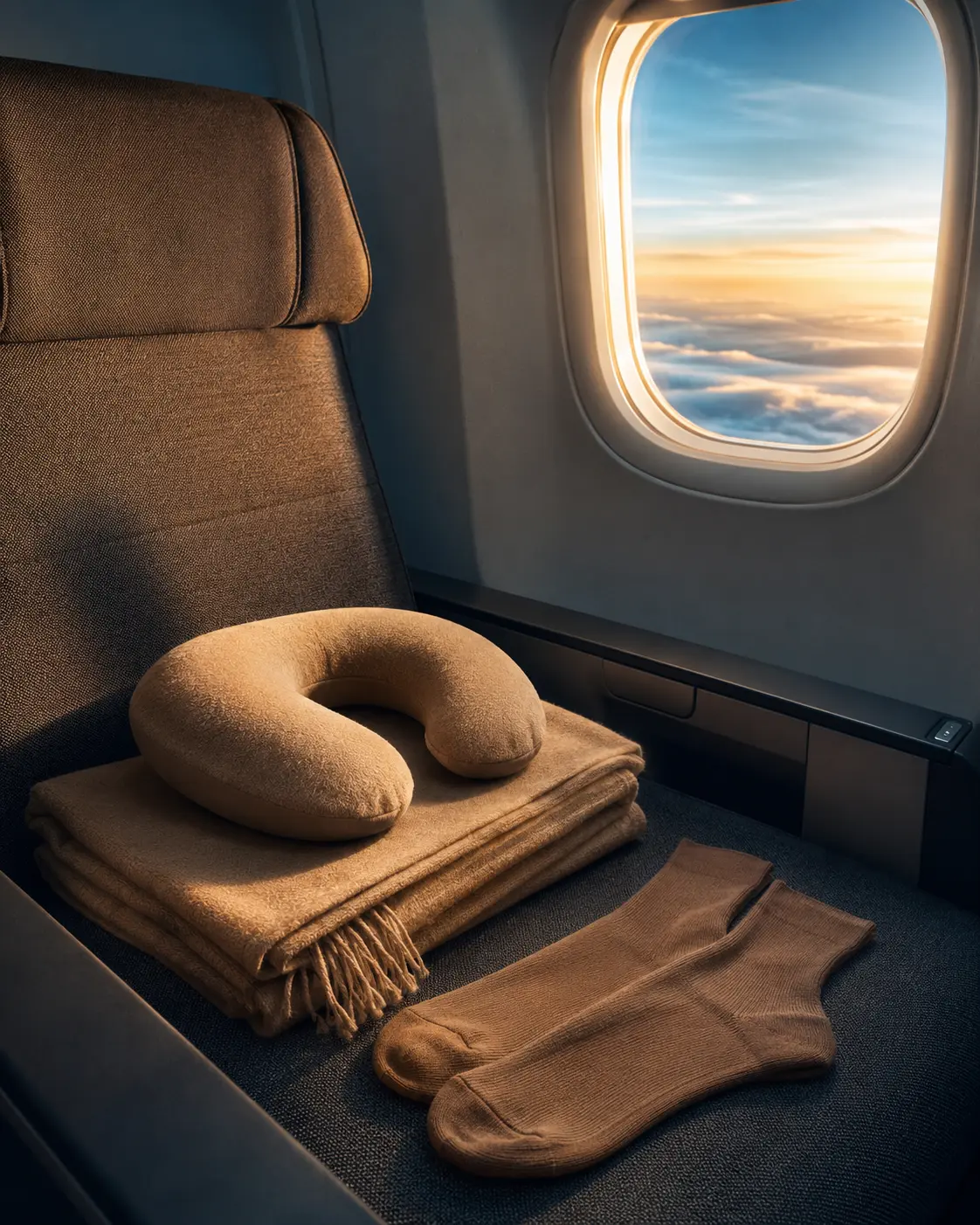
For physical comfort, skip the bulky U-shaped neck pillows. In 2026, structured neck wraps (like the Trtl pillow) hold your head ergonomically and pack down flat. Combine this with a lightweight merino wool layer or a cashmere wrap, as airplane cabins fluctuate wildly in temperature. If you want to bypass the economy grind entirely, you might be interested in our guide on how the elite fly: Villiers Jet Empty Legs Hack.
7. User Scenarios: Real-World Packing Architecture
Let’s put theory into practice. The true test of a carry-on packing list is how it adapts to specific travel scenarios.
Scenario A: The 3-Day Business Trip (London to Frankfurt)
The Strategy: Speed and professionalism. You will carry a sleek hardshell spinner (20-inch) and a premium leather laptop briefcase (personal item). Your wardrobe consists of one suit worn on the plane (to prevent wrinkles and save space), two fresh dress shirts folded in a dedicated garment sleeve, and casual evening wear in a compression cube. Result: Zero bag-drop lines. Straight from the tarmac to the boardroom.
Scenario B: The 14-Day Southeast Asia Backpacking Trip
The Strategy: Agility and climate control. You will use a 40L travel backpack (fits in overhead bin). The climate is hot and humid, meaning clothes are thin but require frequent changing. Use three small packing cubes categorized by item type (shirts, bottoms, undergarments). Rely heavily on solid toiletries to beat the liquid ban. Planning an epic boat trip while there? Check out our Searadar Review Yacht Charter Hack.

8. The Golden Rules of Security & Boarding
Having the perfect carry-on packing list means nothing if you act like a deer in the headlights at the TSA checkpoint. You must operate with military precision.
When you approach the x-ray machine, you should already have your phone and wallet secured inside your personal item (do not put loose items in the plastic bins). Your laptop should be easily sliding out of its dedicated sleeve. Your liquids bag must be on top of your luggage, instantly grabbable. Once through, do not reassemble your life at the belt; grab your bins, move to the repacking benches, and let the flow of traffic continue. For an effortless hotel booking experience globally, refer to our Trip.com Travel Deals guide.
Conclusion: The Freedom of Less
Mastering your carry-on packing list is not about deprivation; it is about liberation. It’s the freedom to hop on an earlier standby flight because you have no checked bags holding you back. It’s the freedom to take public transport from the airport to your hotel without sweating profusely while dragging dead weight. It’s the freedom to treat yourself to an unbelievable dinner at your destination, funded entirely by the baggage fees you didn’t pay. Speaking of phenomenal dinners, you have to read our World’s Best Michelin Restaurants 2026 guide.

Travel shouldn’t be a burden. Follow this list, trust the process, and reclaim your power as a smart traveler. At TICKETSHUNTERS, our pledge to Honesty means we won’t sugarcoat it: packing takes discipline, but the reward is a seamless, friction-free journey across the globe.
Frequently Asked Questions (FAQ)
Is a backpack or a suitcase better for carry-on?
It depends on your destination. For European cobblestones or Southeast Asia, a 40L travel backpack is vastly superior. For smooth airport terminals and business trips, a 4-wheel hardshell spinner saves back strain.
Do airlines actually weigh carry-on bags in 2026?
Yes. While US carriers are relatively lax with weight (focusing on dimensions), budget carriers in Europe (like Ryanair) and Asia strictly weigh bags. The standard limit is usually 7kg to 10kg (15-22 lbs). Always weigh your bag at home.
Can I bring a razor on an airplane?
Disposable razors and cartridges are permitted in your carry-on luggage. Safety razor blades (the loose, double-edged blades) and straight razors are strictly prohibited and must be checked.