Chasing Flavors: The Ultimate 2026 Guide to Global Gastronomy Tourism
(Skip the Tourist Traps)
Gastronomy tourism is no longer a niche pursuit for food critics and culinary school graduates. In 2026, it is the fastest-growing form of travel on the planet — and if you have never eaten your way through a foreign city with genuine intention and a willingness to go off-map, you have been missing the truest version of travel that exists.
This guide was built with a single promise: no glossy hotel restaurant recommendations, no paid placements, no filtered-for-tourists itineraries. What you will find here is the distillation of thousands of kilometres of honest food travel — from the backstreet ramen counters of Tokyo to the hillside mole kitchens of Oaxaca — with real data, real comparisons and the specific insider knowledge that separates a life-changing food trip from an overpriced disappointment.
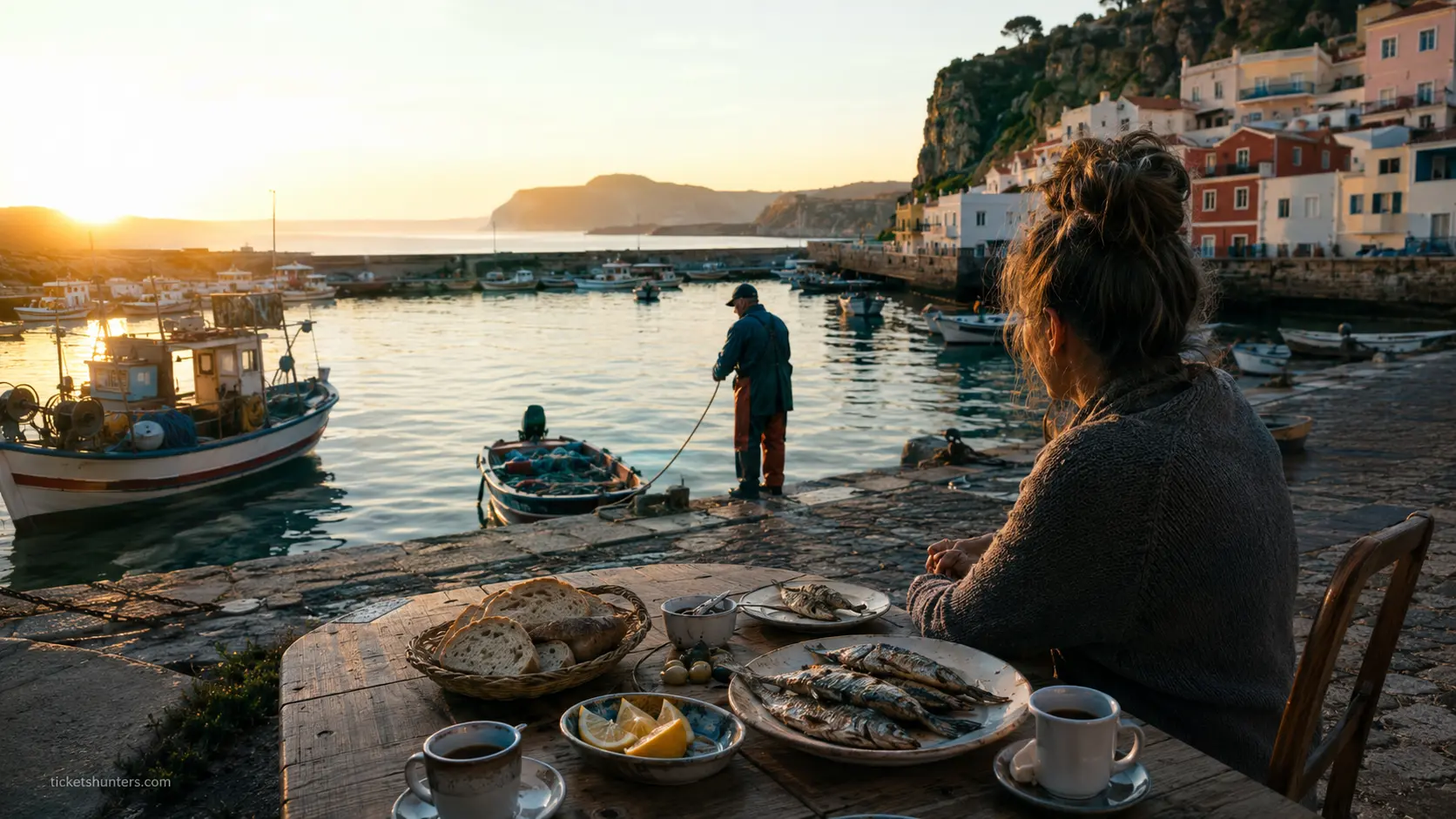
Every great food journey has a starting point. Ours began on a sun-drenched Lisbon harbor terrace with the finest pastéis de nata we had ever tasted. This is gastronomy tourism at its purest.
What Is Gastronomy Tourism? The 2026 Definition That Rewrites Everything
The United Nations World Tourism Organization defines gastronomy tourism as travel whose primary motivation is food — visiting a place to taste, learn and experience its food culture as the core purpose of the journey. But this clinical definition barely scratches the surface.
True gastronomy travel is the act of understanding a culture through its most honest medium. Food does not lie. The ingredient list of a Basque pintxo tells you more about the Atlantic coastline’s ecology than any guidebook. The spice balance of a Marrakech tagine carries 600 years of trade route history. A bowl of Penang char kway teow is an edible record of Chinese-Malay-British colonial fusion. When you travel for food, you travel for truth.
Gastronomy Tourism vs. Regular Food Travel: The Critical Difference
Many travellers eat well on holiday. Very few practise genuine culinary tourism. The distinction matters because it determines the quality of your experience — and whether you come home transformed or merely fed.
| Dimension | ❌ Regular Food Travel | ✅ True Gastronomy Tourism |
|---|---|---|
| Where you eat | Hotel restaurants, TripAdvisor top 10 | Local markets, family restaurants, street stalls |
| When you eat | Tourist mealtimes | When locals eat (often 2-3 hours different) |
| How you choose | Online reviews (filtered) | Local recommendations, language-only menus |
| What you pay | 3-5x local price | Local price (often 70-90% cheaper) |
| What you remember | A nice meal | A life-altering experience |
| Cultural depth | Surface level | Genuine exchange and understanding |
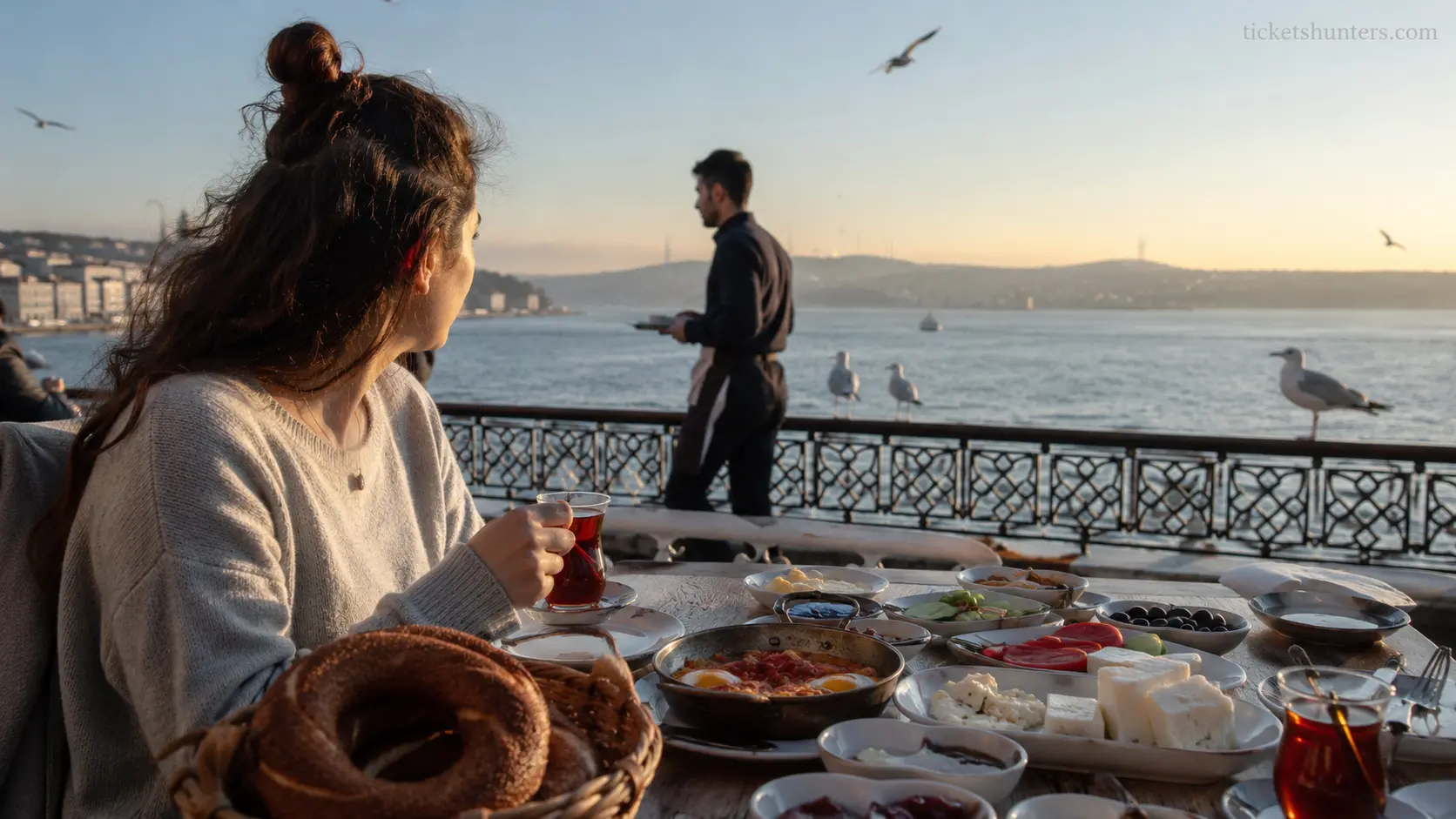
The legendary Turkish breakfast spread on Istanbul’s Bosphorus shore: 30+ small dishes, two hours, and an understanding of Turkish hospitality that no museum can convey.
Why Gastronomy Tourism Is the Fastest-Growing Travel Segment in 2026
Three converging forces are reshaping the global travel industry in 2026 — and all three point directly to the rise of culinary travel:
- The authenticity recession: Post-pandemic travellers are allergic to manufactured experiences. 67% of Gen-Z travellers specifically avoid mainstream tourist circuits in favour of local immersion. Food is the most direct route to authenticity.
- Social media food discovery: TikTok and Instagram have democratised food discovery. A 30-second video of a hidden Oaxacan mole kitchen can generate 40 million views and 6,000 bookings in a week. Food is now the primary driver of destination virality.
- Michelin’s global expansion: Our expert guide to the world’s best Michelin restaurants in 2026 documents the dramatic expansion of Michelin recognition into Asia, Latin America and the Middle East — creating new aspirational food tourism corridors that simply did not exist five years ago.
Europe's Gastronomy Tourism Crown Jewels: Where the Old World Still Leads
Europe invented the modern notion of gastronomy as an art form. Brillat-Savarin defined it, Escoffier codified it, and three distinct European regions continue to set the global standard for food travel in 2026. But the smart traveller knows which ones to visit — and more importantly, how to access them at their most honest.
The Alps Dining Train: Gastronomy Tourism at 1,000 Metres
One of the most underrated gastronomy tourism experiences in Europe is something that combines two of the continent's greatest pleasures: Alpine scenery and precision dining. The dining trains of Switzerland and Austria have evolved dramatically in 2026, with curated multi-course menus featuring hyper-regional Alpine ingredients — Graubünden dried venison, Tirol mountain cheese, Engadin walnut torte — served as the most spectacular landscape on Earth scrolls past your window at 120km/h.
For train travel connections across Europe's gastronomy corridors, 12GO's European rail booking platform provides the most comprehensive multi-country rail search available, including the scenic dining routes that most booking sites don't index correctly.
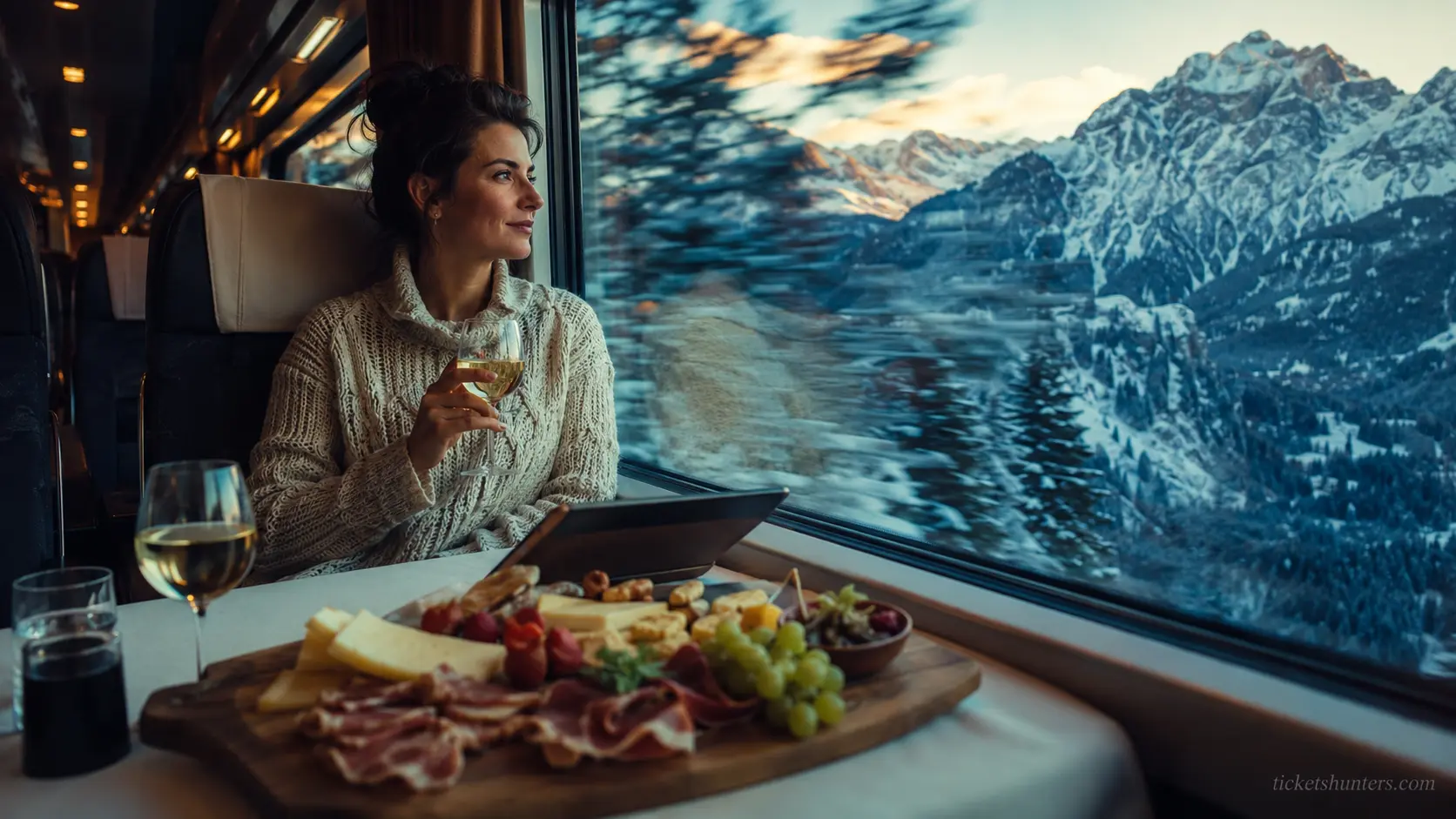
Dining at altitude: the Alpine train dining experience combines the world’s most spectacular scenery with hyper-regional mountain cuisine. A culinary experience unlike any other on the planet.
Basque Country — The World's Most Honest Food Culture
San Sebastián (Donostia) holds more Michelin stars per square kilometre than any city on Earth. But the Basque Country's greatest culinary secret is not its starred restaurants — it is the txakoli-soaked cider houses (sagardotegiak) where cod and Idiazabal cheese are consumed with the same reverence reserved for sacred rituals elsewhere.
The pintxo bars of the Old Quarter's Parte Vieja represent the most democratic fine dining in the world: extraordinary ingredients — Cantabrian anchovies, Ibérico pork, Txangurro crab — assembled on a slice of bread and available for less than €2.50 each. The rule: arrive at 1pm, eat standing, move every two bars. Never sit at a table in the pintxo zone. The locals never do.
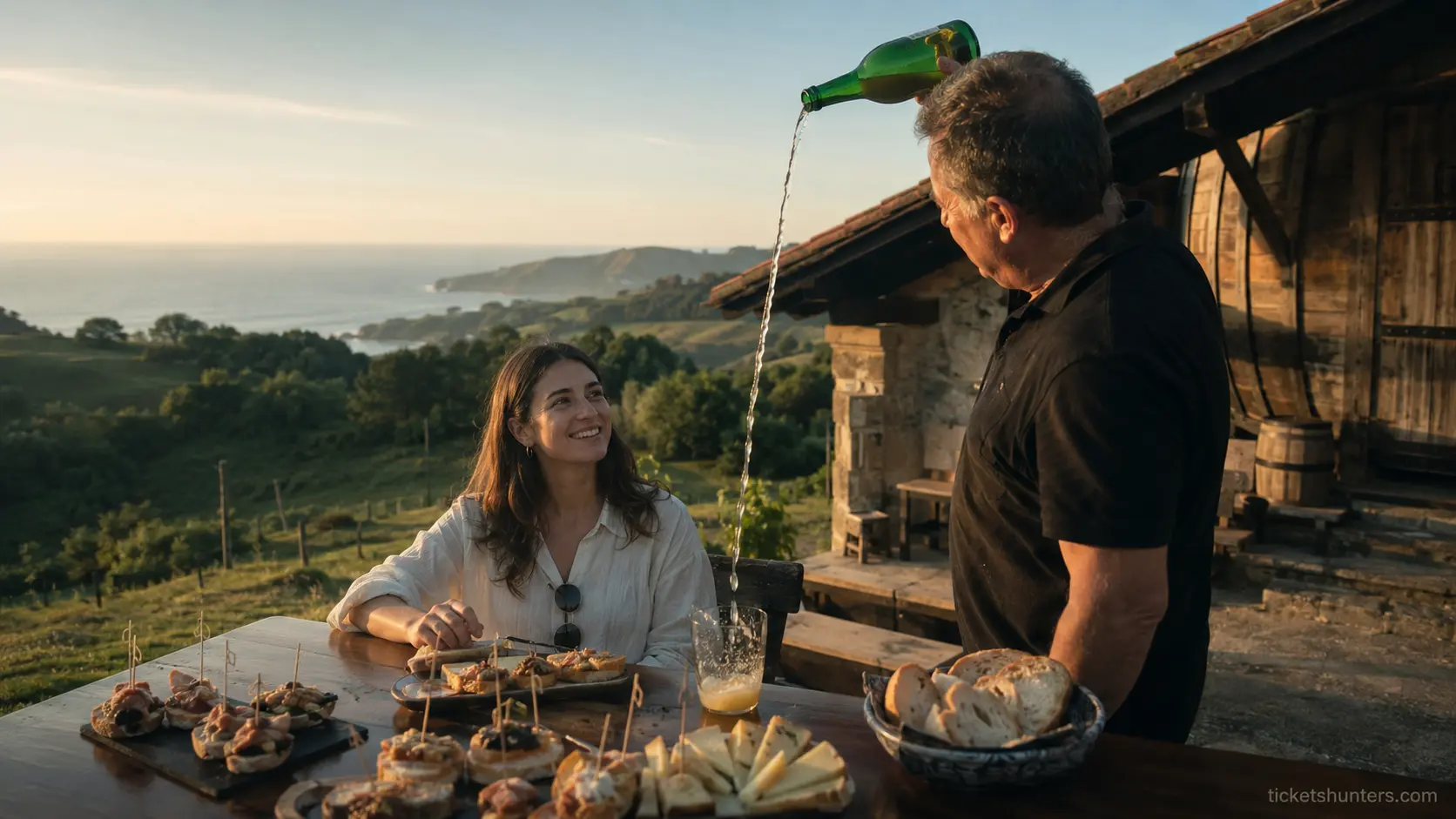
A Basque sagardotegi (cider house) in full swing: cod sizzling over oak coals, cider poured from a height of two metres, and pintxos built with an engineering precision that would humble most Michelin kitchens.
For self-guided deep-dives into Basque food culture that go well beyond the tourist trail, Wegotrip's self-guided audio food tours provide GPS-triggered local narration that transforms a walk through any food neighbourhood into a genuine cultural education. Their San Sebastián and Bilbao tours are particularly exceptional.
Tuscany — Slow Food's Sacred Homeland & Italy's Most Rewarding Food Region
The Slow Food movement was born 45 minutes from Florence, and its philosophical DNA is present in every farmhouse kitchen in Tuscany. The region's food philosophy is the antithesis of gastronomy tourism trap culture — which is ironic, given how many tourists pass through eating nothing but undistinguished bistecca and generic Chianti.
The Tuscan gastronomy experience that matters in 2026 is not a restaurant. It is a family agriturismo lunch at a vineyard in the Chianti Classico zone — three hours, five wines, seven courses, served by the family who grew every ingredient. It costs €45-65 per person and it is something no restaurant in the world can replicate.
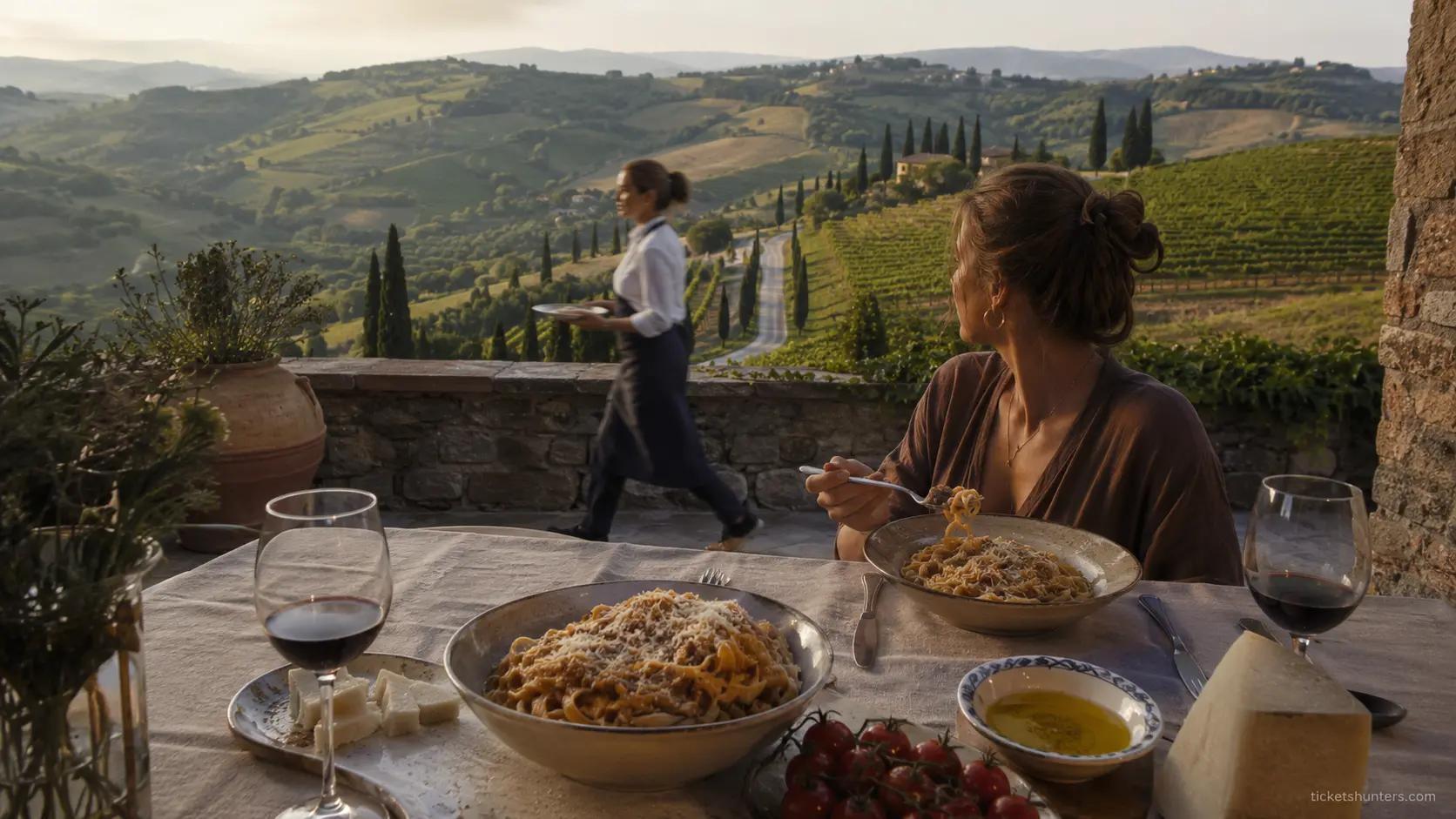
A Chianti vineyard lunch in Tuscany: three generations of the same family, five wines, and a ribollita that has been made to the same recipe for 90 years. This is the real Italian food tourism.
Getting between Tuscany's agriturismo properties requires reliable local transport. QEEQ's global car rental platform offers transparent pricing for Tuscan exploration — essential for reaching the wineries and farms that no public transport serves. For day trips from Florence or Siena, GetTransfer's fixed-price transfer service eliminates the unpredictability of rural Italian taxi pricing.
Asia's Gastronomy Tourism Revolution: Where Ancient Meets Extraordinary
Asia's food travel scene in 2026 is not a single story — it is ten simultaneous food revolutions happening in parallel. From Japan's hyper-refined culinary precision to Southeast Asia's explosive street food democracy, the continent offers the widest range of culinary tourism experiences on Earth — at every price point imaginable.
Tokyo Backstreet Ramen: Michelin Stars vs. The Hole-in-the-Wall Truth
Tokyo has more Michelin stars than any city in the world. This fact impresses people, and it should — but it is also one of the most misleading statements in food tourism, because the best food in Tokyo has no Michelin star and costs 900 yen.
The ramen counter in the backstreet of Shimokitazawa that is open from 11pm to 3am, serves one broth (tonkotsu, 30-hour cook), and seats eight people at a time — this is what culinary pilgrims cross the world to eat. Not the ¥30,000 kaiseki that makes the Instagram highlight reel.

11:30pm in Shimokitazawa, Tokyo: eight seats, one broth, a 30-year-old recipe, and the most honest bowl of ramen on the planet. This is what real culinary travel tastes like.
Penang — UNESCO's Street Food Capital & Asia's Greatest Hawker Culture
Penang, Malaysia, is the only place on Earth where a single hawker stall can have a three-generation waiting list of customers and a price list that hasn't changed since 2018. The island's food is a living UNESCO Heritage product — a collision of Hokkien Chinese, Malay, Tamil Indian and colonial British culinary traditions that should, by all rights, be incoherent but instead produces the most harmonious street food culture in the world.
The non-negotiable Penang culinary experiences in 2026:
- Asam Laksa at Air Itam: The stall at the base of Kek Lok Si Temple. Sour fish broth, tamarind, pineapple, torch ginger. The correct price is MYR 5.00. If you are quoted more, walk.
- Char Kway Teow at Lorong Selamat: Arrive by 7pm. Queue for 45 minutes. Order for two. This is the definitive version of a dish eaten daily by two billion people across Asia.
- Nasi Kandar at Line Clear: Open 24 hours. The mixed rice spread includes 20-40 curry options, assembled by a server who reads your face before you speak. Always order the fish head curry. Never say no to extra gravy.
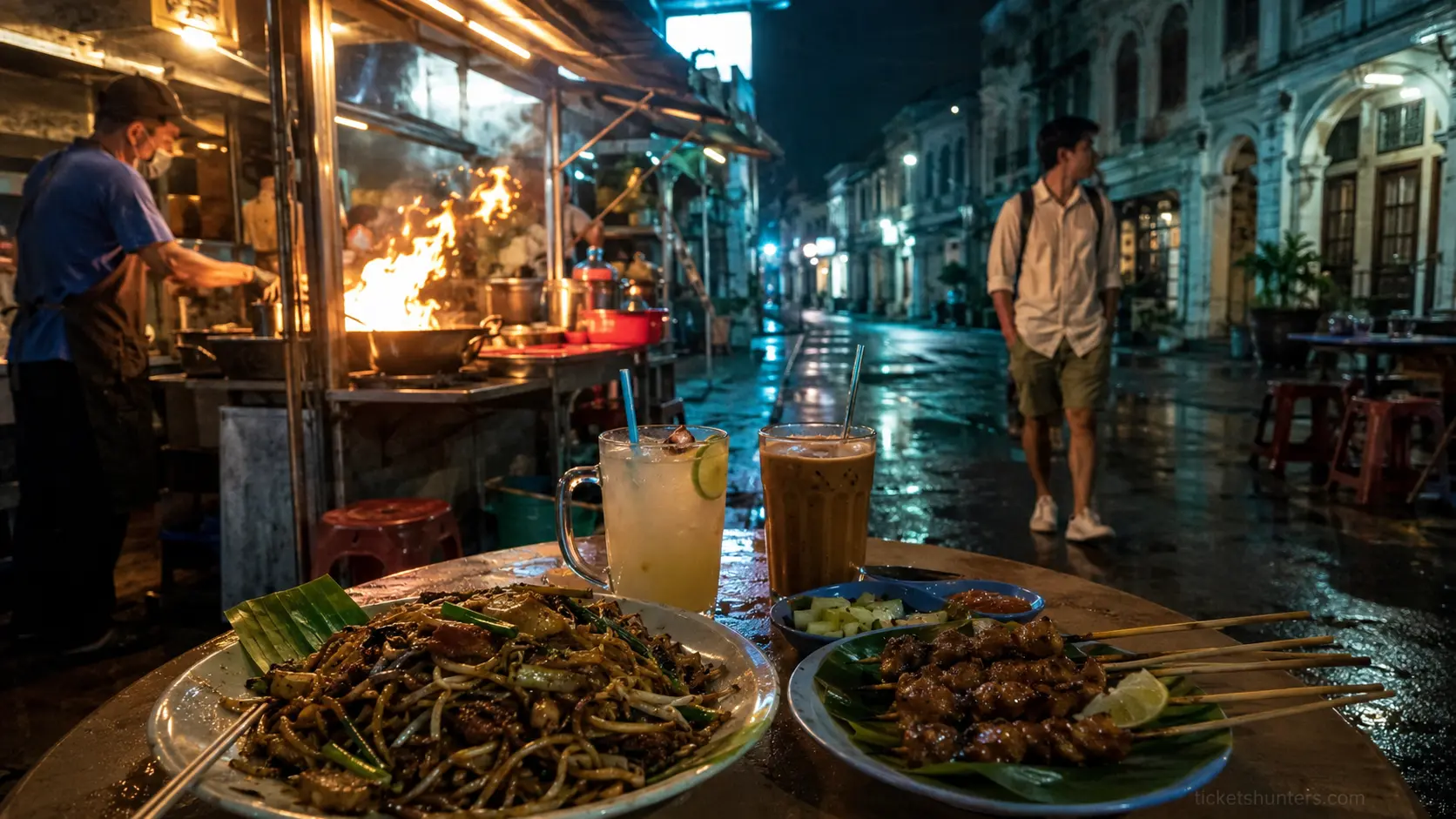
Penang's hawker lanes at dusk: 60 stalls, 200 years of culinary heritage, and a single plate of char kway teow that recalibrates everything you thought you knew about fried noodles.
Penang is a short flight from Kuala Lumpur, Bangkok or Singapore. Use Aviasales to find the cheapest regional flights into Penang International Airport (PEN) — regional routes in Southeast Asia are frequently 60-75% cheaper when booked 3-4 weeks in advance through fare comparison platforms.
Latin America: Gastronomy Tourism's Most Explosive Frontier in 2026
Two South American cities have collectively redrawn the global gastronomy map in the last decade. Lima and Oaxaca are no longer regional curiosities — they are pilgrimage sites for serious food travellers, each attracting a disproportionate share of the world's most food-passionate tourists. The question in 2026 is no longer whether to go, but how to go without being swallowed by the tourist infrastructure that has grown up around them.
Lima, Peru — The Ceviche That Rewrote the Rules of Latin American Cuisine
Lima is home to more restaurants per capita in the “World's 50 Best” list than any city outside Europe. But Lima's culinary genius is not its fine dining establishments — it is the fact that the same culinary philosophy that drives Central and Maido trickles down to a USD 3 ceviche cart in Miraflores Market.
Leche de tigre (tiger's milk — the citrus marinade from ceviche) is consumed as a morning pick-me-up. Anticuchos (marinated beef heart skewers) are the street food equivalent of a national flag. Causa rellena (layered potato terrine) demonstrates a 3,000-year-old Andean ingredient handled with modern precision. Lima's food is not “becoming” world-class — it has been world-class for centuries, and the world is only now catching up.
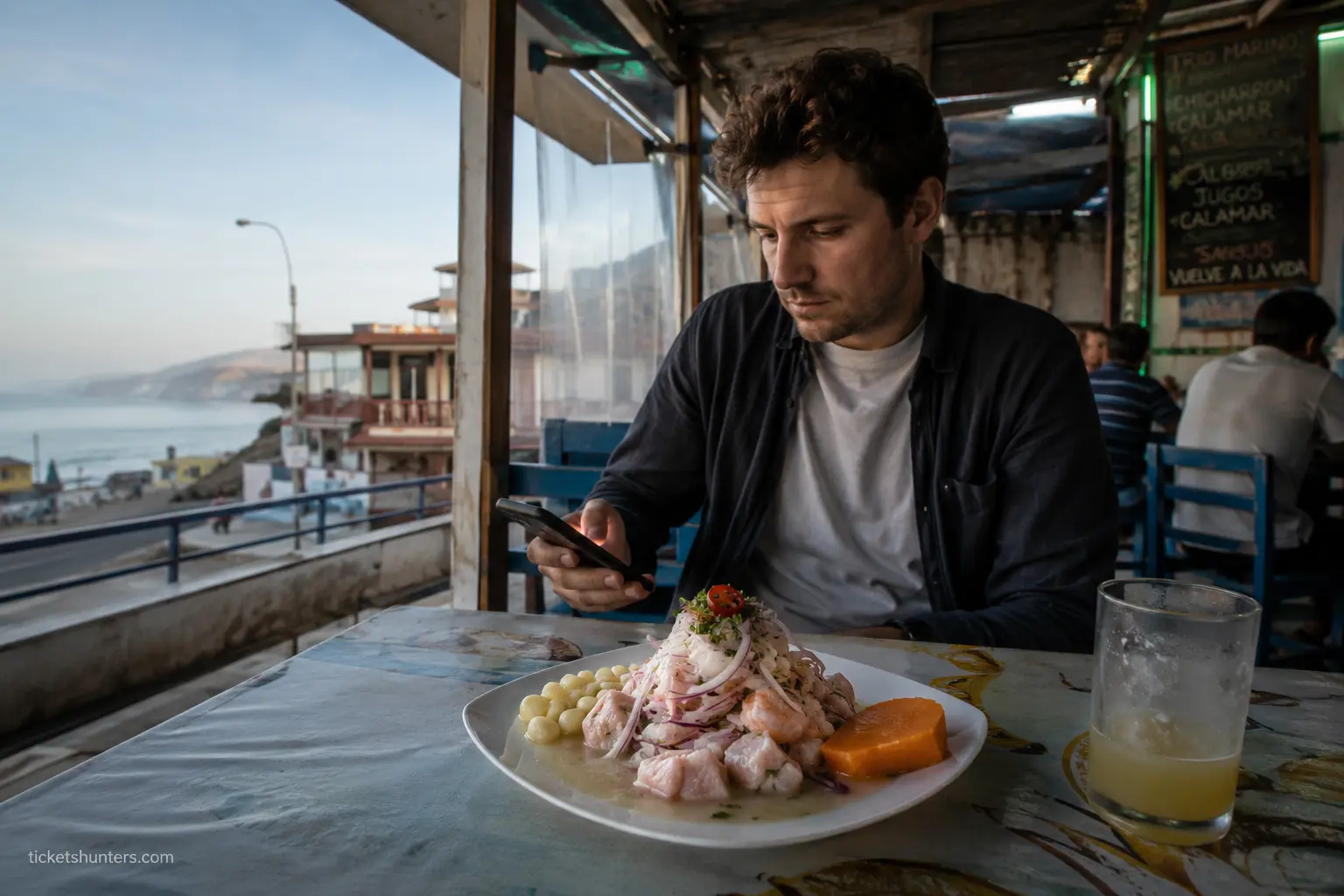
A hidden ceviche counter in Miraflores, Lima: the same aji amarillo and corvina combination that inspired the world's best restaurant kitchens, served in a plastic bowl on a plastic chair, for USD 3.50.
Oaxaca, Mexico — Ancient Flavors, Living Traditions, and Mole That Takes Three Days to Make
Oaxaca is to Mexico what Lyon is to France: the kitchen of the nation, the place where the authentic flavour of the culture is maintained with near-religious devotion. The state's seven varieties of mole — complex, slow-cooked sauces built from up to 40 ingredients including chocolate, dried chilli, charred tomato and, in negro mole, a whisper of avocado leaf — represent one of the most intellectually complex culinary traditions on Earth.
The food travel experience that Oaxaca offers in 2026 is not one restaurant. It is a market + mezcal + mole cooking class + tlayuda combination that requires three full days to do justice. The Mercado 20 de Noviembre is the centrepiece: a covered market where smoke-blackened coals char Oaxacan tasajo beef while women in traditional dress shape tlayudas on iron comales using technique passed directly from mother to daughter for 400 years.
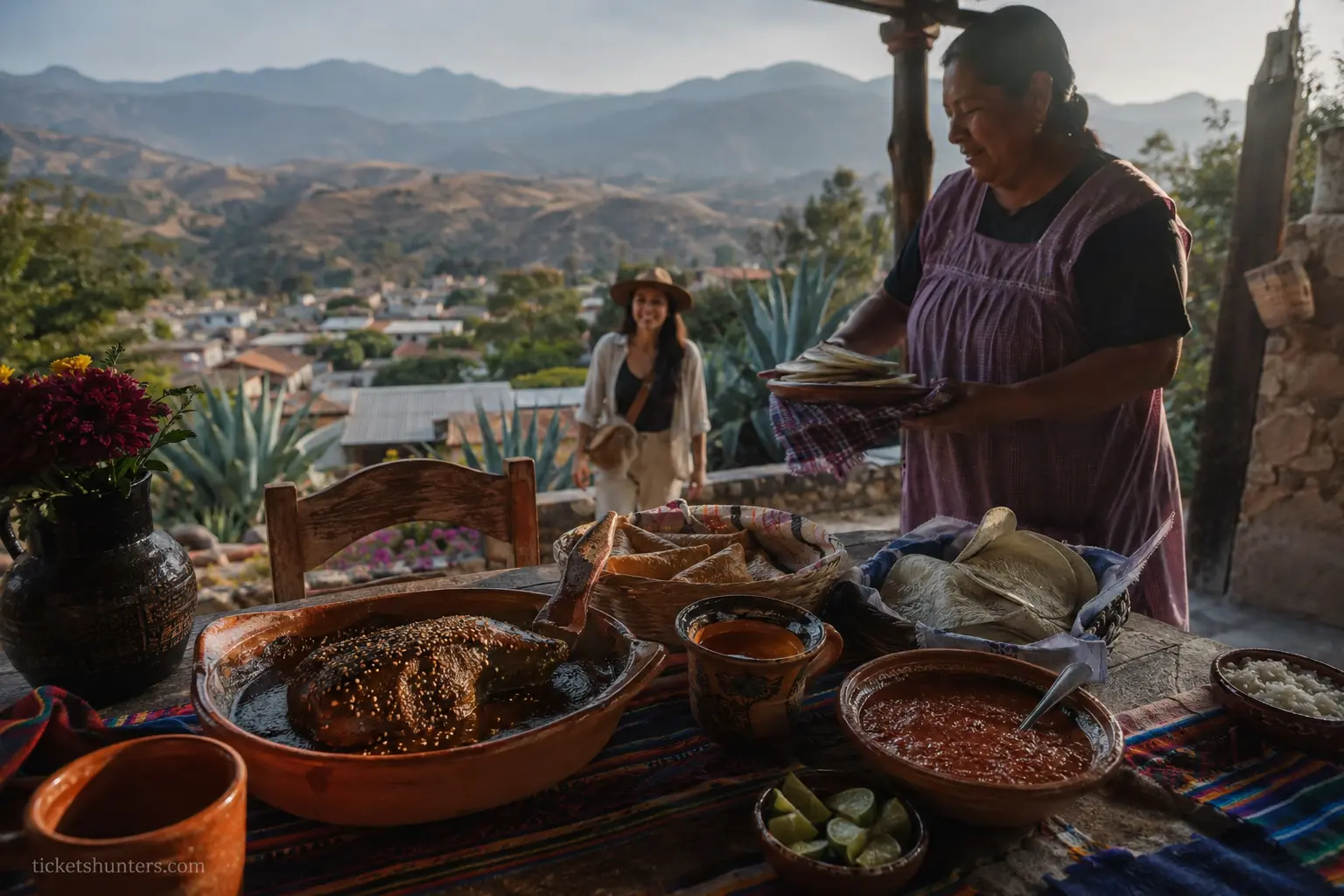
A mole negro being ground in the highlands above Oaxaca City: 38 ingredients, three days of preparation, 400 years of unbroken tradition. Culinary travel at its most profound.
Reaching Lima and Oaxaca from Europe or North America requires smart flight booking. Our CheapTickets flight deal guide covers the most consistently underpriced Latin America routes — particularly the London-Lima and New York-Oaxaca corridors which often have substantial fare gaps between airlines that most travellers never compare.
Africa & The Middle East: Gastronomy Tourism's Final Frontier
The African and Middle Eastern food tourism narrative in 2026 is one of the most exciting in the entire field of gastronomy travel. While European and Asian destinations have been extensively documented, Morocco, Lebanon, Ethiopia and Georgia are emerging as destinations where the food travel experience is still raw, unfiltered and genuinely transformative — precisely because the tourist infrastructure has not yet homogenised them.
Marrakech — Where Every Rooftop Tells a Story and Every Tagine Carries a Secret
Marrakech's Djemaa el-Fna square is one of the most photographed food environments on Earth — and also one of the most tourist-trapped. The rooftop tagine restaurants ringing the square charge five to eight times local price for food that has been adapted for Western palates. Do not eat there on your first night.
The Marrakech gastronomy experience that matters is found in the souks at 7am — msemen flatbreads straight from the griddle, argan oil pressed that morning, preserved lemon from a jar that has been fermenting since October. Or in a private riad kitchen with a Fassi cook demonstrating the genuine seven-spice ras el hanout blend that no restaurant will ever give you correctly. The real tagine — the one cooked in a proper clay conical pot over charcoal for four hours — is available only in private homes and the handful of authentic restaurants the guides never mention.
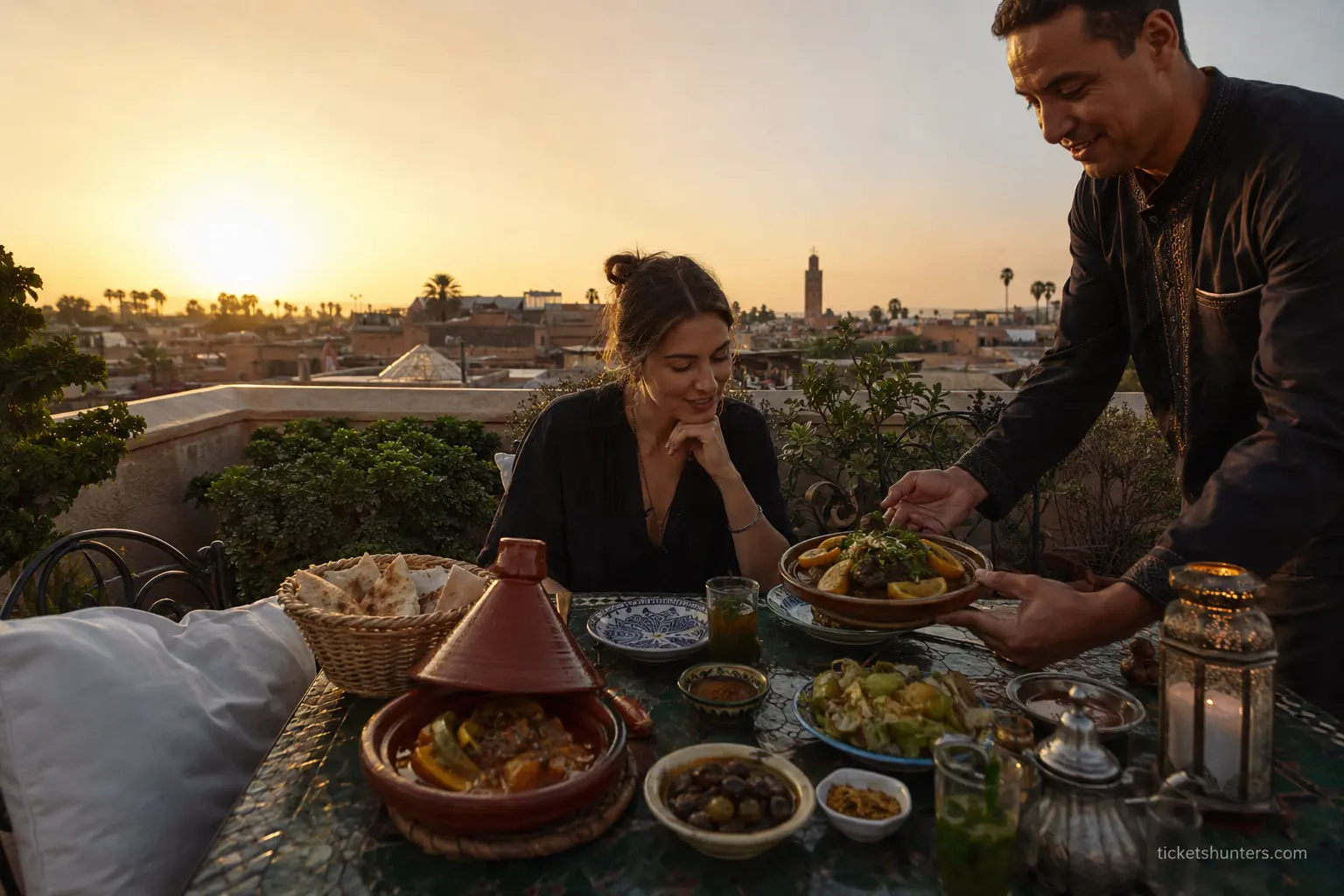
A rooftop tagine above Marrakech's medina at dusk: lamb, preserved lemon, Meknès olives, and a seven-spice ras el hanout that took thirty years to perfect. Gastronomy tourism's final, most rewarding frontier.
Morocco requires no visa for most EU, UK and North American passport holders for stays under 90 days. However, our honest VisaHQ review covers the nuances for other nationalities and the increasingly complex digital entry requirements being implemented across the MENA region. Always check 60 days before departure — requirements can change with minimal notice.
How to Plan the Perfect Gastronomy Tourism Trip: The TicketsHunters Method
After years of food travel research and first-hand culinary tourism across five continents, our team has distilled the planning process into a framework that consistently produces extraordinary food experiences at local prices. This is not theory — this is the exact method we use ourselves.
Skip the Tourist Traps: Our 7 Insider Rules for Honest Food Travel
- Rule 1 — The 200-Metre Rule: Never eat within 200 metres of a landmark, museum, or tourist attraction. The food quality drops inversely to the proximity to the Colosseum, Eiffel Tower or Grand Bazaar. Walk two blocks. The price halves and the quality doubles.
- Rule 2 — The Language Filter: If the menu is available in five languages, it was designed for tourists. Seek menus written only in the local language. Use Google Translate photo mode if needed — the minor inconvenience is the entire point.
- Rule 3 — The Queue Principle: Any food stall with a queue of locals at a non-tourist mealtime is worth the wait. A 45-minute queue in Penang is a quality signal, not an inconvenience.
- Rule 4 — The Lunchtime Local Rule: In Spain, real locals eat lunch at 2:30-3:30pm. In Turkey, pide and lahmacun are breakfast foods. In Japan, ramen is permissible at any hour. Eating on local schedules unlocks lower prices and better food because kitchens are cooking for their community, not for tourists.
- Rule 5 — The Market Morning Protocol: Spend the first morning of every food trip at the central covered market. The ingredients, prices and vendor interactions there will recalibrate your entire understanding of the local food economy and help you make informed restaurant choices for the rest of the trip.
- Rule 6 — The Audio Tour Unlock: Self-guided food audio tours by platforms like Wegotrip and GetYourGuide consistently surface spots that no printed guide or review site covers. The best food in every city is known by a very small number of informed locals — audio tours are the most efficient way to access that knowledge.
- Rule 7 — The Luggage Liberation Principle: Heavy luggage forces you to eat near your accommodation. Use Radical Storage's luggage storage network to drop your bags at the start of each food exploration day and move freely. The best markets, street food lanes and off-map restaurants are rarely near hotel districts.
The Complete Gastronomy Tourism Planning Toolkit
| Travel Need | TicketsHunters Recommended Tool | Why It Matters for Food Travel | Cost Range |
|---|---|---|---|
| Cheap Flights | Aviasales | Compare 1,000+ airlines for food destination routes | Free tool |
| Train & Bus | 12GO | Essential for multi-city food itineraries in Asia & Europe | Varies by route |
| Visa Processing | VisaHQ | Sort visa before booking tours & restaurants | From £49 |
| Food Tours | Klook | Local food tours in 100+ gastronomy destinations | From USD 15 |
| Self-Guided Tours | Wegotrip | Audio food trails for independent explorers | From USD 8 |
| Car Hire | QEEQ | Essential for wine regions, rural farms, coastal food towns | From USD 18/day |
| Airport Transfer | GetTransfer | Fixed-price drivers who know local market timings | Fixed price |
| Luggage Storage | Radical Storage | Freedom to explore food markets without heavy bags | USD 4-8/day |
| Experiences | GetYourGuide | Cooking classes, market tours, cellar visits worldwide | From USD 20 |
| Private Jet | Villiers Empty Legs | Premium food circuit travel: Tuscany + Basque + Bordeaux | From USD 1,200 |
Global Gastronomy Tourism Market Analysis 2026: The Data That Drives Decisions
We believe in data-driven honesty. Here is the verified market intelligence that serious food travellers and travel industry professionals need to understand the culinary travel landscape in 2026:
The Numbers Behind the Food Travel Boom
| Metric | 2023 Data | 2026 Data / Projection | Source |
|---|---|---|---|
| Global market value | USD 805B | USD 1.1T | Allied Market Research |
| CAGR (growth rate) | — | 10.8% annually | Grand View Research |
| Travellers citing food as primary motivation | 56% | 71% | World Food Travel Assoc. |
| Average premium food traveller daily spend | USD 180 | USD 240 | UNWTO 2026 |
| Michelin-starred cities globally | 42 | 67 | Michelin Guide 2026 |
| Countries with recognised food heritage (UNESCO) | 8 | 17 | UNESCO ICH 2026 |
| Food-focused tour bookings (GetYourGuide) | 12M/year | 19M/year | GetYourGuide 2026 Report |
Top 10 Gastronomy Tourism Destinations: TicketsHunters 2026 Ranking
#1 Tokyo, Japan
Most Michelin stars globally. Unmatched food precision at all price points.
#2 Lima, Peru
Fastest-rising food city. Latin American culinary revolution HQ.
#3 San Sebastián, Spain
Most Michelin stars per km². Pintxo culture unmatched globally.
#4 Penang, Malaysia
UNESCO street food heritage. Most diverse culinary DNA on Earth.
#5 Oaxaca, Mexico
Ancient mole traditions. Living culinary schools. Unfiltered authenticity.
#6 Bologna, Italy
Italy's unofficial food capital. Tortellini, mortadella, Parmigiano.
#7 Istanbul, Turkey
Two continents on one plate. Breakfast culture without equal.
#8 Marrakech, Morocco
Spice culture + Slow cooking + Riad kitchen experiences.
#9 Tbilisi, Georgia
World's oldest winemaking tradition. Khachapuri. Underrated gem.
#10 Seoul, South Korea
Korean BBQ, fermentation culture, anju food pairing tradition.
Who Is Gastronomy Tourism For? (And Who Should Think Twice)
| Traveller Profile | Culinary Fit | TicketsHunters Recommendation |
|---|---|---|
| Adventurous solo traveller | ⭐⭐⭐⭐⭐ Perfect fit | Penang, Oaxaca, Tokyo — go immediately |
| Foodie couple | ⭐⭐⭐⭐⭐ Perfect fit | Tuscany, Basque Country, Lisbon |
| Family with children | ⭐⭐⭐⭐ Excellent | Penang, Marrakech, Tuscany (pasta making) |
| Business traveller with layover | ⭐⭐⭐ Good | Istanbul, Tokyo, Singapore — 4-hour food audits |
| Traveller with dietary restrictions | ⭐⭐⭐ Needs planning | Choose destinations with diverse cuisines |
| Luxury-only traveller | ⭐⭐ Limited | Miss the best food — consider mixed approach |
| Comfort-first traveller | ⭐ Low fit | Authentic gastronomy requires stepping outside comfort zone |
Gastronomy Tourism FAQ — Every Question, Answered Honestly
The TicketsHunters Verdict: Gastronomy Tourism Is the Most Honest Form of Travel
We have spent years building TicketsHunters on three pillars: honesty, authority and genuine value. This guide reflects all three. Gastronomy tourism is not a trend. It is a correction — a return to the fundamental reason human beings have always travelled: to understand the world through direct, sensory, unmediated experience.
A bowl of ramen in a Tokyo backstreet at midnight, a glass of txakoli in a Basque cider house, a teaspoon of fresh-ground mole negro in an Oaxacan highland kitchen — these are not meals. They are arguments, made in flavour, about what a place is, who its people are, and why it matters.
The world's best food experiences are waiting. Most of them cost less than USD 10. All of them require a willingness to go exactly where the guidebook doesn't point. Use this guide as your map, use our trusted tools as your infrastructure, and trust the queue of locals over every online review ever written.
Disclosure: This article contains affiliate links. TicketsHunters may earn a commission at no additional cost to you when you book through our partner links. All destinations, rankings and recommendations are based on independent editorial research. We have not accepted payment for any placement in this guide. | Last Updated: May 2026 | Author: TicketsHunters Travel Research Team