How to Avoid 1 Costly Mistake in Morocco Travel?
Morocco travel rarely goes badly wrong at passport control or in the souk. It goes wrong in the desert. A three-day Sahara desert tour is the biggest single purchase on most itineraries, and it is still sold for cash by people who have no license to sell it.
This guide is built around that one mistake, then the four smaller ones that drain budgets in Marrakesh and Fez. Every price below comes from an official source or a dated 2026 listing. Where sources disagree, we say so rather than pick the convenient number.
⚡ Quick Answer
The costliest Morocco travel mistake is buying a Sahara desert tour from a street seller or an operator you cannot verify. Book through a Ministry-licensed agency or a platform with verified reviews and written inclusions, and pay by card. Shared 3-day Marrakech to Merzouga tours listed online on 6 October 2026 started between US$107 and US$284 per person.
Best for: first-time visitors combining Marrakesh, Fez and the desert. Best months: March to May and September to November; the dunes from October to April. Visa: none for up to 90 days on US, UK, Canadian, Australian and most EU passports. Money: the dirham is a closed currency, so cross the border with no more than 2,000 MAD.
TL;DR · Morocco Travel in 60 Seconds
Morocco is good value in 2026 if you control five leaks: unlicensed desert tours, meterless taxis, airport exchange desks, the “closed street” guides of Fez and the “free” help around Jemaa el-Fnaa. Each one has a cheap, specific fix. They are listed below with the source behind every number.

The first hour after landing sets the tone for Morocco travel. Travelers who arrive with a transfer booked, a data plan working and a few hundred dirhams in their pocket spend the rest of the trip making choices. Those who arrive without them spend it reacting to whoever reaches them first.
🔑 Key Takeaways for Morocco Travel
- The desert tour is the biggest spend of the trip. Check the license, the named operator and the written inclusions before any money changes hands.
- A short metered petit-taxi ride in Marrakesh costs around 10 MAD. In May 2026, Telquel reported drivers asking foreigners 40 to 50 MAD for the same trip.
- Change only a small amount at the airport and keep every exchange receipt; you need it to turn leftover dirhams back into euros or dollars.
- In Fez, a stranger announcing that “this street is closed” is almost always steering you towards a shop.
- Henna, monkey photos and “your riad is this way” escorts end with a demand for money. Agree the price, or say no, before anything starts.
Quick Verdict: The 5 Morocco Travel Mistakes That Cost the Most
The table ranks Morocco travel mistakes by how much money is exposed at once, not by how often they happen. Taxi overcharging is more frequent; a bad desert booking costs more in one go.
| # | Mistake | What it costs you | The fix | Evidence |
|---|---|---|---|---|
| 1 | Unlicensed Sahara desert tour | The whole tour price, plus extras for lunches, site guides and camp upgrades | Licensed agency or verified platform, written inclusions, card payment | TourRadar listings (6 Oct 2026); Law 11-16 |
| 2 | Meterless taxi in Marrakesh | 40–50 MAD for a ride that meters at about 10 MAD | Ask for the meter, or agree the fare before the door closes | Telquel, May 2026 |
| 3 | Changing everything at the airport | Poorer desk rates; an airport ATM fee of almost €3 reported | Change a little, then use bank ATMs in town and decline home-currency conversion | Dave’s Travel Pages (updated July 2026); Wise |
| 4 | The “closed street” trick in Fez | Commission-driven shop visits and pressured leather sales | Offline map, or a licensed guide booked through your riad | Journal of Nomads (updated March 2025) |
| 5 | “Free” help in Marrakesh Medina | Payment demands after henna, animal photos or escorts | Say no clearly, or settle the price first | Born Free investigation (April 2025) |
🔍 Methodology · TicketsHunters Independent Travel Intelligence
We checked every figure in this Morocco travel guide on 6 October 2026. Rules come from regulators where we could reach them; prices come from dated listings, and press reports are named. We did not take a tour or a taxi for this article, and no operator saw it before publication.
- Official and regulatory: Office des Changes (dirham reconversion), Moroccan customs rules as summarized by Wise, the US State Department country page, the Jardin Majorelle official site, the Marrakech-Safi Regional Tourism Council and Ministry of Tourism figures reported by Ecofin.
- Prices: three shared 3-day Marrakech to Merzouga listings on TourRadar, Welcome Pickups’ Marrakesh price page and 2026 reports on the ALSA airport bus.
- Press: Telquel on Marrakesh taxis (May 2026); Hespress on the guide law (June 2025) and hotel taxes (April 2026).
Conflicts we found and disclose below: Bahia Palace at 70 MAD in a 2022 guide versus 100 MAD in 2026 guides; the State Department calling dirham export prohibited while customs rules allow 2,000 MAD; a stay-tax child exemption given as under 10 or under 12; and bus 19’s last departure listed as 21:30 or around 23:00.
Morocco Travel in 2026: Where People Go and When It Works
Most first trips trace the same loop: Marrakesh, a desert crossing over the High Atlas, Fez, then either the blue town of Chefchaouen in the north or the Atlantic at Essaouira. That loop crosses mountains, desert and coast and mixes trains, taxis and tour vehicles, which is why timing and logistics shape a Morocco itinerary more than the sights themselves.
The country is busier than it has ever been. The Ministry of Tourism reported 19.8 million arrivals in 2025, up 14% on 2024, and it is aiming for 26 million by 2030, when Morocco co-hosts the FIFA World Cup with Spain and Portugal (Ecofin, January 2026).
More visitors also means more people selling to them, licensed or not.
Best Time for Morocco Travel, Region by Region
| Region | Best window | Harder months | Planning note |
|---|---|---|---|
| Marrakesh, Fez, Meknes | Mar–May, Sep–Nov | Jul–Aug, the hottest inland months | Do medina walks before noon in summer |
| Sahara (Merzouga, Zagora) | Oct–Apr | Summer days; winter nights turn cold in camp | Pack a warm layer for any winter desert night |
| High Atlas (Imlil, Toubkal) | Apr–Jun, Sep–Oct | Winter snow on high passes and summits | Jebel Toubkal reaches 4,167 m; treat it as a mountain, not a day stroll |
| Atlantic coast (Essaouira, Asilah) | May–Oct | Few; Essaouira is windy most of the year | The wind keeps summer cooler than inland cities |
| North (Chefchaouen, Tetouan) | Apr–Jun, Sep–Oct | Winter is wetter in the Rif | Combine with Akchour while the trails are dry |
| Ramadan 2027 (expected) | ≈8 Feb – 9 Mar 2027 | Shorter opening hours; many cafés shut by day outside tourist zones | Dates depend on the moon sighting; confirm a week ahead |
The desert window comes from the dunes themselves: Erg Chebbi runs about 28 km north to south, its tallest dunes reach 150 m, and October to April is the usual season for camps and camel treks. The Ramadan dates are a projection published in August 2026 and may shift by a day depending on the moon sighting.
Up north, Chefchaouen sits at roughly 600 m in the Rif Mountains and was founded in 1471. The famous blue has more than one origin story; some residents say the town-wide paint dates only from the 1970s and was meant to draw visitors. Either way, Chefchaouen’s blue streets are compact enough to walk end to end in an afternoon.

The better reason to stay a second night is outside town. Akchour, about 30 km away in Talassemtane National Park, has waterfalls and a 60-meter natural rock arch known as God’s Bridge, reached by a walk of roughly 1.35 km from the end of the road.
Entry is free, and the cafés along the trail mean you do not need to carry much.
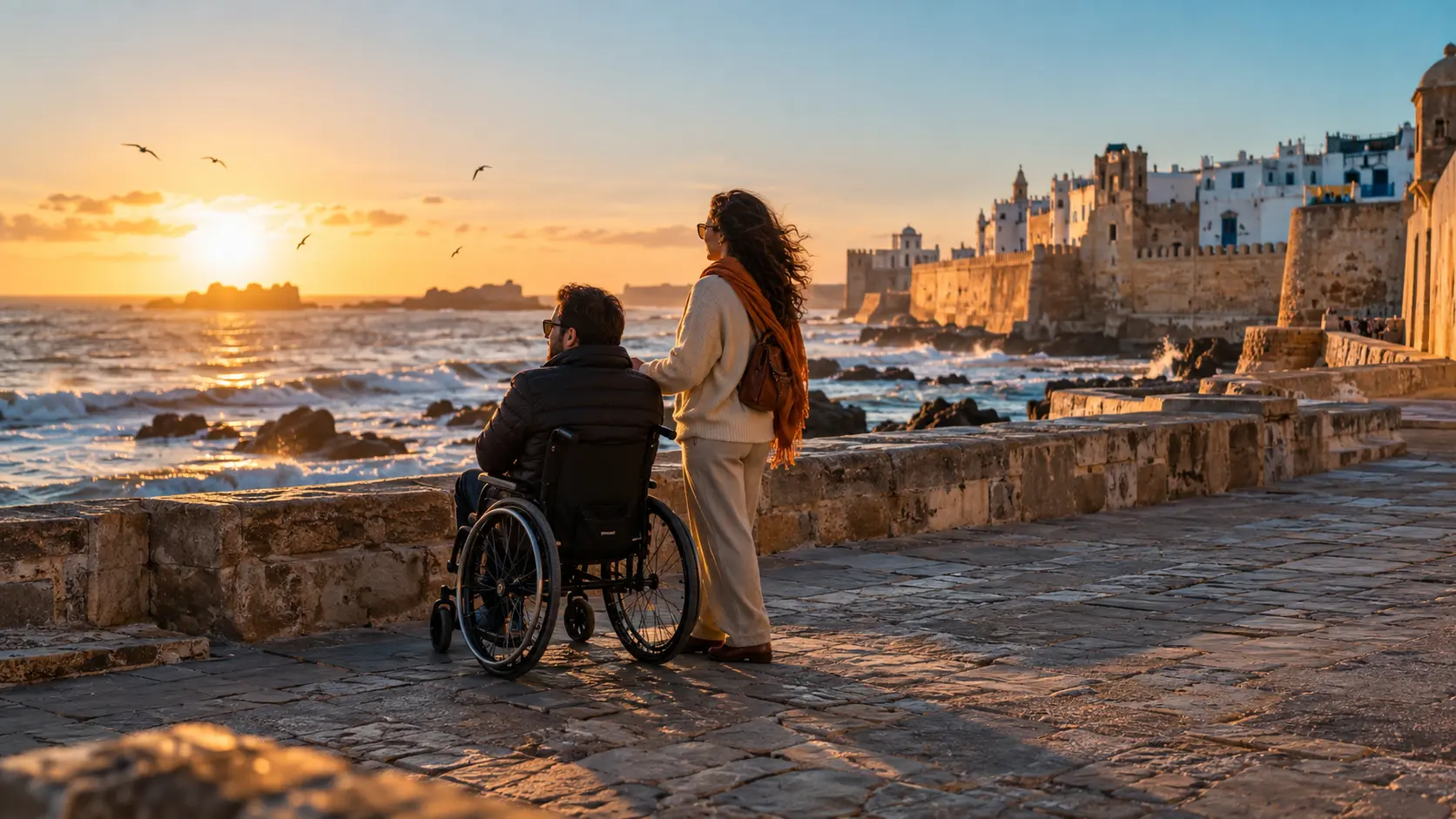
On the Atlantic, Essaouira’s walled medina has been on the UNESCO World Heritage list since 2001, and its steady wind makes it a kitesurfing town as much as a day trip from Marrakesh. Asilah, south of Tangier, is the quieter northern counterpart: whitewashed walls, murals and a seafront rampart.
What Morocco Travel Costs: A Fair-Price Reference Table
Morocco travel scams work because visitors have no reference point. This table gives you one. Each row names its source and date, because a price without a date is a rumor, and some Marrakesh entry fees rose between 2022 and 2026.
| Item | Reference price | Source & date | What to watch |
|---|---|---|---|
| ALSA bus 19, Marrakesh airport to Jemaa el-Fnaa | 30 MAD one way · 50 MAD return | 2026 traveler guides | Cash only; carry small notes |
| Pre-booked airport transfer, Marrakesh | From €17 day · €20 night (up to 4 people) | Welcome Pickups price page, Oct 2026 | Fixed and prepaid |
| Short metered petit-taxi ride, Marrakesh | ≈10 MAD | Telquel, May 2026 | Meter rates rise about 50% at night |
| Bahia Palace, El Badi, Saadian Tombs | 100 MAD each, foreign adults | 2026 visitor guides (70 MAD for Bahia in 2022) | Cash only at the gate |
| Ben Youssef Madrasa | 50 MAD | Recent visitor reports | Cash only |
| Jardin Majorelle | Online tickets only | Official site, Oct 2026 | Tickets from other sellers do not give entry |
| Chouara tannery terraces, Fez | Free; 5–10 MAD tip expected | Journal of Nomads, updated Mar 2025 | The mint sprig is not a gift |
| Licensed guide in Fez, per group | 300 MAD half day · 600 MAD full day (ministry reference) | Traveler report, Mad Hatters NYC | Shop stops earn the guide commission |
| Shared 3-day Merzouga desert tour | US$107–284 per person | TourRadar listings, 6 Oct 2026 | Check meals, site-guide fees, camp type |
| Tourist promotion tax | 2–15 MAD per night by hotel category | Hespress, Apr 2026 | Often missing from the headline price |
| Communal stay tax | 3–30 MAD per person per night | Hespress, Apr 2026 | Collected at check-in or checkout |
| Prepaid SIM data | 20GB ≈ US$10 (inwi, Orange) | Lonely Planet | Passport required to register |
Palace prices are the least stable line in this table. A 2022 guide listed Bahia Palace at 70 MAD; 2026 guides list 100 MAD for foreign adults at Bahia, El Badi and the Saadian Tombs. We found no ministry page confirming either, so carry 100 MAD in cash per person per palace.
An open-jaw ticket, flying into Marrakesh and out of Fez or Tangier, removes a full day of backtracking from a one-week loop. Price the two-airport version before buying a return to the same city; the saved day often matters more than the fare difference.
How Safe Is Morocco Travel Right Now?
The US State Department rates Morocco at Level 2, “Exercise Increased Caution”, in an advisory issued on 21 April 2025, mainly because of terrorism risk. Day to day, the problems that affect Morocco travel are smaller and more predictable.
| Topic | What the official source says | What it means on the ground |
|---|---|---|
| Petty crime | Pickpocketing, purse-snatching and theft from vehicles are listed as common (US State Dept.) | Crossbody bag in medinas; nothing left on café tables |
| Women travelers | Harassment of women is listed among common issues (US State Dept.) | Pre-booked transport after dark; a riad that meets you at a landmark |
| LGBTQ+ travelers | Same-sex relations are criminalized, with penalties of up to three years’ imprisonment (US State Dept.) | Discretion in public spaces and with accommodation hosts |
| Emergency numbers | Police 19 · Fire and ambulance 15 · Royal Gendarmerie 177 in rural areas | Save them on your phone before leaving the airport |
| Marrakesh tourist brigade | +212 5 24 38 46 01, office on Jemaa el-Fnaa (Marrakech-Safi Regional Tourism Council) | The place to report a scam or harassment in the medina |
Yes, for most visitors who take ordinary city precautions. The US State Department keeps Morocco at Level 2 for terrorism risk, while the issues tourists actually report are pickpocketing, overcharging and harassment. Those are managed with pre-booked transport and a firm “no, thank you” in the medina.
The #1 Costly Mistake: Booking Unregistered Sahara Desert Tours
The desert tour combines everything that makes a Morocco travel purchase risky: a large amount of money, a long distance from the seller, several hand-offs between people you never meet, and, too often, payment in cash. A taxi overcharge costs you 40 MAD. A bad desert booking can cost the whole trip and two of your best days in Morocco.
Morocco does regulate the business. Law 11-16 requires travel agents to hold a license from the Ministry of Tourism, and tourist guides fall under Law 05-12, amended in 2021 by Law 67-21. The guides’ own union told Hespress in June 2025 that parts of that reform still lack implementing rules, which leaves room for informal operators to keep selling.
How Fake Guides and Rogue Operators Inflate Prices
Inflation rarely looks like a single outrageous price. It arrives in steps, each small enough to accept on the spot. These four patterns come from the operator listings, traveler reports and press coverage of Morocco travel scams we reviewed for this guide, with the reason each one works.
- The unnamed desert. “Three days in the Sahara” can mean Merzouga, about 560 km from Marrakesh, or Zagora, about 360 km away, according to one operator’s own route notes. With nothing written down, the shorter trip can be delivered at the longer trip’s price.
- The camp that was never specified. One TourRadar listing we checked offers a luxury camp as a paid upgrade. If the seller promised “luxury” and wrote nothing, you have no way to prove which camp you bought.
- The pooled bus. Another shared listing allows groups of 1 to 50 participants. Seats on a departure that size can be sold by many different agents at different prices, so two people on the same bus may have paid very different amounts.
- The commission stop. Guides earn commission on what you buy, a point one detailed traveler report on Fez guides makes plainly. Argan, carpet and fossil stops on a desert route follow the same economics.
Marrakesh to Merzouga takes roughly 8 to 9 hours by road each way, by one operator’s estimate. A three-day tour therefore spends 16 to 18 hours in the vehicle, most of the daylight on days one and three. With only two days, choose Zagora or the stony Agafay desert near Marrakesh instead.
| Desert | From Marrakesh | Realistic length | What you get | Best for |
|---|---|---|---|---|
| Erg Chebbi (Merzouga) | ≈560 km, 8–9 h | 3 days minimum | Dunes up to 150 m; the classic camel-and-camp image | First desert trip with time to spare |
| Zagora | ≈360 km, 6–7 h | 2 days | Lower, scattered dunes in stony, palm-fringed desert | Short trips that still want a desert night |
| Erg Chigaga (via M’Hamid) | Beyond Zagora; about 56 km past M’Hamid el Ghizlane | 3 days | Remote dunes, some over 50 m above the plain | Travelers who want fewer camps nearby |
| Agafay | Close to Marrakesh | Half day or one night | Stony desert with mountain views, no sand dunes | Families and very short stays |
Distances and drive times in the first three rows come from a Morocco tour operator’s comparison, so read them as an industry estimate. Dune heights come from Wikipedia’s entries on Erg Chebbi and Erg Chigaga.
The Hidden Costs of Cheap Morocco Desert Excursions
We compared three shared 3-day Marrakesh to Merzouga tours listed on TourRadar on 6 October 2026. The point of the exercise was not to find the cheapest, but to see whether price predicts what you actually get. It does not.
| Listing | From (per person) | Rating & reviews | Meals listed | Listed as excluded or optional |
|---|---|---|---|---|
| Listing A | US$107 | 3.7 ★ (3 reviews) | Lunches and dinners; breakfast days 2–3 | Optional activities, tips; price varies by room type |
| Listing B | US$225 | 4.6 ★ (31 reviews) | Dinners days 1–2; breakfast days 2–3 | Local guide fees at certain sites; meals not in the itinerary |
| Listing C | US$284 | 5.0 ★ (1 review) | Dinners days 1–2; breakfast day 3 | Quad bikes and luxury camp upgrade offered as extras |
The cheapest listing includes more meals on paper than the most expensive one. The mid-priced listing is the only one with enough reviews to judge, and it is the one that openly excludes local guide fees and unlisted meals. That is what an honest listing looks like: the exclusions are written down, so you can budget for them.
The extras that turn a cheap tour into an average-priced one are predictable. Unlisted lunches on two long driving days, a local guide at Aït Benhaddou or the Todra Gorge, drinks at camp, sandboarding or quad bikes, a single-room supplement and tips for the driver and camel handler.
None is a scam by itself. Hidden together, they are how a “bargain” is built, and why the cheapest Sahara desert tour on a listing page is rarely the cheapest by the time you get home.
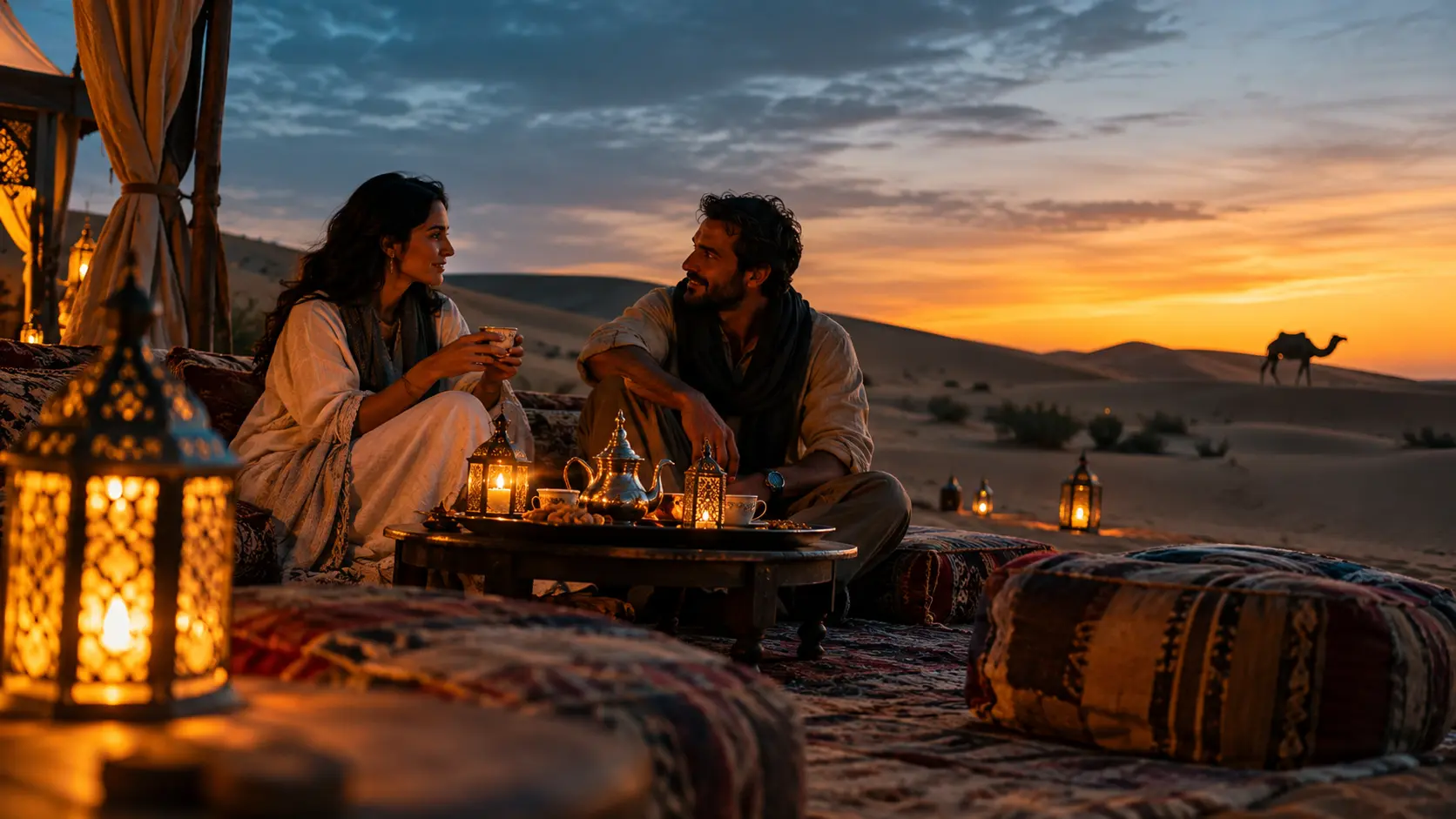
The largest hidden cost is the one you cannot see at all: recourse. If a card-paid or platform-booked tour is cancelled, cut short or swapped for a different desert, there is a paper trail and a complaint route. If you paid a stranger in cash, there is nothing to dispute and nobody to contact.
🚩 The TicketsHunters Red-Flag Checklist
Walk away from any desert tour offer that shows one of these signs.
- No license, no booking. A legitimate Moroccan travel agency holds a Ministry of Tourism license under Law 11-16 and can show it. A seller who changes the subject, or offers his cousin’s agency instead, wants your money without taking any of the legal responsibility that comes with it.
- A cash deposit to a stranger. Being asked for a cash deposit in the street or the medina, against a handwritten receipt, is the clearest warning sign there is. Card and platform payments can be disputed if the tour never runs. A banknote handed to someone you met ten minutes ago cannot.
- No named desert. “Three days in the Sahara” means nothing until the seller names the erg. Erg Chebbi at Merzouga is about 560 km from Marrakesh; Zagora is about 360 km. A vague itinerary lets an operator run the shorter, cheaper trip and still charge the longer trip’s price.
- Inclusions spoken, never written. Meals, local site guides, camp category and the pickup point should be in writing before you pay. A verbal “luxury camp, all meals included” cannot be enforced at a camp hundreds of kilometers from the person who sold it to you.
- Pressure and today-only prices. A discount that expires in ten minutes, a guide claiming every other agency is closed, or a seller who follows you down the street are sales tactics. A fairly priced tour will still be available tomorrow morning, after you have compared it.
✔ Shared desert tour: what works
- Lowest price per person; listings from US$107
- Fixed itinerary covering Aït Benhaddou, the Todra Gorge and Erg Chebbi
- Hotel pickup in Marrakesh on some listings
- Easy to compare on platforms with reviews
✘ Shared desert tour: the trade-offs
- Group sizes up to 50 on some listings
- Early starts (07:00–07:30) and late returns (18:00–20:00)
- Shop stops you did not choose
- Lunches and site guides often excluded
- Little flexibility if someone falls ill
A private tour solves most of the right-hand column and costs more. It still needs the same license and written-inclusions check, because “private” describes the vehicle, not the operator’s paperwork.
4 Other Expensive Missteps to Avoid in Morocco
The desert is where the big money goes. These four are where it trickles away, one small payment at a time, across a week of Morocco travel. Each fix takes less than a minute once you know it.
Overpaying for Taxis in Marrakesh (The “No Meter” Scam)
Hidden taxi fares are the small daily leak in a Morocco travel budget. Marrakesh petit taxis are the beige cars that carry up to three passengers inside the city.
The meter is not optional: an Interior Ministry circular in December 2024 restated the obligation, which dates back to a 1963 decree. In practice, many drivers simply quote a flat price to anyone who looks foreign.
Telquel’s May 2026 investigation documented rides that normally cost about 10 MAD being offered for 40 or 50 MAD. One driver told the magazine: “Instead of transporting a Moroccan for 10 dirhams, I much prefer a foreigner who’s going to give me at least 50 dirhams.” Penalties exist, the report notes, but are rarely enforced.
The fix is a single sentence before the door closes: “Le compteur, s’il vous plaît.” If the driver refuses, agree a price out loud or step out and wait for the next car. Expect the meter itself to run about 50% higher at night, which is legitimate and not a scam.
Airport arrivals are the weak spot. The cheapest fixed option is ALSA bus 19 to Jemaa el-Fnaa, about 30 MAD one way or 50 MAD return, paid in cash to the driver. Taxi fares at the airport rank are negotiated in practice; Expat.com puts the meter-equivalent near 50 MAD and the price most visitors end up paying near 100 MAD.
A pre-booked car removes the haggle entirely. Welcome Pickups lists Marrakesh airport transfers from €17 by day and €20 at night for up to four passengers; our Welcome Pickups review looks at what the service does well and where it falls short.
Between cities, the train takes the negotiation out of the equation. Morocco’s national railway, ONCF, runs conventional lines linking Marrakesh, Casablanca, Rabat, Meknes, Fez and Tangier, with tickets sold at fixed prices on its own website and at station counters. CTM and Supratours coaches cover the places the rails do not reach, such as Essaouira.
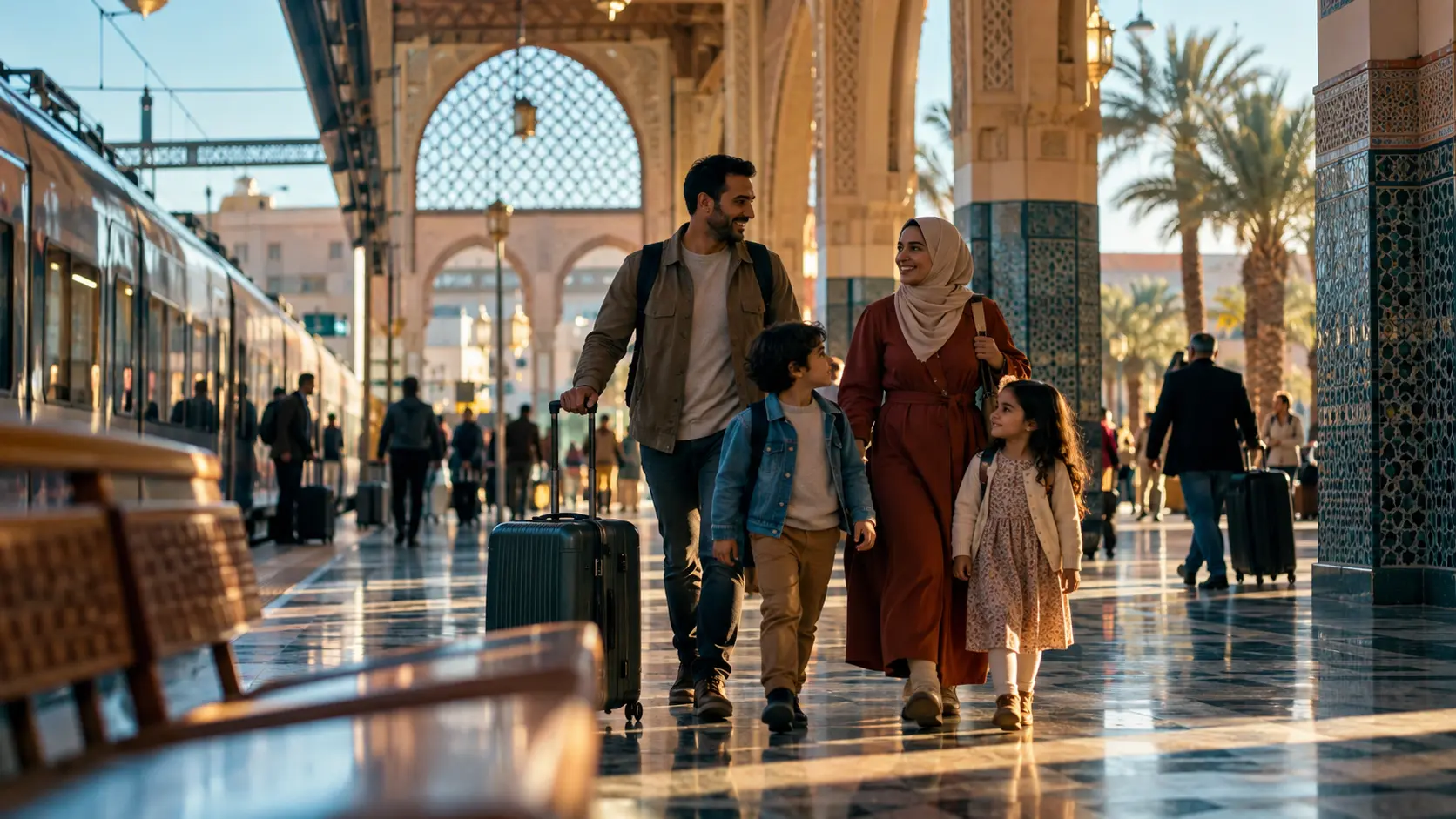
The Al Boraq high-speed line, opened in November 2018, connects Tangier with Kenitra, Rabat and Casablanca at up to 320 km/h.
Work on a 430 km extension from Kenitra to Marrakesh was launched on 24 April 2025, with opening announced for 2029 and a promised Tangier to Marrakesh time of about 2 hours 40 minutes. Until then, Marrakesh is reached by conventional train.
Exchanging Currency at Moroccan Airports
The Moroccan dirham is a closed currency, which shapes every money decision on a Morocco travel budget. You cannot reliably buy it before you leave home, and you cannot freely take it back out.
Moroccan customs rules, as summarized by Wise, cap dirhams carried in or out at 2,000 MAD and require foreign currency worth 100,000 MAD or more to be declared on arrival.
The US State Department’s Morocco page states that exporting dirhams is prohibited, which is stricter than the 2,000 MAD allowance cited from customs rules. The safe reading is the strict one: spend or reconvert your dirhams before passport control.
The exchange desks in the arrivals hall are convenient, and that is all. Dave’s Travel Pages, updated in July 2026, found airport desk rates generally poorer than those in the Marrakesh Medina and an airport ATM charging almost €3 per withdrawal.
Wise adds that most Moroccan ATMs cap a single withdrawal at around 2,000 MAD, so fees stack up on large amounts.
The math is simple enough to do at the counter. The mid-market rate on 5 October 2026 was about 11.2 MAD per euro. Every 0.5 MAD below that costs you roughly 4.5% of whatever you change. On €500, that is 250 MAD, about €22, gone before you have bought a single glass of mint tea.
The simplest dirham currency exchange routine for Morocco travel: change €50 to €100 at the airport, enough for the bus, a taxi and tips. Then withdraw from a bank ATM in town and always choose to be charged in dirhams when the machine offers your home currency. Dynamic currency conversion is the worst rate on the screen.
Falling for the “Closed Street” Trick in Fez Medina
Fez el-Bali, a UNESCO World Heritage site since 1981, is a car-free maze where phone GPS often struggles in the narrow lanes. That disorientation is the business model of the “closed street” trick, the Fez version of a pattern that runs through Morocco travel scams: service first, price second.
A friendly stranger tells you the lane ahead is closed and offers to show you another way.
The other way leads to a shop: a leather terrace above the Chouara tannery, a carpet cooperative, a spice stall. Nobody has robbed you. You have simply been delivered to a business that pays the person who brought you, and the price of everything inside now includes his cut.
The tannery visit itself shows how small charges build. Journal of Nomads, updated in March 2025, explains that viewing the Fez tanneries from the shop terraces is officially free, but shopkeepers expect a tip of 5 to 10 MAD.
The mint sprig handed out at the door comes with an expectation of payment, and some guides ask for more money on the way out. None of it is illegal, and all of it is cheaper when you ask the price first.
Licensed guides carry an official badge and must show it on request, which is the quickest way to tell them apart from unlicensed tour guides; Morocco’s tourist police, the Brigade Touristique, patrols the main sights.
One detailed traveler account of hiring a guide in Fez cites ministry reference rates of 300 MAD for a half day and 600 MAD for a full day, per group rather than per person.
Paying for “Free” Help in Marrakesh Medina: Henna, Animal Photos and Riad Escorts
Jemaa el-Fnaa is on UNESCO’s intangible heritage list for its storytellers, musicians and performers, and most of what happens there is honest street commerce. The trouble starts with anything offered before a price is mentioned: henna drawn on a hand that was never asked, a monkey placed on a shoulder, a stranger who “knows your riad”.
The animal photos carry a second cost. During a visit on 17 April 2025, the wildlife charity Born Free counted at least eight chained macaques being passed between tourists for paid photos. The Barbary macaque is an endangered species, and every paid photo keeps the trade going.
The riad escort works on tired arrivals. Medina riads hide behind unmarked doors, so a stranger offering to walk you there sounds helpful until he names a fee at the door.
Before you travel, ask your riad to meet you at a landmark or the nearest taxi drop-off. Many riads offer this; ask in advance whether there is a charge.
One more trap sits just outside the medina. The Jardin Majorelle sells tickets only online through its official site, and warns that tickets bought anywhere else will not get you in. The garden is open daily from 8:00 to 17:30, with last entry at 17:00. A street seller offering a cheaper Majorelle ticket is selling you nothing.
Meterless taxis, fake “closed street” guides, unsolicited henna or animal photos followed by a demand for money, and unlicensed desert tours sold for cash. All four put the service first and the price second. Ask the price before anything begins and most of them stop working.
How to Plan a Scam-Proof Morocco Travel Itinerary
Most overspending in Morocco is a planning problem disguised as a scam problem. When the riad, the desert tour and the first transfer are booked in writing before you land, the people selling in the street have nothing left to sell you.
The itinerary below keeps long drives together and ends in a different city from the one you fly into. It suits a first week of Morocco travel with one night in the desert.
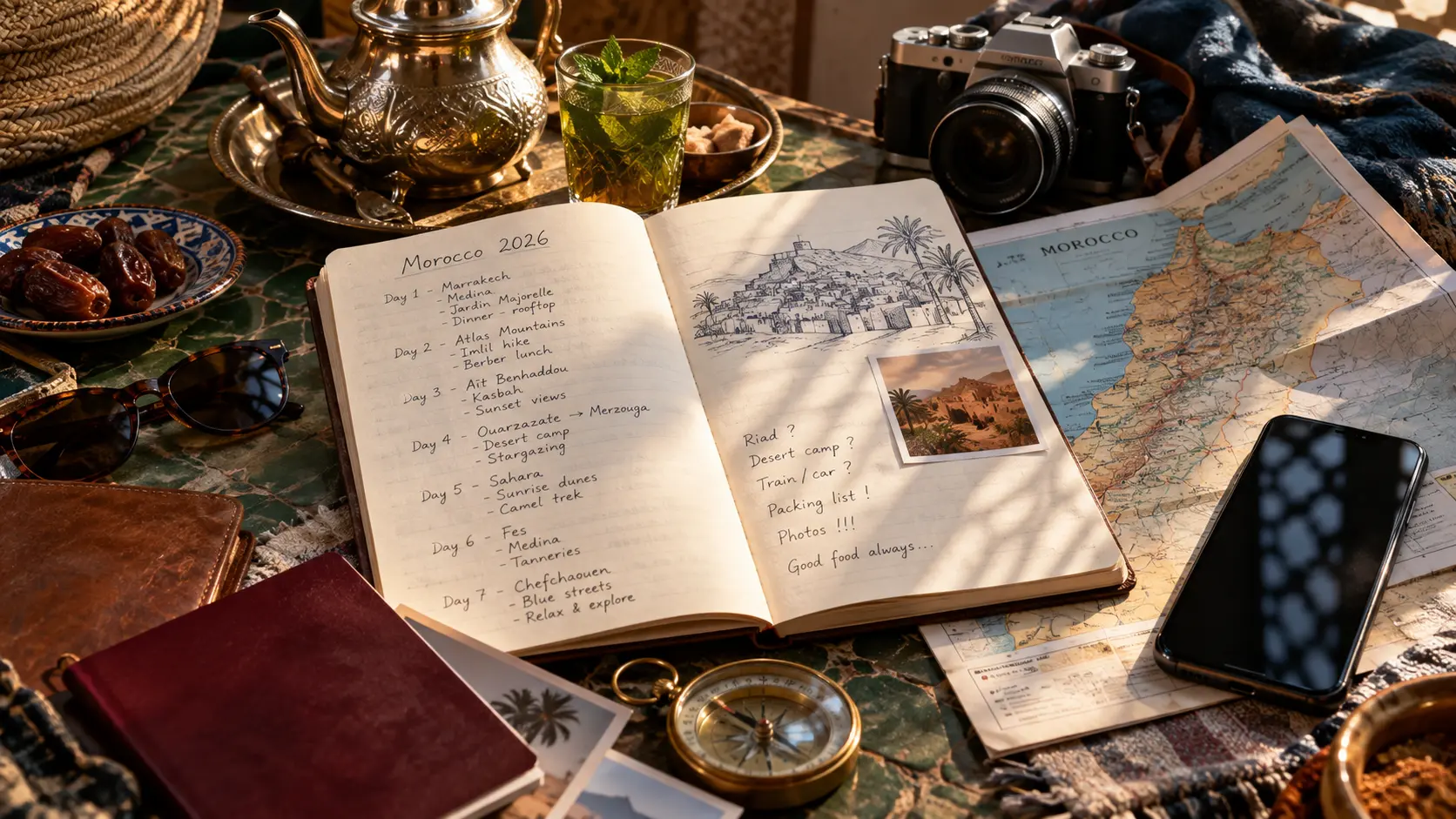
| Day | Base | What to do | What to book in advance |
|---|---|---|---|
| 1 | Marrakesh | Arrive; evening walk to Jemaa el-Fnaa | Transfer or bus 19 plan; riad meeting point |
| 2 | Marrakesh | Bahia Palace, Ben Youssef Madrasa, Jardin Majorelle | Majorelle ticket on the official site; cash for palace gates |
| 3 | High Atlas → Dades or Todra area | Tizi n’Tichka pass, Aït Benhaddou | Licensed desert tour with written inclusions |
| 4 | Erg Chebbi camp | Todra Gorge, camel ride at sunset | Camp category confirmed in writing |
| 5 | Fez | Long drive north through the Middle Atlas | Tour ending in Fez rather than returning to Marrakesh |
| 6 | Fez | Fez el-Bali with a licensed guide; Chouara tannery | Guide booked through the riad |
| 7 | Fez | Free morning; fly out of Fez or continue north | Open-jaw flight out of FEZ |
| 8–10 (optional) | Chefchaouen → Tangier | Blue town, Akchour and God’s Bridge, then Al Boraq south or a flight home from Tangier | ONCF tickets; coach to Chefchaouen |
The design choice that saves the most money is day five. A desert tour that drops you in Fez instead of driving you back to Marrakesh avoids repeating the 8-to-9-hour road you have already traveled, and it turns a there-and-back trip into a route. Ask for the one-way version when you compare tours.
Seven days covers Marrakesh, a three-day desert crossing and Fez at a reasonable pace. Ten days adds Chefchaouen and the north, or the Atlantic coast. With fewer than five days, pair one city with a short desert trip to Agafay or Zagora.
Moroccan Riad Booking Without the Surprise Charges
A riad is a traditional house built around an inner courtyard, and staying in one is part of the point of Morocco travel. It is also where two charges catch visitors who expected the online price to be final.
Morocco applies a tourist promotion tax of 2 to 15 MAD per night by hotel category, plus a communal stay tax of 3 to 30 MAD per person per night.
According to Hespress, reporting in April 2026, these charges are usually not part of the advertised room price and are often collected at check-in or checkout. Sources disagree on the child exemption for the stay tax, giving it as under 10 or under 12, so ask the riad directly if you travel with children.
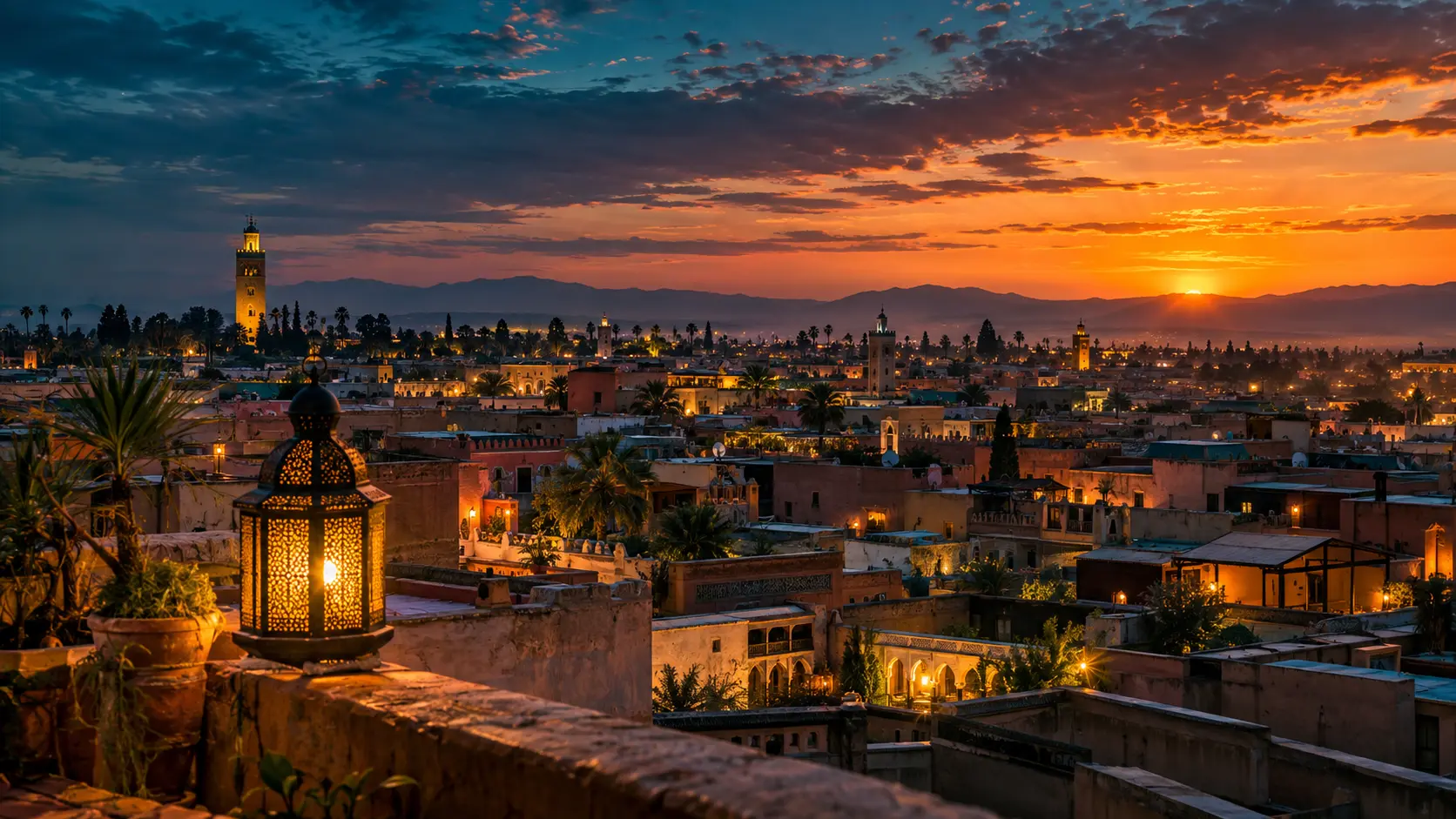
The roof terrace is the part of a medina riad you will use most, and it is worth checking in the photos before booking.
The other thing to check is access. Cars cannot reach most riads inside the Marrakesh Medina or Fez el-Bali, so luggage travels the last stretch by hand or by porter’s cart, and 10 MAD is a fair tip for a porter.
Read reviews for three phrases rather than star averages: “easy to find”, “met us at” and “tax included”. The first two tell you whether arrival will be calm or chaotic. The third tells you whether the price on your booking confirmation is the price you will pay at the desk.
Breakfast is included in many riad rates but not all, so check the rate line rather than the photos. Served on the terrace, it is often the quietest hour of the day in a medina, before the shops open and the lanes fill.

Medina or new town? The medina puts you inside the sights and the noise; Gueliz in Marrakesh and the Ville Nouvelle in Fez put you near taxis, cafés and wider streets. First-time visitors who arrive late at night, or who want fewer approaches from touts, are often better served by a new-town hotel for the first night.
Hidden Morocco: Places Worth the Detour
The classic loop leaves out most of the country. These places slot into a Morocco travel route with a day or two extra, and each one rewards a slower pace than a coach tour allows.
| Place | Near | Why go | How to get there honestly |
|---|---|---|---|
| Akchour and God’s Bridge | Chefchaouen, about 30 km | Waterfalls and a 60 m natural rock arch in Talassemtane National Park | Shared or private taxi from Chefchaouen; agree the return time |
| Volubilis and Moulay Idriss | Meknes | Roman ruins on the UNESCO list since 1997, beside a hillside holy town | Half-day trip from Meknes or Fez by taxi or tour |
| Imlil and the Toubkal valleys | Marrakesh | Mountain villages at the foot of North Africa’s highest peak, 4,167 m | Guesthouse-arranged transfer; local mountain guide |
| Tetouan medina | Tangier | A UNESCO-listed medina with Andalusian architecture | Coach or grand taxi from Tangier |
| Rabat | Casablanca | The capital’s Kasbah of the Udayas and riverside old town, UNESCO-listed since 2012 | ONCF train; Al Boraq from Tangier |
| Essaouira | Marrakesh | Walled port town, Atlantic wind, working fishing harbor | Supratours or CTM coach |
Several valleys in the High Atlas Mountains south of Marrakesh were among the areas hit by the magnitude 6.8 earthquake of 8 September 2023. If you plan village stays or treks there, book through guesthouses and mountain guides that are named and reachable, so your money goes where you intend it to.
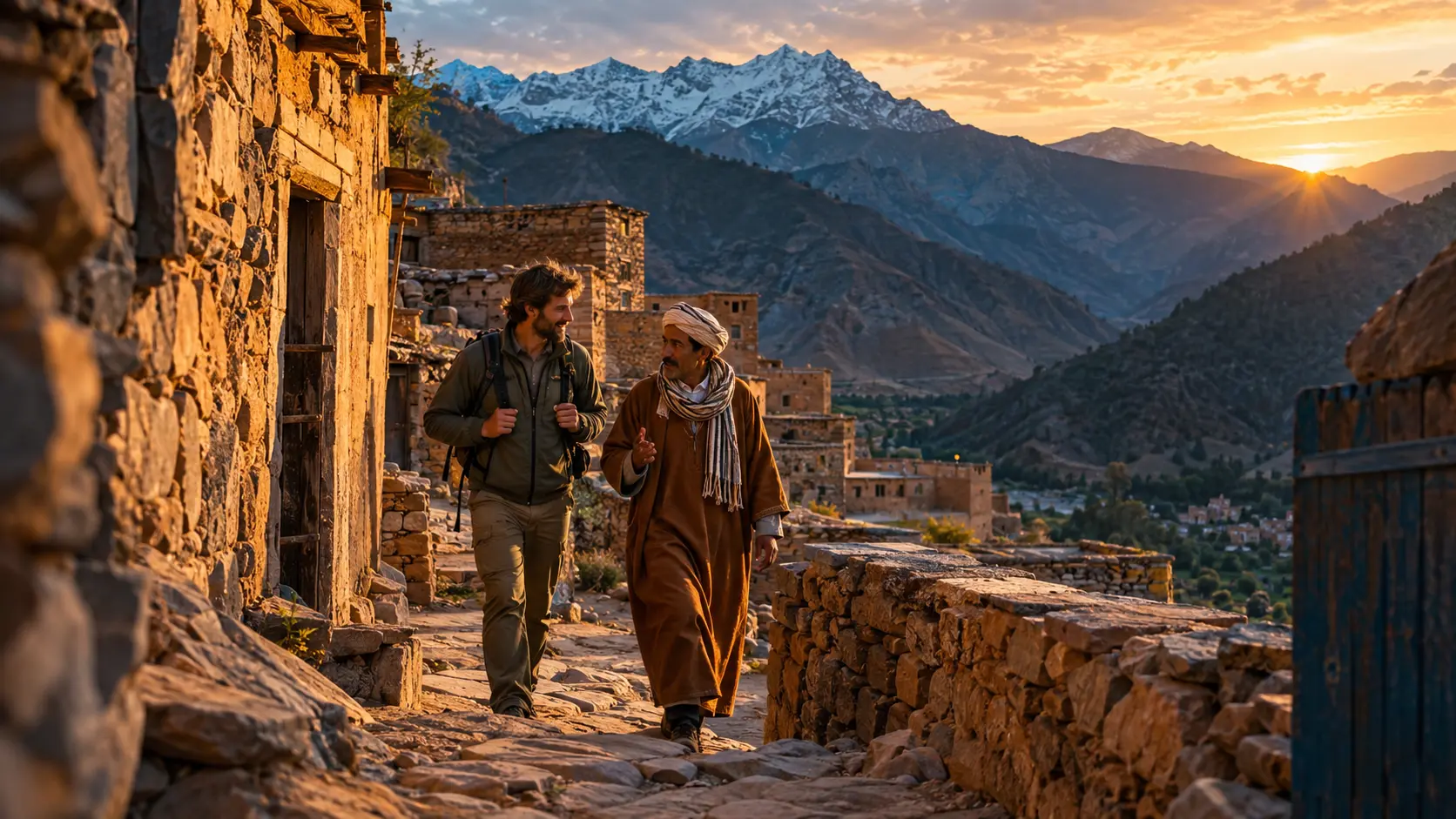
Mountain roads are where a rental car earns its cost on a Morocco travel route, and where it needs the most care. The Tizi n’Tichka pass between Marrakesh and Ouarzazate climbs over the High Atlas on tight bends; avoid driving it, or any mountain road, after dark.
Police checkpoints are common on intercity roads, so keep your license, passport and rental contract within reach.
Read the deposit, fuel and insurance terms before you compare the daily rate; those terms often matter more than the headline rate. Our complete guide to renting a car in 2026 covers deposits, insurance and the checks worth making at the rental counter.
Self-driving makes the least sense in the medinas themselves. Park at the edge, at a guarded car park, and walk in; the lanes of Fez el-Bali and most of the Marrakesh Medina are not built for cars.
Ticketshunters Expert Verdict: How to Secure an Authentic Moroccan Experience
In Morocco travel, authentic and expensive are not the same thing, and neither are authentic and informal. The most local experiences on this list, a licensed Fez guide, a family riad, a desert camp run by people from Merzouga, are all bookable in ways that leave a record. That record is what protects your budget.
Verified Booking Platforms vs. Local Street Scammers
| Factor | Licensed agency or verified platform | Street seller or unlicensed operator |
|---|---|---|
| Upfront price | Visible and comparable; platforms add their margin | Negotiable, and can look lower at first |
| Inclusions | Written list of meals, guides and camp type | Spoken, and open to change after payment |
| Reviews | Tied to real bookings on platforms that verify them | Photos on a phone; impossible to check |
| Payment | Card or platform payment that can be disputed | Cash, usually with a deposit |
| Cancellation | Written policy shown before you pay | None you can enforce |
| If it goes wrong | Complaint route and a paper trail | Nobody to contact |
Platforms are not automatically cheaper. A licensed local agency booked directly can undercut them, because there is no platform margin. The protection comes from the license and the paper trail, not from a brand name. Our honest guide to avoiding tourist traps applies the same logic to tourist traps in other countries.
| Traveler type | Pre-booking everything suits you if… | You may do better booking locally if… |
|---|---|---|
| First-time visitor | You have a week or less and want calm arrivals | Rarely; the learning curve costs more than the margin |
| Family | You need car seats, fixed pickup times and no late-night searching | You are staying in one place for a week or more |
| Female solo traveler | You want transport and guides arranged before you land | You already know the cities and speak French or Darija |
| Flexible budget backpacker | Your dates are fixed by flights | You can reach Merzouga by public coach and book a licensed camp in town, comparing two or three in person |
Essential Cultural Rules to Protect Your Budget
Most breaches of local cultural norms cost goodwill rather than money, but a few cost both. Tipping etiquette in Morocco is the topic visitors ask about most, and the amounts are more modest than many expect.
| Situation | What is normal | Source or basis |
|---|---|---|
| Café or restaurant | Round up the bill or leave spare change | Intrepid Travel |
| Taxi driver | About 10 MAD, or round up a metered fare | Intrepid Travel |
| Porter with luggage | About 10 MAD | Intrepid Travel |
| Tannery terrace in Fez | 5–10 MAD | Journal of Nomads |
| Guides and desert drivers | At the end of the service, never upfront | TicketsHunters advice |
| Performers you photograph | Agree the amount before you raise the camera | TicketsHunters advice |
- Dress for the medina, not the beach. Covered shoulders and knees draw less attention in old towns and villages and are expected at religious sites. Our carry-on packing list is a good starting point for light layers that work in a souk at noon and a desert camp at night.
- Mosques are mostly closed to non-Muslims. The Hassan II Mosque in Casablanca is the best-known exception, open to visitors on guided tours.
- Ramadan changes the daytime rhythm. Avoid eating, drinking or smoking in public during daylight hours, and expect shorter opening times at many sights.
- Bargain only if you mean to buy. Haggling over an item you never wanted wastes everyone’s time; walking away politely is always acceptable.
- Ask before photographing people. In Jemaa el-Fnaa, a photo of a performer is a paid service.
- Religious outreach is illegal. The US State Department warns that proselytizing can lead to detention or expulsion.
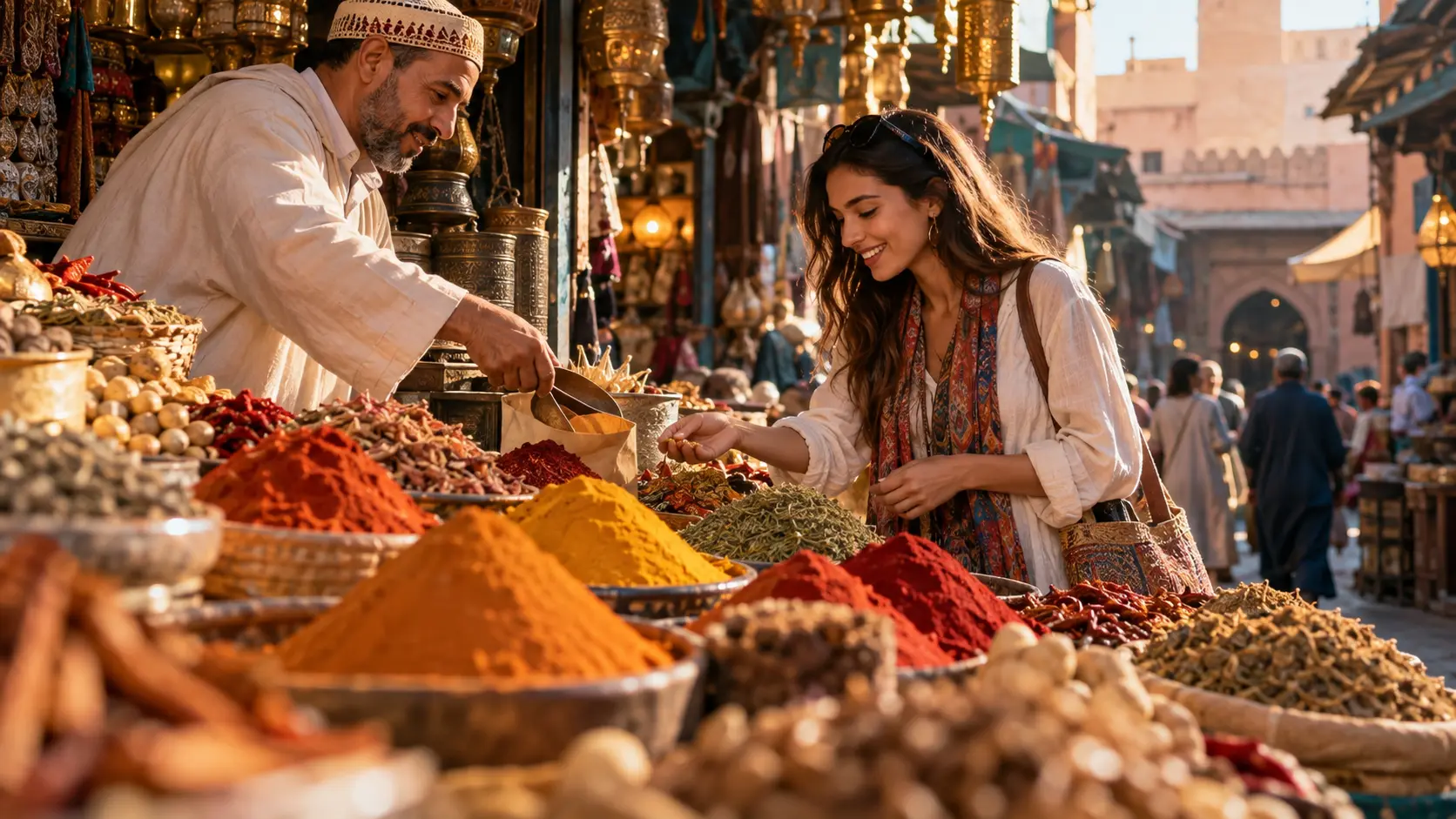
The souk is where cultural knowledge turns directly into money on any Morocco travel itinerary. Prices in the spice and craft lanes of the Marrakesh Medina are opening positions, not labels, and the first number you hear is set with you in mind.
Decide what an item is worth to you before asking, and let the seller come towards that figure.
Female Solo Travel in Morocco
Many women travel Morocco alone, and the official advice is worth reading in full. The US State Department lists harassment of women among common problems, warns that women walking alone in certain city and rural areas are particularly vulnerable to assault, and advises traveling with companions and ignoring harassment.
In practice, that points to three habits: pre-booked transport after dark, a riad that meets you on arrival, and a licensed guide for your first walk through each medina.
Local SIM Card or eSIM?
On a Morocco travel day, data is what lets you check a fair price, call your riad or show a driver the map, so get it working before you need it.
Morocco has three networks: Maroc Telecom, which Lonely Planet credits with the widest 4G coverage, Orange and inwi. A local SIM card needs your passport; Lonely Planet lists inwi and Orange packs of 20GB for about US$10. Coverage thins out in the desert and the high mountains.
An eSIM skips the airport SIM queue and works from the moment the plane lands, which is when you most need to message a transfer driver. Our Airalo review explains how its data packages and activation work, and who is better off with a local SIM.
Check that your phone is unlocked and eSIM-compatible before buying; if it is not, the airport SIM counter with your passport is the fallback.
🏆 TicketsHunters Verdict on Morocco Travel
8.7 / 10 for independent travelers who book the desert properly.
Few destinations a short flight from Europe pack this much variety into a week: mountain passes, Saharan dunes, two of North Africa’s great medinas and an Atlantic coast, connected by a working rail network. The score loses points for one reason only: the cost of a careless booking is unusually high, and the desert is where it lands.
Book the Sahara desert tour, the first transfer and the riad in writing before you fly. Carry small notes, keep exchange receipts, and ask the price before any service starts. Do those four things and the rest of Morocco travel becomes what it should be: a series of good decisions rather than a series of negotiations.
Morocco Travel Booking Checklist: 10 Things to Settle Before You Fly
Tick these off at home and most Morocco travel mistakes in this guide never get the chance to happen. The order matters: the desert tour and the first night shape everything after them.
- Passport checked: the US State Department asks for six months’ validity at entry; confirm the rule for your own nationality.
- Sahara desert tour booked with a licensed operator, with the desert named and the inclusions in writing.
- First-night plan fixed: a pre-booked transfer or the bus 19 route, plus the riad’s meeting point.
- eSIM installed, or a plan to buy a local SIM with your passport on arrival.
- €50–100 to change at the airport; a bank card ready for ATMs in town.
- An envelope for every exchange receipt, for reconversion before you leave.
- Jardin Majorelle tickets bought on the official website only.
- Small notes for palace gates (100 MAD per person), buses and tips.
- Travel insurance that names the activities you plan, from trekking to quad bikes.
- Emergency numbers saved: police 19, ambulance 15, Royal Gendarmerie 177.
For more general money-saving habits that apply well beyond Morocco, see our top 10 travel hacks for 2026.
For Morocco travel, insurance matters most where help is farthest away. A desert camp or an Atlas village can be hours from a large hospital, and policies differ on quad biking, sandboarding and trekking. Read the activity exclusions before you compare prices. Our Heymondo travel insurance review sets out what its plans cover and what they leave out.
Buy cover when you book the desert tour rather than the week you fly. On most policies, cancellation benefits only apply to events that happen after the purchase date.
Summary: Smart Traveler’s Checklist for Morocco (FAQ)
The short version of everything above: name the desert, get it in writing and pay by card; ask for the meter; change little at the airport and keep receipts; ignore route corrections in Fez; and settle the price before any service in Jemaa el-Fnaa. The questions below give short, direct answers to the Morocco travel planning points covered above.
What is the most costly mistake in Morocco travel?
Booking a Sahara desert tour from an unlicensed street seller or an unverifiable operator is the most costly Morocco travel mistake. It combines the largest single spend of most trips with cash payment, no written inclusions and no way to recover money if the trip is cut short or downgraded.
How much should a 3-day Sahara desert tour from Marrakech cost?
Shared 3-day Marrakech to Merzouga tours listed on TourRadar on 6 October 2026 started at US$107, US$225 and US$284 per person. The cheapest listing had three reviews. Lunches, local guide fees at some stops and tips are often excluded, so compare inclusions before price.
How much is a taxi from Marrakech airport to the Medina?
ALSA bus 19 is the cheapest fixed-price option at about 30 MAD one way or 50 MAD return, paid in cash. Pre-booked transfers start from €17 by day for up to four passengers on Welcome Pickups. Taxi fares at the airport rank are negotiated in practice, so agree the price before loading bags.
Can I take Moroccan dirhams out of Morocco?
Only up to 2,000 MAD, according to the Moroccan customs rules cited by Wise, because the dirham is a closed currency. Keep your exchange receipts: banks can reconvert up to 20,000 MAD with a receipt less than six months old, while airport counters cap reconversion at 2,000 MAD per passport.
Do I need a visa for Morocco?
No visa is needed for stays of up to 90 days on US, UK, Canadian, Australian, most EU, Japanese and South Korean passports. Other nationalities may need a visa or Morocco’s e-visa, launched in July 2022. The US State Department asks for six months of passport validity at entry.
Is Morocco safe for female solo travelers?
Many women travel Morocco alone, but harassment is a documented problem. The US State Department lists harassment of women among common issues and warns that women walking alone in some areas are particularly vulnerable. Book a riad that will meet you at a landmark, dress modestly in medinas and rural areas, and use pre-booked transport after dark.
How much should I tip in Morocco?
Round up the bill in cafés and restaurants, and give about 10 MAD to taxi drivers and porters, according to Intrepid Travel. Tip guides and desert drivers at the end of the service, not upfront, and only after the agreed itinerary has been delivered.
Is the Fez tannery free to visit?
Viewing the Chouara tannery from the leather-shop terraces is officially free, but shops usually expect a tip of 5 to 10 MAD. The mint sprig handed out at the door also comes with an expectation of payment. Ask the price before you climb the stairs.
Should I buy a local SIM card or an eSIM for Morocco?
Both work. Morocco has three networks, Maroc Telecom, Orange and inwi, and a physical SIM requires your passport. Lonely Planet lists inwi and Orange packs of 20GB for about US$10. An eSIM installed before departure lets you book transport and message your riad the moment you land.
When is the best time for Morocco travel?
Spring and autumn suit most Morocco travel, because inland cities are hottest in July and August. October to April is the best window for the Erg Chebbi dunes. Ramadan 2027 is expected to run from about 8 February to 9 March, which shortens some opening hours.
📝 Summary Box · Morocco Travel in Five Lines
Biggest risk: an unlicensed Sahara desert tour paid in cash. Shared 3-day Merzouga tours listed online started at US$107–284 per person on 6 October 2026.
Taxis: a short metered ride in Marrakesh is about 10 MAD; ask for the meter or agree the fare first.
Money: the dirham is closed; carry no more than 2,000 MAD across the border and keep exchange receipts.
Medinas: licensed guides carry badges; “closed street” offers lead to shops.
Best time: March to May and September to November; the dunes from October to April.
The same reference data in a copy-ready format:
| Item                          | Reference (Oct 2026)          | Source                  |
|-------------------------------|-------------------------------|-------------------------|
| Shared 3-day Merzouga tour    | US$107-284 per person         | TourRadar listings      |
| Metered petit taxi, Marrakesh | ~10 MAD short ride            | Telquel, May 2026       |
| ALSA bus 19, airport-medina   | 30 MAD one way / 50 return    | 2026 traveler guides    |
| Dirham border limit           | 2,000 MAD                     | Customs rules via Wise  |
| Airport reconversion cap      | 2,000 MAD per passport        | Office des Changes      |
| Bahia / El Badi / Saadian     | 100 MAD each, cash            | 2026 visitor guides     |
| Tourist promotion tax         | 2-15 MAD per night            | Hespress, Apr 2026      |
| Communal stay tax             | 3-30 MAD per person per night | Hespress, Apr 2026      |
| Emergency numbers             | Police 19 / Ambulance 15      | Wikipedia               |
Sources & last updated: 6 October 2026
- Office des Changes: reconversion of dirhams by non-residents
- Wise: taking cash in or out of Morocco
- US State Department: Morocco country information and advisory
- Wikipedia: Visa policy of Morocco
- Telquel: Taxis in Marrakech (May 2026)
- Hespress: Moroccan tour guides demand implementation of reform law (June 2025)
- CGEM: Organization of the travel agent profession (Law 11-16)
- Hespress: Morocco hotel bookings come with extra charges (April 2026)
- Ecofin: Morocco tourist arrivals hit 19.8 million in 2025
- TourRadar shared 3-day Merzouga listings, checked 6 October 2026: Listing A, Listing B, Listing C
- Local Morocco Tours: Zagora vs Merzouga (operator source)
- Wikipedia: Erg Chebbi, Erg Chigaga, Chefchaouen, High-speed rail in Morocco, Moroccan dirham, Telephone numbers in Morocco, Morocco
- Jardin Majorelle: official visitor information
- Marrakech-Safi Regional Tourism Council: useful numbers
- Born Free: Jemaa el-Fna Square investigation (2025)
- Journal of Nomads: visiting the Fez tanneries (updated March 2025)
- Mad Hatters NYC: hiring a guide in Fez
- Dave’s Travel Pages: ATMs and currency exchange in Marrakech (updated July 2026)
- Wise: ATMs in Morocco
- Lonely Planet: getting connected in Morocco
- Intrepid Travel: tipping in Morocco
- Welcome Pickups: Marrakech airport transfer prices
- The Traveler: Marrakech airport bus 19 (2026)
- Expat.com: taking taxis in Marrakech
- Showcaves: Pont de Dieu, Akchour
- Palace prices: Nomado Travel (2026) and MarocMama (2022); Passport & Stamps on Ben Youssef Madrasa
- Human Appeal: projected Ramadan 2027 dates
Related TicketsHunters Guides
- 🚩 The Honest Guide to Avoiding Tourist Traps 2026
- 🚗 The Complete Guide to Renting a Car in 2026
- 🚖 Welcome Pickups Review: Premium Airport Transfers
- 📶 Airalo Review: Global eSIM Data
- 🛡️ Heymondo Travel Insurance Review 2026
- 🎒 The Ultimate Carry-On Packing List 2026
- ⚡ Top 10 Travel Hacks for 2026
Affiliate disclosure: some buttons in this guide are partner links marked as sponsored. If you book through them, TicketsHunters may earn a commission at no extra cost to you.
Partners do not see, review or approve our articles. Prices and rules in Morocco change; check the source and date beside each figure before you book.